
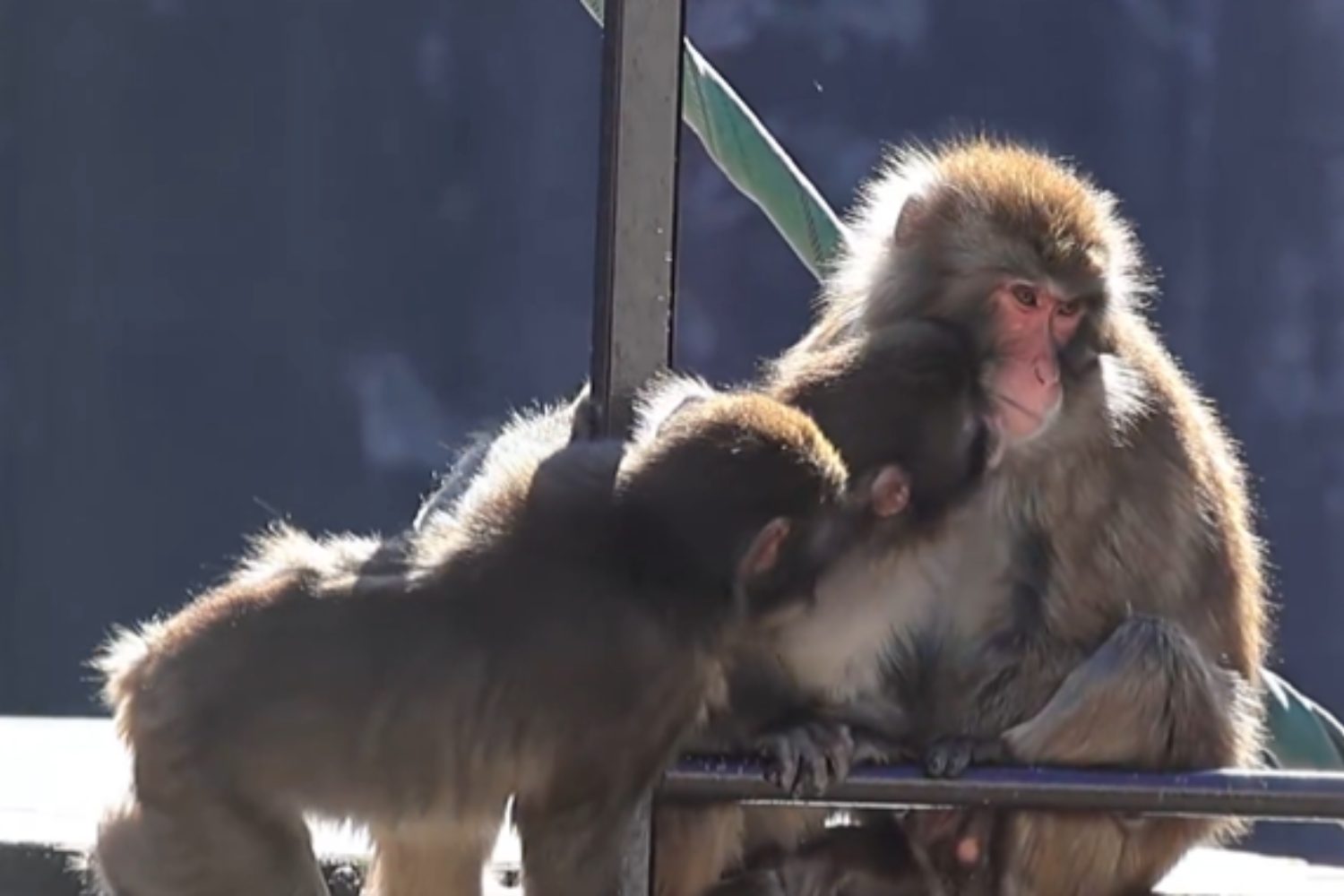
Born in the summer of 2025 inside the Ichikawa Zoo, east of Tokyo, Punch had conquered the web for a reason as tender as it was painful. Rejected almost immediately by his mother, this little Japanese macaque found himself deprived of a primary biological need for primates: the maternal contact essential for receiving warmth, security and learning the social rules of the pack.
To relieve the stress of isolation, the keepers had introduced blankets and soft toys into the enclosure, but the specimen had chosen an orange plush orangutan, transforming it into a true emotional anchor. The images in which he slept wrapped around that cloth body or used it as a shield in moments of fear had made the rounds on social media, transforming his fragility into a viral phenomenon capable of even causing the number of visitors to the Japanese structure to soar.
~お知らせ~
現在、サル山の中にぬいぐるみを持った子ザルがいます。
2025年7月26日に生まれ、放置されていたところから人工哺育で育ち、今年の1月19日から群れで過ごしています。
名前は「パンチ」という男の子です!
パンチの成長を暖かく見守ってください!#市川市動植物園 #ニホンザル#パンチ pic.twitter.com/jNpFSH0LOV— 市川市動植物園(公式) (@ichikawa_zoo) February 5, 2026
Difficult integration and the new role of big brother
The path to growth has not been linear at all. When the gradual reintegration into the community began in January, Punch clashed with the harshness of the internal hierarchies: without the teachings of the first months of life, he did not master the behavioral codes of the species and was often rejected, isolated or mistreated by the adult specimens.
However, thanks to the perseverance of the operators and its own resilience, the macaque has gained weight, confidence and its first playmates, arriving today to write a new chapter. The puppy who sought protection in an inanimate object conquered a stable space in the group and in fact spontaneously began to take care of the smaller macaques, taking on a protective and caring attitude towards the new arrivals.
飼育員撮影、本日のパンチです。
パンチや他の個体の様子は日々変化します。
観察したり交流しながらケアをしたり、
季節や天候にあわせた給餌の調整も。こうした飼育員の対応があるからこそ、
パンチは元気に暮らしていると思います。
そんな飼育員たちにも応援をお願いします。#市川市動植物園 pic.twitter.com/5KMyw50Jpn— 市川市動植物園(公式) (@ichikawa_zoo) November 8, 2026
The tenderness of viral videos and the long shadow of captivity
Watching Punch return the affection he desperately needed evokes immediate emotion, but reducing this story to pure entertainment risks obscuring the underlying reality. However cared for and attentive, the Ichikawa structure remains a closed, controlled and artificial environment, far from the forests in which a primate should explore, choose its own bonds and grow free.
Captivity is not a reduced version of freedom, but rather a condition in which spaces, relationships and stimuli remain inevitably limited. The sweetness of this macaque is authentic, as is its adaptability, but its virality comes from an initial wound: the fact of having had to learn to survive behind a wire fence, clinging to a stuffed animal instead of a mother.
