
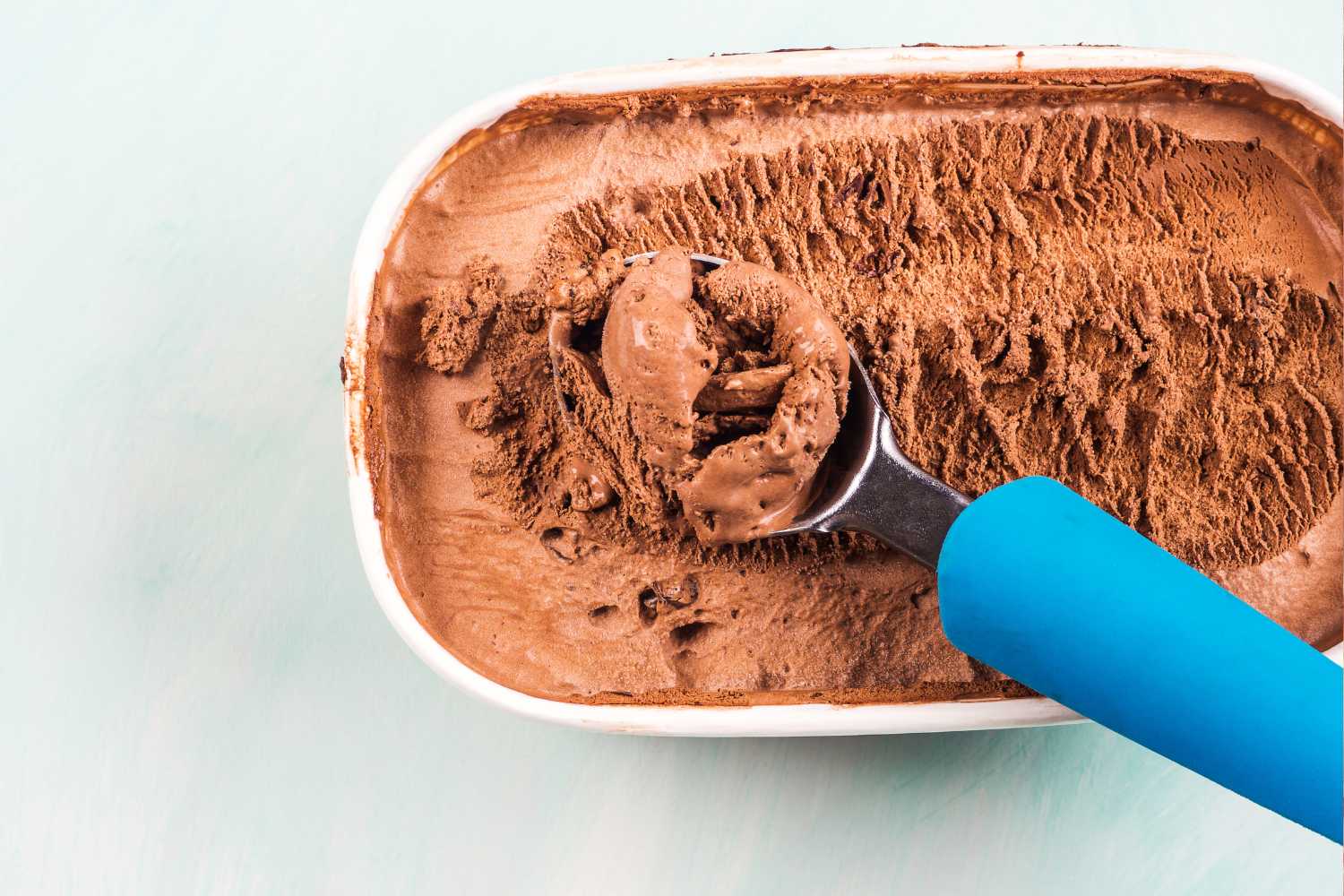
Ice cream is undoubtedly one of the most loved desserts, especially during the hot summer months. Prepared with simple ingredients such as milk, cream, eggs and sugar, ice cream is a product that contains within it a delicate balance between taste, consistency and freshness.
But what happens when ice cream melts and is then refrozen? Why are its flavor and texture no longer the same? In this article we will explore the scientific reasons behind this phenomenon and understand why it is best not to refreeze ice cream once it has thawed.
Ice cream: a scientific culinary art
Before understanding what happens when ice cream is refrozen, it is useful to take a step back and understand how it is prepared. The process of making ice cream is not only a culinary art, but also a real scientific operation: ice cream is a mixture of milk, cream, sugar and, in some cases, eggs, which is whipped and frozen simultaneously to obtain a creamy and smooth consistency. The creaming process, i.e. the incorporation of air during the freezing phase, is crucial to giving the ice cream its characteristic softness and volume.
During creaming, the ice cream mixture increases in volume thanks to the incorporation of tiny air bubbles, which together with the ice crystals, give the ice cream a velvety consistency and a pleasant lightness. These ice crystals are extremely small, ranging in size between 20 and 50 microns. At the same time, the air bubbles in the ice cream are covered with a layer of fats that attract proteins, helping to stabilize the structure of the ice cream.
Why shouldn’t ice cream be refrozen?
When ice cream melts, its molecular structure undergoes significant changes. The thawing process causes the ice crystals to dissolve, releasing the sugars stored inside. The air bubbles, which were incorporated during creaming, begin to escape as the layer of fats and proteins surrounding them thins. As a result, the ice cream loses its original structure, returning to a liquid state.
If we decide to refreeze the ice cream once it has melted, we do not get the original product back. Without the air incorporated during creaming, the ice cream loses its softness and lightness. Instead of the small ice crystals that characterize well-made ice cream forming, larger ice crystals develop, which trap less sugar and make the ice cream more solid and grainy. This change in the structure of the ice crystals negatively affects the consistency of the ice cream, which becomes less pleasant on the palate, losing that creaminess that we appreciate so much.
The crucial role of consistency
The consistency of ice cream is a fundamental element for its overall quality. A good ice cream must be creamy, soft and homogeneous. When we eat freshly made or well-preserved ice cream, our mouth perceives a velvety sensation without lumps. This effect is the result of the small size of the ice crystals and the uniform presence of air bubbles.
However, when ice cream is refrozen, the ice crystals grow in size and the consistency of the product changes dramatically. The larger size of the crystals makes the ice cream harder and grainier, compromising the tasting experience. Furthermore, the lack of air causes the ice cream to become denser and less airy, eliminating the lightness that makes it so pleasant to taste.
The importance of air in ice cream
Air is an invisible but essential ingredient in ice cream. During creaming, the incorporation of air contributes not only to increasing the volume of the ice cream, but also to giving it that soft and creamy texture that distinguishes it. The air acts as a sort of cushion between the ice crystals, preventing them from compacting too much and maintaining a small size.
When the ice cream melts, however, the air is released and, once refrozen, it is no longer possible to reincorporate it in the same way. This means that the refrozen ice cream will be more compact and less soft than the original product. In other words, the loss of air irremediably compromises the quality of the ice cream.
The consequences on flavor
In addition to texture, the flavor of ice cream can also be negatively affected by refreezing. The larger ice crystals that form during the refreezing process trap fewer sugars and flavors, which can make the ice cream less sweet and less tasty. Additionally, the greater density of re-frozen ice cream can make it more difficult for taste buds to perceive flavors properly, altering the overall experience.
The hygienic risks of refreezing
There is an aspect that goes beyond texture and flavor, and which directly concerns health. Ice cream, especially artisanal ice cream made with eggs and fresh cream, is a food that during defrosting enters a critical temperature zone – between 4°C and 60°C – in which bacteria multiply rapidly.
Microorganisms such as Salmonella, potentially present in raw or poorly pasteurized egg-based products, find in these conditions a favorable environment for proliferation.
Listeria monocytogenes, a bacterium particularly resistant to cold, can also pose a risk in lactic-based ice creams left at room temperature for more than two hours. Refreezing the product does not eliminate these bacteria: it simply lowers their activity, leaving them ready to reactivate the next time it is defrosted. For this reason, health authorities recommend never refreezing ice cream that has completely melted, regardless of its appearance or smell, which may not give any visible signs of contamination.
How to avoid the problem
To avoid compromising the quality of the ice cream, it is essential to pay attention to its conservation. Once the ice cream has been removed from the freezer, it should be consumed as soon as possible. If you notice that the ice cream is melting, avoid refreezing it. Instead, store ice cream in a well-sealed container and make sure the freezer maintains a constant and sufficiently low temperature.
Additionally, it’s always a good idea to buy ice cream in small quantities, so you can consume it quickly and not have to deal with the problem of refreezing. If you have leftover ice cream, consider using it in other ways, such as in a smoothie or dessert that requires softer ice cream, rather than risk compromising its quality by refreezing it.
How to use melted ice cream in cooking
If you find yourself with liquid ice cream, the solution is not to throw it away or – as we have seen – to refreeze it. Instead, it’s time to treat it for what it has become: a creamy, sweet and flavored base, ready to be reinterpreted. Poured hot onto a scoop of the same flavor it becomes an improvised affogato, elegant enough to seem intentional.
If, however, you leave it to solidify in the freezer inside a plum cake mold, without stirring, you will obtain a rustic semifreddo with a compact consistency, which can be cut into slices and served with fresh fruit or a sprinkling of grains. Melted chocolate or hazelnut ice cream, heated slightly in a saucepan with a drop of cream, turns into a thick sauce perfect for accompanying cakes, crepes or a simple banana. Finally, the fruit one can become the base of a granita sorbet if poured into a shallow pan and scraped with a fork every thirty minutes during freezing. In short, melted ice cream is an ingredient, not a waste.
