
A “clean and suavecito” mouse, cute and very soft, walking on the grass along the Circuito Chico of San Carlos in Bariloche. Marina Korb, an Argentine influencer, picks it up, caresses it and places it in the palm of her hand, then takes it back and publishes everything on TikTok. What he doesn’t know, at that moment, is that he is handling a Oligoryzomys longicaudatusthe colilargo ratón (also known as the long-tailed mouse), the main natural reservoir of the Andes virus, the hantavirus variant with the highest lethality and the only one of the group for which person-to-person transmission is documented. The video went viral within hours, overwhelmed by hundreds of comments.
@marina_korb In my defense I didn’t know that it was the large mouse that carried the virus, I only had a very cute little boy, and that night I entered that this week I had fouled people for a reason, alas. Spoiler: sobreviví. Just the right mouse button didn’t hold anything
but they don’t have it in their homes!! #hantavirus #raton
♬ original sound – marina_korb
The influencer’s reaction
Faced with the storm, Korb responded directly in the caption of the post:
In my defense, I didn’t know that was the long-tailed mouse carrying the virus. I only saw a cute little creature, and that evening I found out that people had died in an epidemic in that same area.
Spoiler: I survived. There was nothing wrong with that little mouse, but don’t try this at home!!
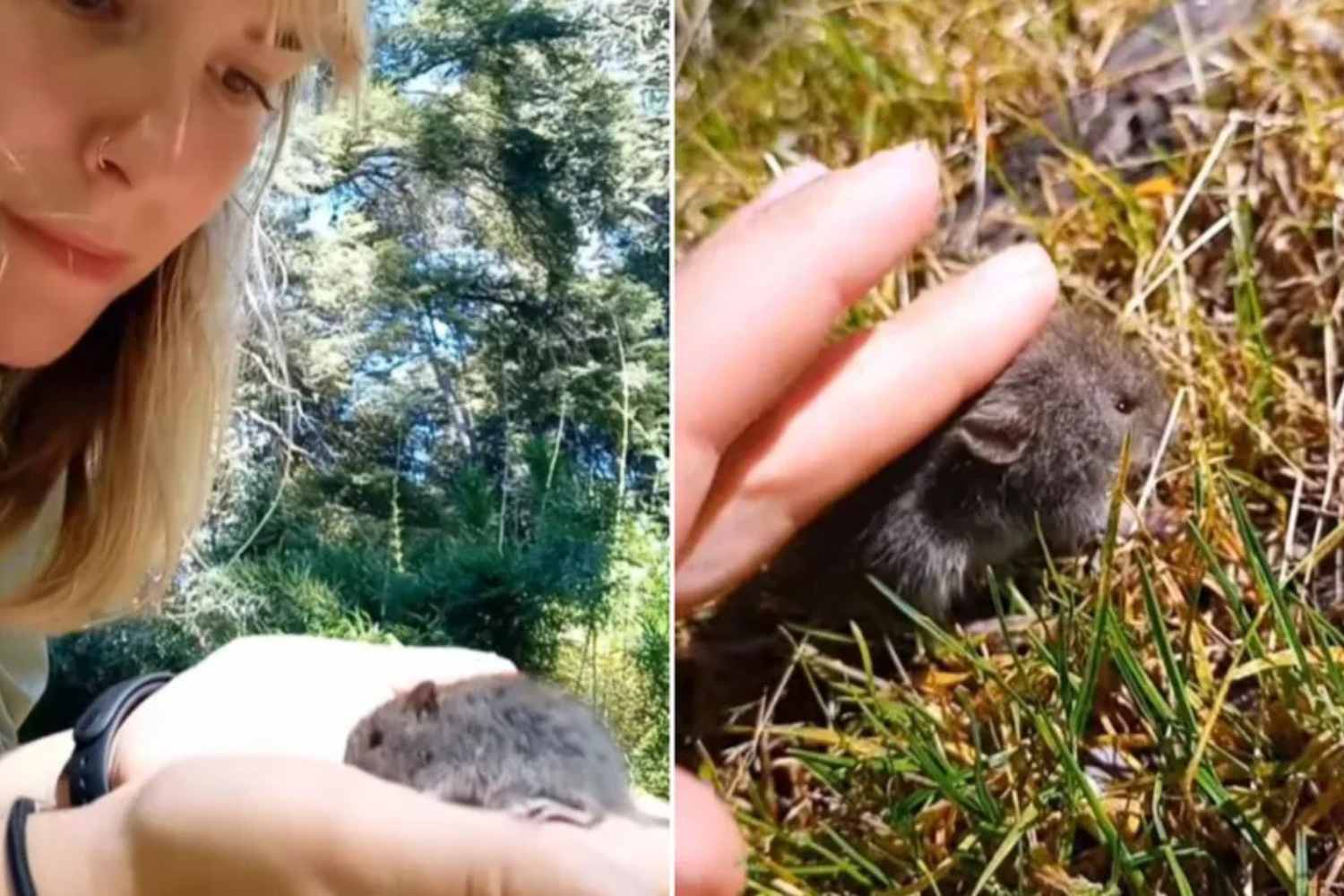
He then added that the images had been recorded about a year earlier, a version that did not completely convince followers, also because the video had been published less than a week ago.
Because the colilargo ratón is dangerous
The rodent, whose scientific name is Oligoryzomys longicaudatus (called colilargo due to the tail being longer than the body) lives mainly in Chile and southern Argentina, in wooded and shrubby areas, near watercourses. A tiny creature, weighing no more than thirty grams, which can spread the virus through urine, feces and saliva: contagion can occur after inhaling the airborne particles, through direct contact with the animal and/or with surfaces contaminated by its secretions.
Hantavirus cardiopulmonary syndrome can reach a lethality of 50% and the Andes strain, which circulates in Patagonia, is the only one of the family for which human-to-human transmission has also been demonstrated, a characteristic that distinguishes it from all other known variants.
The context: an ongoing emergency
The video emerged at a time of strong health alert. In Bariloche, in the same week, a 45-year-old man was hospitalized in intensive care with suspected hantavirus infection, later confirmed by the Malbrán Institute as the Andes strain according to what was announced by the Ramón Carrillo hospital in Bariloche. For the Ministerio de Salud de la Nación, Argentina recorded 101 confirmed cases in the 2025-2026 epidemiological season, with 32 deaths and a lethality higher than 31%, the highest in recent years. The country has the highest number of hantavirus cases in the entire American continent, according to the Pan American Health Organization.
In the background there is also the story of the cruise ship MV Hondius, which we talked about in recent days: which left Ushuaia on 1 April with 147 passengers, it recorded an outbreak of Andes strain hantavirus which caused three deaths and eleven confirmed and probable cases, a case which triggered an international health alert.
The Ministerio de Salud of Río Negro has issued an official statement which reiterates the prevention measures: no contact with wild rodents, maximum caution in rural and forested environments, immediate medical consultation in case of fever, muscle pain and/or breathing difficulties after potential exposure.
