
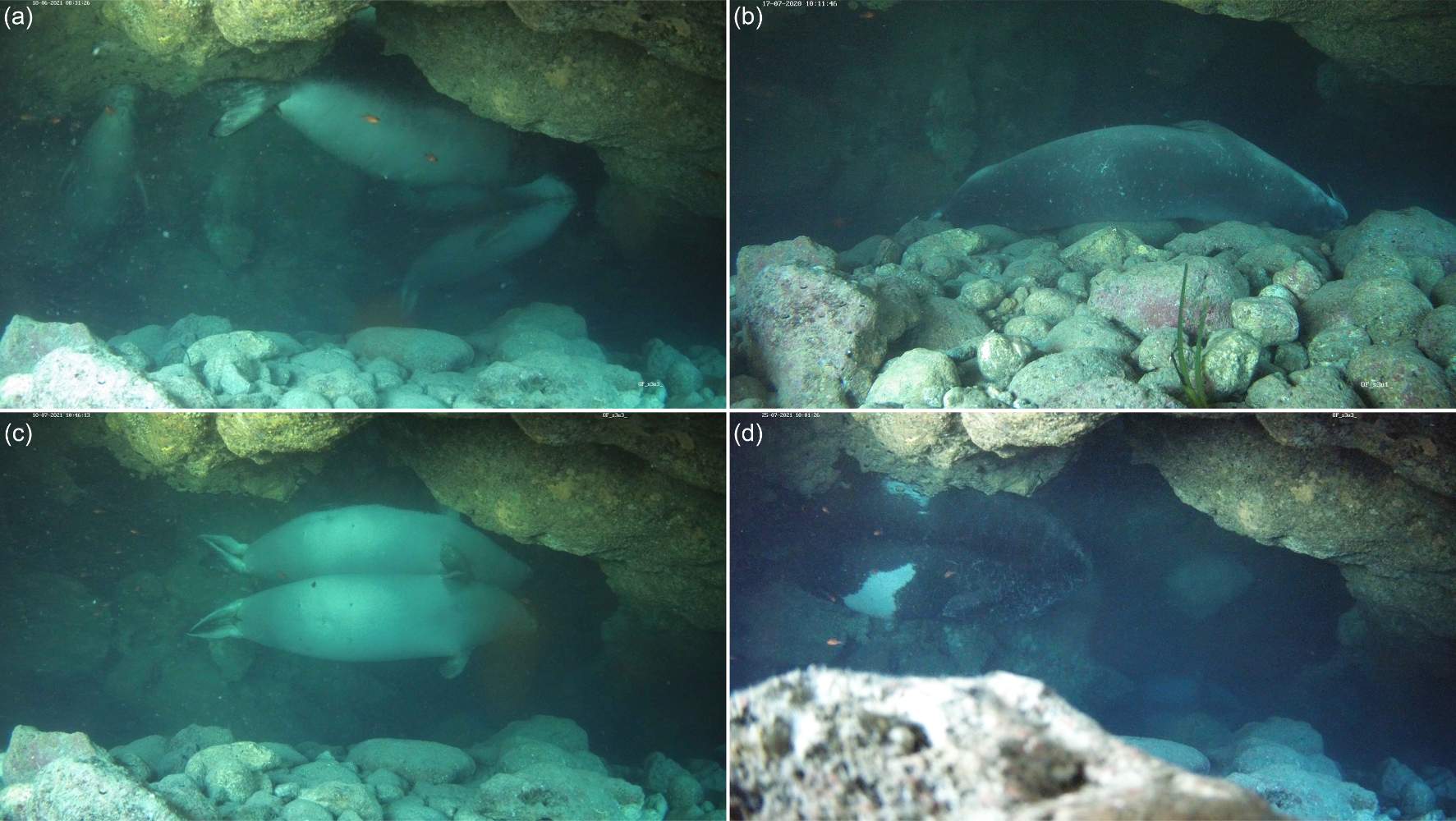
The habits of the Mediterranean monk seal are changing profoundly and not in a positive way, on the contrary. In Greece, where the tourist presence on the coasts is increasingly intense, these animals are in fact abandoning the traditional beaches and exposed rocks to take refuge in increasingly hidden environments. According to a study published in Oryxseals are using the so-called submerged caves filled with air with increasing frequency, environments that are difficult to reach and protected from direct light and human contact. A survival strategy that tells how much man’s impact is changing the behavior of marine fauna.
From open beaches to hidden “bubble caves”.
Once upon a time, monk seals preferred isolated beaches and quiet stretches of coast where they could rest and dry in the sun. Today, however, the pressure of tourism and nautical traffic has pushed the species towards much more inaccessible places. Observations conducted in Greece, in the Ionian archipelago, have highlighted the use of a particular natural structure: bubble caves, submerged cavities with internal air chambers that can only be reached through underwater tunnels. In these environments, seals can rest suspended in the water, remain motionless on the seabed or sleep in an upright position, completely isolated from external disturbance.
The study data and a shelter used almost every day
To analyze the phenomenon, the researchers installed a system of remotely monitored underwater cameras in several caves known for the presence of seals. The recordings, collected for 141 days between 2020 and 2021, showed a clear behavior: the submerged caves were used for 119 days, while the traditional cavities only for 30. A figure that indicates a clear preference towards more protected environments, probably chosen to reduce interaction with humans during periods of greater tourist influx.
Tourism as invisible pressure on the species
The main problem remains the so-called anthropogenic disturbance, today among the most serious threats to the survival of the monk seal. Crowded beaches, boats, diving and constant approaches force these animals to radically modify their habitat. On some Greek islands, such as Formicula, tourists often travel to the caves where seals raise their pups, increasing stress and reducing available safe areas.
A signal also for Italy
The phenomenon does not only concern Greece. Even along the Italian coasts, from Sicily to Sardinia up to parts of the Adriatic, the monk seal is slowly reappearing after years of almost total absence. But its survival will depend on its ability to protect the most sensitive coastal areas and limit human intrusions. Submerged caves thus become not only natural refuges, but also silent indicators of a fragile balance between tourism and biodiversity in the Mediterranean.
We are making their habitats no longer safe
Monk seals aren’t simply “choosing” new caves: they’re fleeing. When an animal is forced to abandon its historical habits to find increasingly hidden and inaccessible refuges, it means that its habitat is no longer safe. Tourism, if not regulated, and the constant presence of man on the coasts transform natural spaces into areas of continuous stress, reducing the possibilities of rest, reproduction and survival.
The most critical part is that this isn’t just about seals. It is a pattern that is repeated everywhere: seas, mountains, forests. Wild animals don’t seek human contact, they suffer it. And every time we get too close, even with good intentions, we risk pushing them one step further towards marginality. Nature is not a scenario to be explored without limits, but a delicate balance to be respected. And sometimes, the most concrete form of protection is just one thing: not getting close.
You might also be interested in:
