
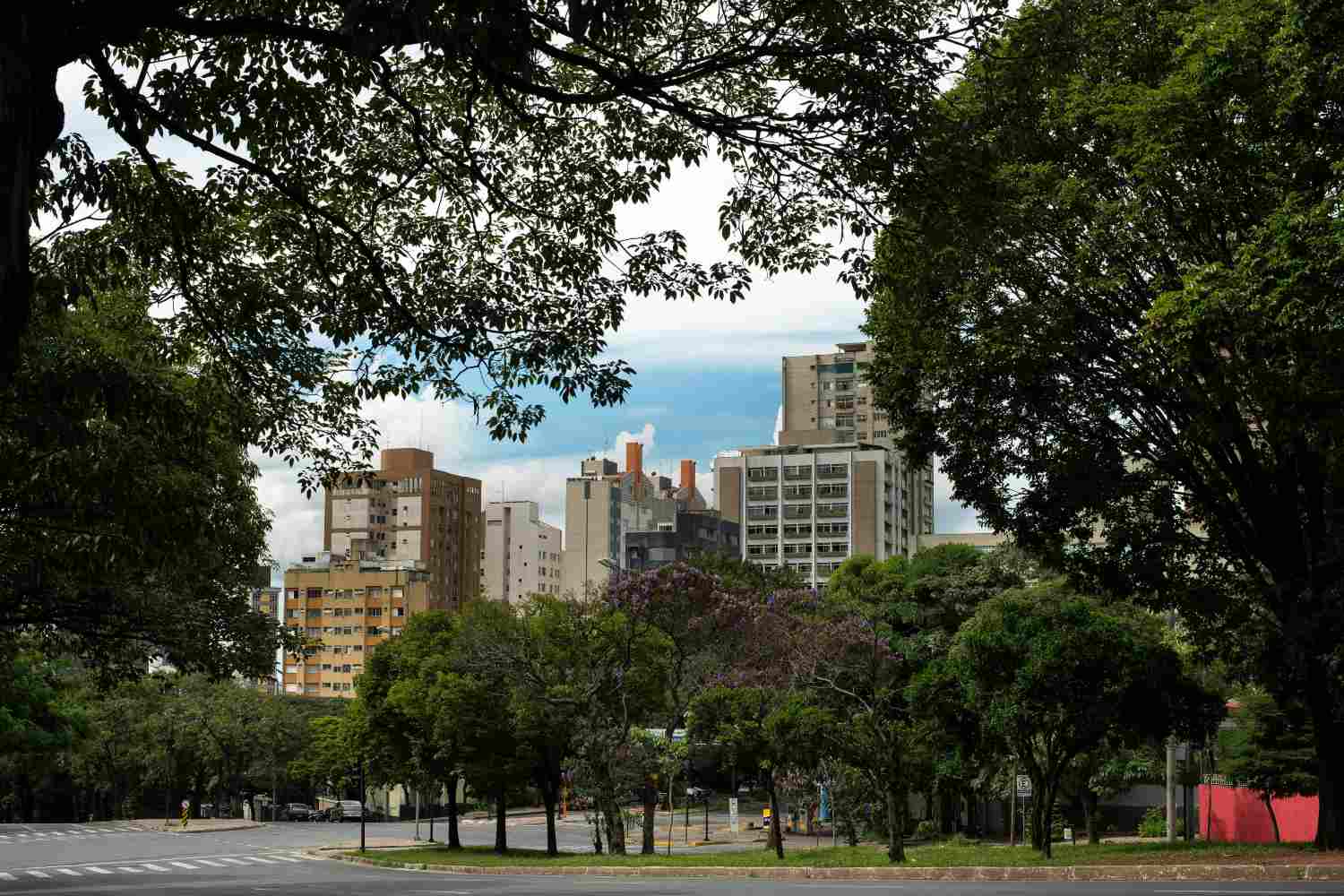
New research published in Nature Communications analyzed almost 9,000 urban areas around the world, involving around 3.6 billion people, and highlighted a surprising fact: the tree cover present in cities is already capable of reducing the “urban heat island” effect by up to 50%.
The urban heat island phenomenon indicates the increase in temperatures in cities compared to rural areas, with differences that fluctuate on average between 1 and 3°C, but which in some cases can reach up to 7°C. The causes are mainly linked to the massive use of materials such as concrete, asphalt and bricks, which absorb heat during the day and release it slowly.
How trees cool cities and why they make a difference
According to scholars, trees act through two fundamental mechanisms. The first is shading, which prevents solar radiation from directly hitting artificial surfaces. The second is transpiration, a natural process through which plants release water vapor, helping to lower the temperature of the surrounding air.
The overall effect is more significant than previously thought: current urban vegetation already manages to compensate between 41% and 49% of the potential heat that would accumulate in the absence of greenery. In some cities, this translates into a perceived reduction of at least 0.5°C, which is especially significant during heat waves.
Environmental inequalities and differences between neighborhoods
The study also highlights an important social aspect: the distribution of urban greenery is not uniform. In poorer contexts, the presence of trees is on average lower than in wealthy neighborhoods. In the United States, for example, low-income communities experience about 15% less tree cover and temperatures about 1.5°C higher. This disparity makes it clear that urban greenery is also a question of climate justice, as well as environmental.
Green alone is not enough: a broader strategy
Experts point out that, while increasing tree cover is essential, it cannot be the only solution. Even in optimistic scenarios, with global green growth of 18% to 33%, the estimated benefit would only cover part of future warming. To address the challenge of the urban climate it will be necessary to integrate greenery with other strategies, such as the use of reflective building materials, the design of more ventilated cities and the transformation of unused spaces into new urban green areas.
You might also be interested in:
