
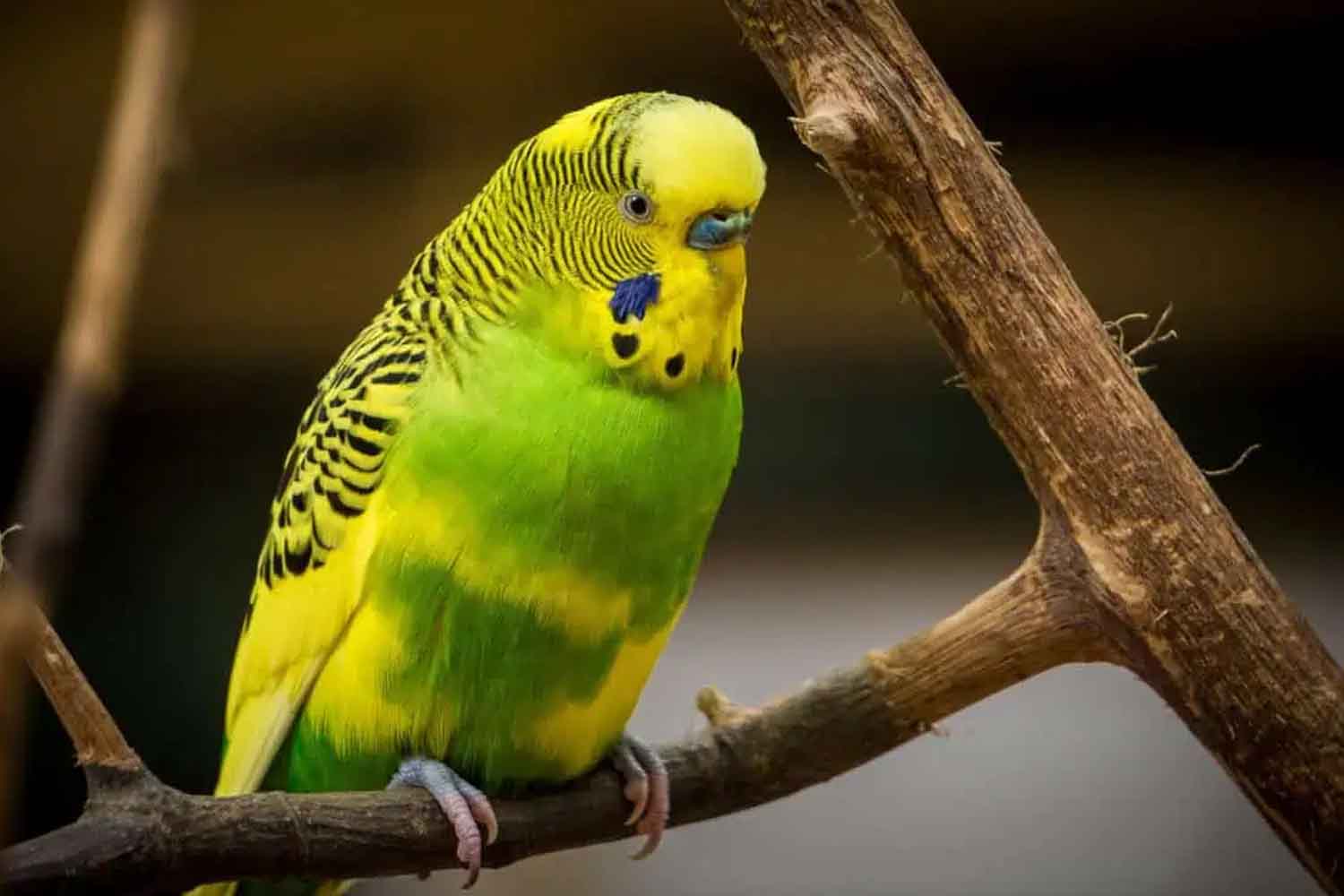
It often happens in the living room, without warning, perhaps while someone is drinking coffee or trying to pretend a normal Sunday morning. The parrot climbs onto the perch, settles down with a certain concentration, begins to move in an unmistakable way and the human reference remains there, halfway between embarrassment and the desire to immediately search for “parrot strange behavior” on Google. The scene may seem funny, even a little uncomfortable. For the bird, however, it has much less drama than we give it credit for.
A new study published in Ecology and Evolution invites us to change our gaze: masturbation in birds appears much more widespread than previously thought, it concerns males and females, appears in many different families and is also observed in wild animals. Indeed, in the work reports are more frequent in wild birds than in captive birds. Translated without too much embroidery: that behavior that many owners immediately read as a sign of stress, boredom or frustration could be, quite simply, a natural part of bird biology.
The roost is not to blame
For years, many owners of parrots, parakeets, cockatiels and other domestic birds have interpreted certain behaviors as something to be stopped quickly. The animal rubs itself against a branch, a toy, a bowl, a fabric, and the small domestic court immediately begins: it will be alone, it will be bored, it lacks a companion, it needs more stimulation, perhaps that perch needs to be removed.
The study suggests more calm. The research group has collected what is described as the largest dataset available so far on masturbation in birds, bringing together scientific literature, questionnaires addressed to experts, zoological and veterinary staff, reports from online communities, social media and videos. The result concerns 120 species, distributed across 22 bird groups. A still imperfect sample, of course, because it also depends on what humans notice, record and decide to tell. Big enough, though, to take this behavior out of the corner of lounge weirdness.
In birds the question is also anatomical. Most species use the cloaca, a common opening for reproduction, urine, and feces. Self-stimulation often occurs by rubbing that area against an object, with wing movements, vocalizations, body posture and some application. The point is to distinguish these gestures from normal grooming, scratching or tidying up feathers. It’s one thing for misplaced plumage, but quite another for the parrot to have clearly made a private appointment with its perch.
Nature is less prudish than us
Here’s the most useful part of the study: Masturbation in birds appears across multiple lineages and tends to cluster among related species. The researchers speak of a behavior that is “phylogenetically conserved”, that is, distributed along the evolutionary tree in a way that is anything but random. It has probably appeared and disappeared several times over time, following different paths depending on the species.
Males were more represented in the reports considered reliable: 55% of the male records included masturbation, compared to 36% of the female ones. The gap exists, but the presence of females matters a lot, because it prevents everything from being archived as simple “cleaning” of old sperm or male reproductive training. Age also helps to mix up the cards: the study does not find a significant difference between young people and adults. So the idea of the dress rehearsal before graduation remains too narrow.
The researchers also observed a link with mating systems. Socially monogamous species and those with longer-lasting pair bonds are less associated with masturbation, while species with more multiple or less selective mating appear to show it more often. This data opens two main paths. The first concerns the release of sexual arousal. The second looks at reproduction: in males it could have to do with the quality of the sperm or preparation for a future mating; in females it could affect arousal and conditions of the reproductive tract. They are hypotheses, not verdicts set in stone. The birds, as often happens, do their thing and then leave the scientists to chase them with graphs, tables and a certain academic modesty.
What changes for those who live with a parrot
For those who have a bird at home, the practical implications are very concrete. Seeing your parrot rubbing itself on the perch can create embarrassment, especially when the scene takes place in front of the guests and no one knows where to look anymore. The most immediate reaction, however, risks being the wrong one: scolding, removing the object immediately, interrupting every time, transforming a natural behavior into a small disciplinary case.
The research invites us to take a step back. If a behavior also exists in wild animals, it becomes more difficult to automatically read it as a consequence of cage, loneliness or poor home management. This does not mean ignoring animal welfare. It means starting from another premise: masturbation in birds can be normal.
The situation changes when the behavior becomes excessive, repetitive to the point of exhaustion, associated with irritation of the cloaca, small wounds, loss of feathers, aggression, apathy, evident stress or sudden alterations to the routine. In those cases, a veterinarian experienced in exotic animals and poultry is needed. There the lightness stops and true care takes over, that made of observation, competence and attention to the individual animal.
For everything else, a simpler rule applies: no panic and no shame transferred to the bird. The parrot is not making a scandal. He is following a behavior that science is finally starting to study with less embarrassment and more seriousness. The human can blush, of course. The parrot has probably already moved on.
You might also be interested in:
