

The air conditioner remains there, hanging on the wall like an expensive promise. You press a button, the cold air arrives, then the bill arrives, then the usual uncomfortable thought arrives: to cool the house we are often consuming energy just as the heat becomes more aggressive. A kind of dog chasing its tail, only with more remote controls and less poetry.
Ancient materials are coming back from here, almost banal as they are familiar: terracotta, clay, porous ceramic, water, air. Stuff from vases on the balcony, from bricks, from hands dirty with earth. Inside these materials there is a simple physical principle: evaporation absorbs heat. It happens when we sweat, it happens when a clay jug keeps water cooler, it happens when hot air passes through a moist, porous surface. The difference today lies in the way in which designers, architects and researchers are taking that principle and putting it inside walls, urban modules, facades and even refrigerators without electricity.
Old clay comes in handy
1. The hollow ceramic integrated into the walls
Among the most interesting ideas is the natural air conditioning system in hollow ceramic, designed to be inserted directly into buildings. Here cooling becomes part of the architecture: porous modules, cavities, air passages, surfaces capable of retaining water and releasing freshness through evaporation. The idea works because it shifts the problem from the individual appliance to the very skin of the house. Instead of adding a machine later, we try to build a wall that works better first.
©materialsource
2. TerraMound, the 3D clay inspired by termite mounds
Another road passes through TerraMound, the 3D printed clay air conditioner inspired by termite mounds. Termites, without engineers and without energy certifications hanging on the wall, build structures capable of regulating temperature and air flows. TerraMound takes up that logic with complex geometries and porous surfaces. Here a fan also comes into play, so the correct story is that of low consumption, or passive-assisted, cooling. The change of perspective remains interesting: fewer compressors, more shape, more material, more intelligence in the way the air is guided.
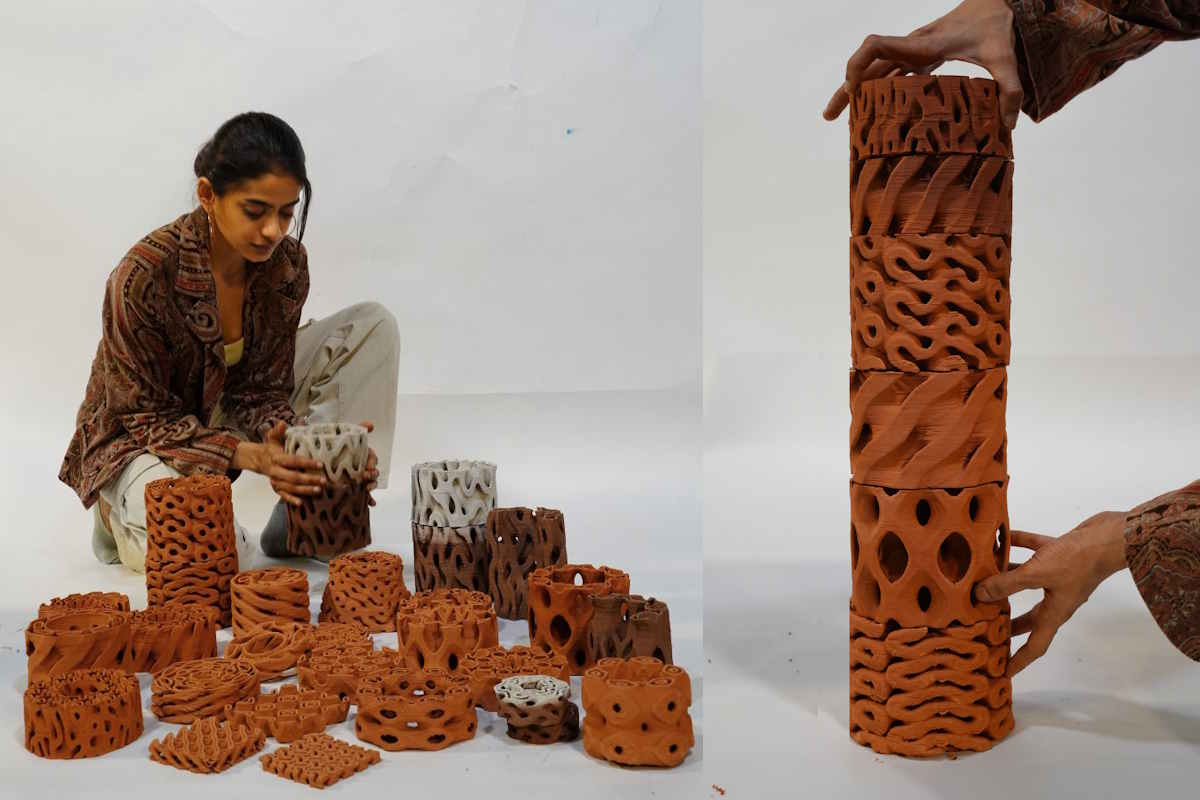
3. FungalForm, terracotta and mycelium in the same form
Even more curious is FungalForm, a terracotta system with a mycelium core. It seems like something that came out of a half-botanical, half-carpentry laboratory of the future, but instead it follows a very concrete logic: the water filters, the external surface favors evaporation, the internal core creates an environment useful for the growth of mycelium and the cultivation of edible mushrooms. Also in this case there are fans, sensors and electronics, so we are faced with a hybrid system: nature, terracotta and light technology. Strange, yes. But the strange, every now and then, serves to remind us that classic air conditioning is only one of the possible ways.
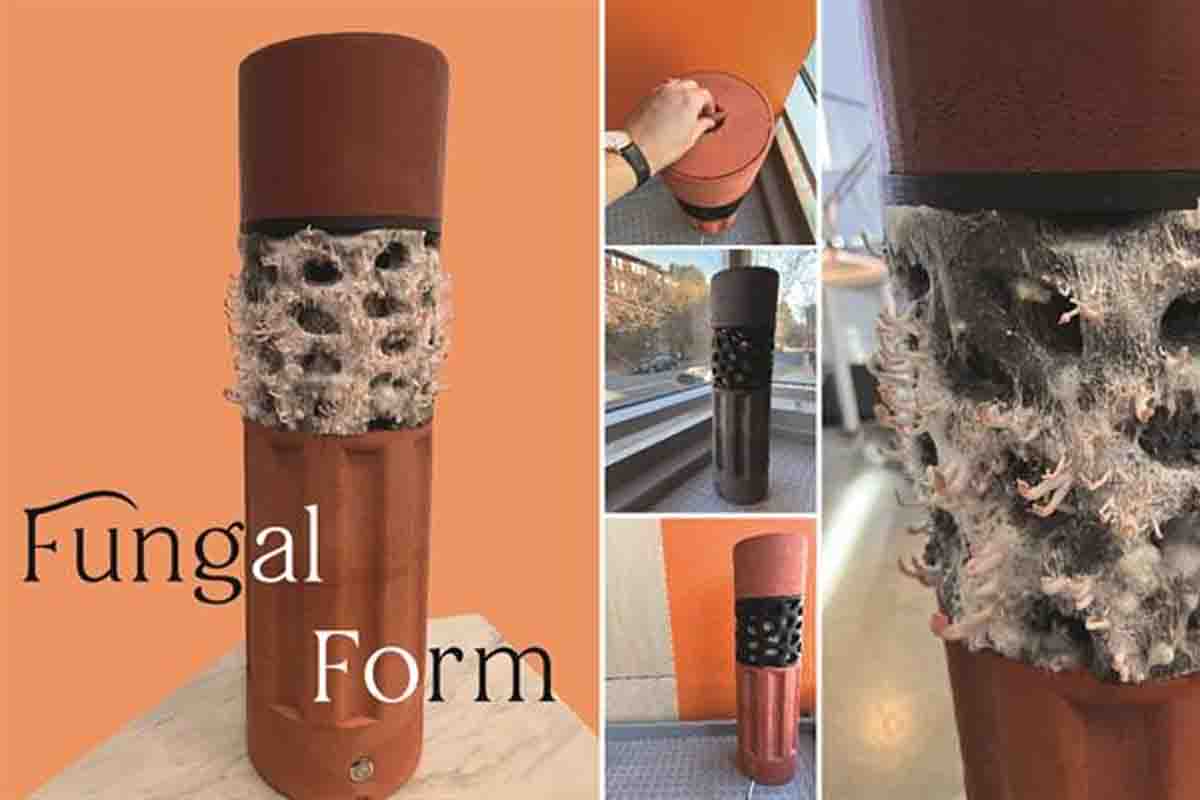
©Jamesdysonaward
4. Radiative cooling materials
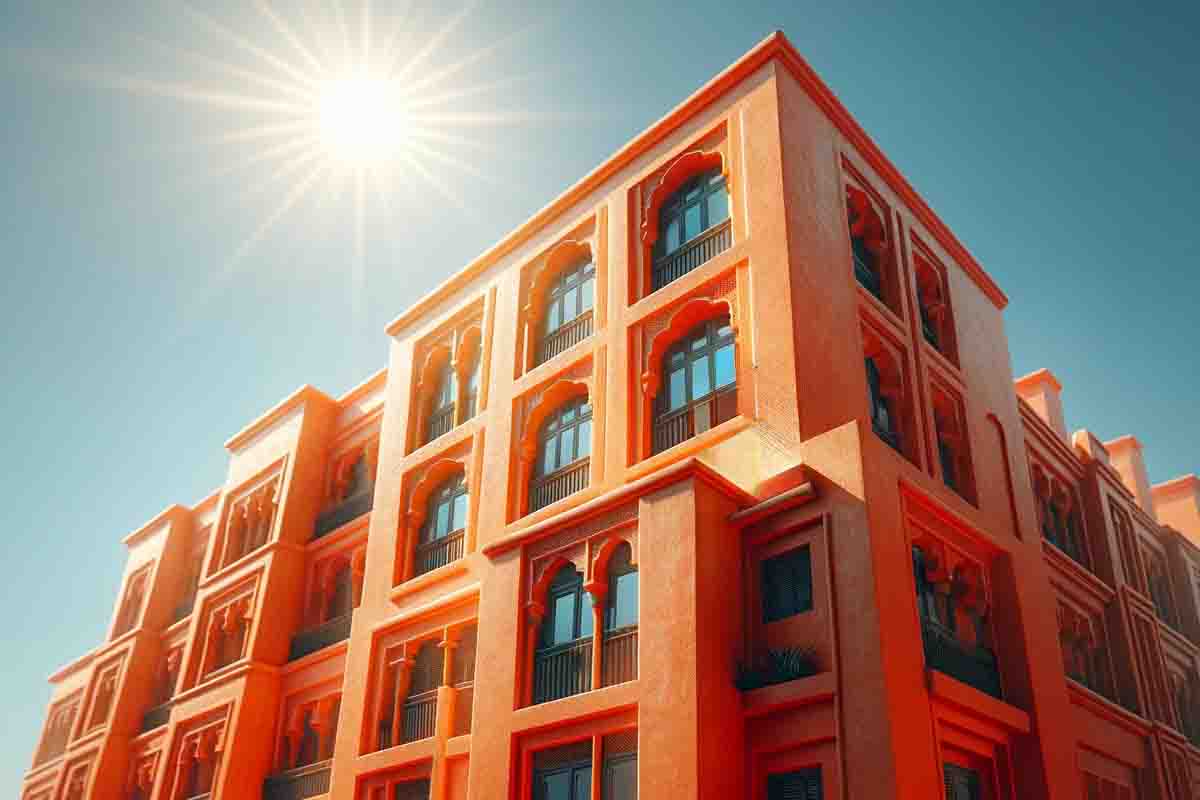
Alongside pure terracotta there are also radiative cooling materials, designed to reflect sunlight and disperse heat. Here the mechanism changes: what counts is the ability of the surfaces to avoid overheating and to release thermal energy towards the outside. We are talking about a different family than wet clay, but the reasoning remains close: to make the materials work before the machines. Less dependency on the system, more attention to roofs, facades, ventilation, orientation and quality of the building envelope.
Bricks that breathe
5. The refreshing ceramic bricks
The refreshing ceramic bricks awarded as part of the James Dyson Award work precisely on this: transforming a normal, almost invisible building element into a system capable of passing air, retaining it, cooling it and returning it inside. The brick ceases to be just mass and separation. It becomes a small porous lung, inserted into the structure of the building.
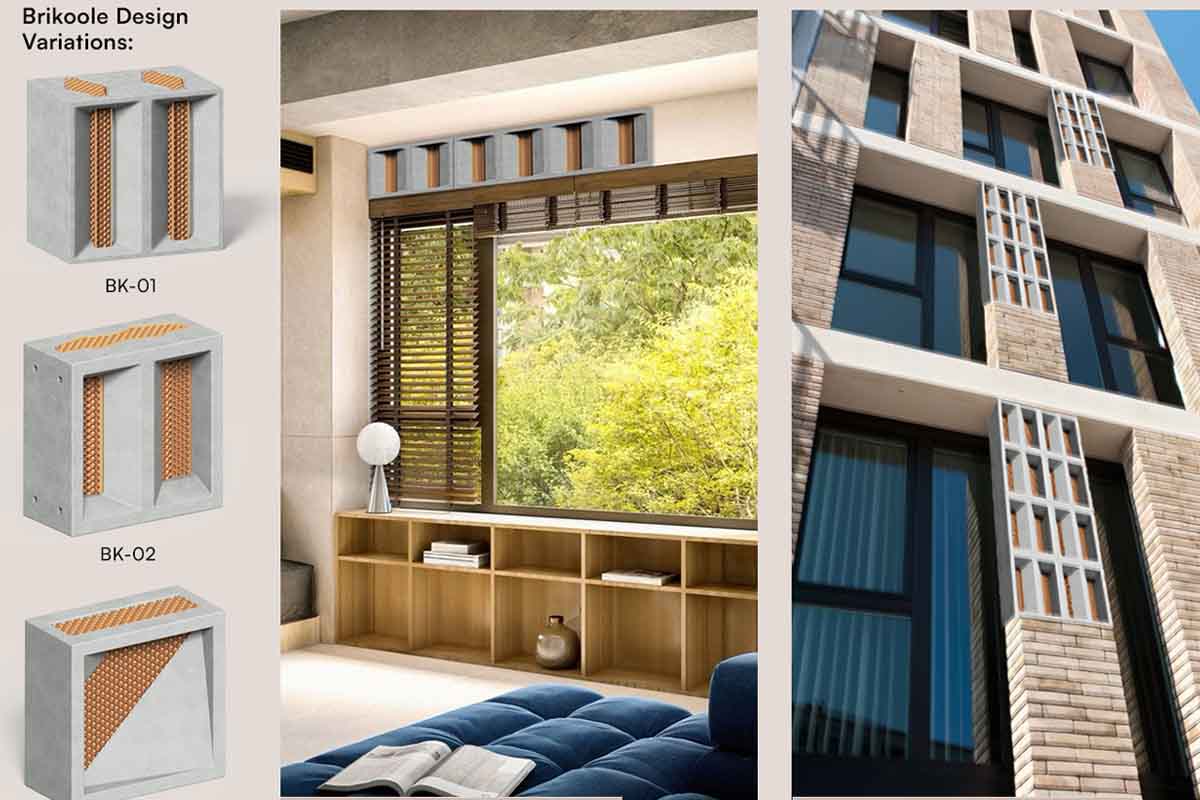
©James Dyson Award
6. Beehive and terracotta urban cooling
Ant Studio’s zero-emission terracotta system, also known through solutions such as Beehive or Deki Cooling, moves on a more urban scale. Terracotta cones arranged like a beehive, water flowing on the surface, hot air passing through the porous body and cooling down. It is one of the most effective images of this technology: it looks like an artistic installation, but instead it was created to provide relief in public spaces, factories, courtyards, outdoor areas. In some cases it can work without electricity, in others it can use a small pump to circulate the water. The substance changes little: the bulk of the work is done by form and evaporation.
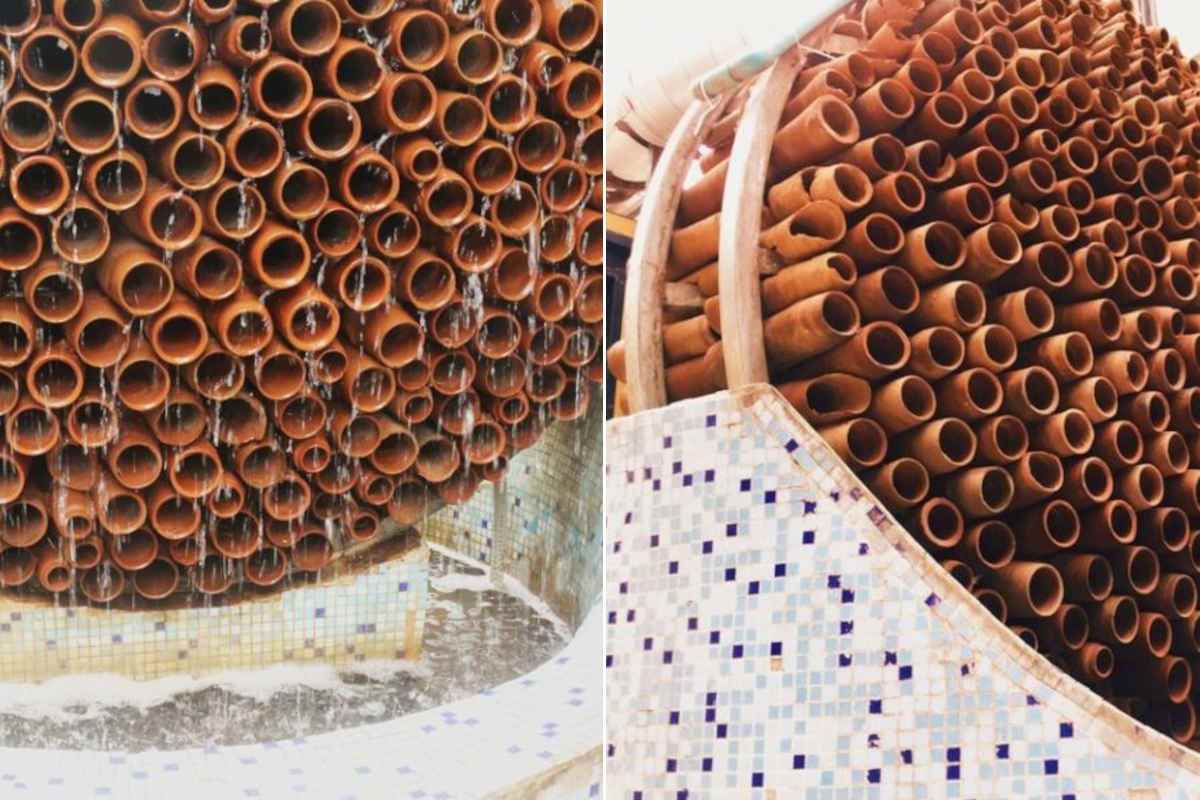
@Monish Siripurapu
7. The ceramic air conditioner by Manoj Patel Design Studio
Then there is the electricity-free ceramic air conditioner designed in India by Manoj Patel Design Studio. Here the promise is very direct: a 15 liter water tank, ceramic tubes, evaporative cooling and a temperature reduction of up to 9°C in favorable conditions. It’s the kind of solution that speaks especially to places that are hot, dry, have limited access to energy, or have public spaces exposed to heat. Bus stops, small shops, schools, offices, environments where even a few degrees less can change the day.
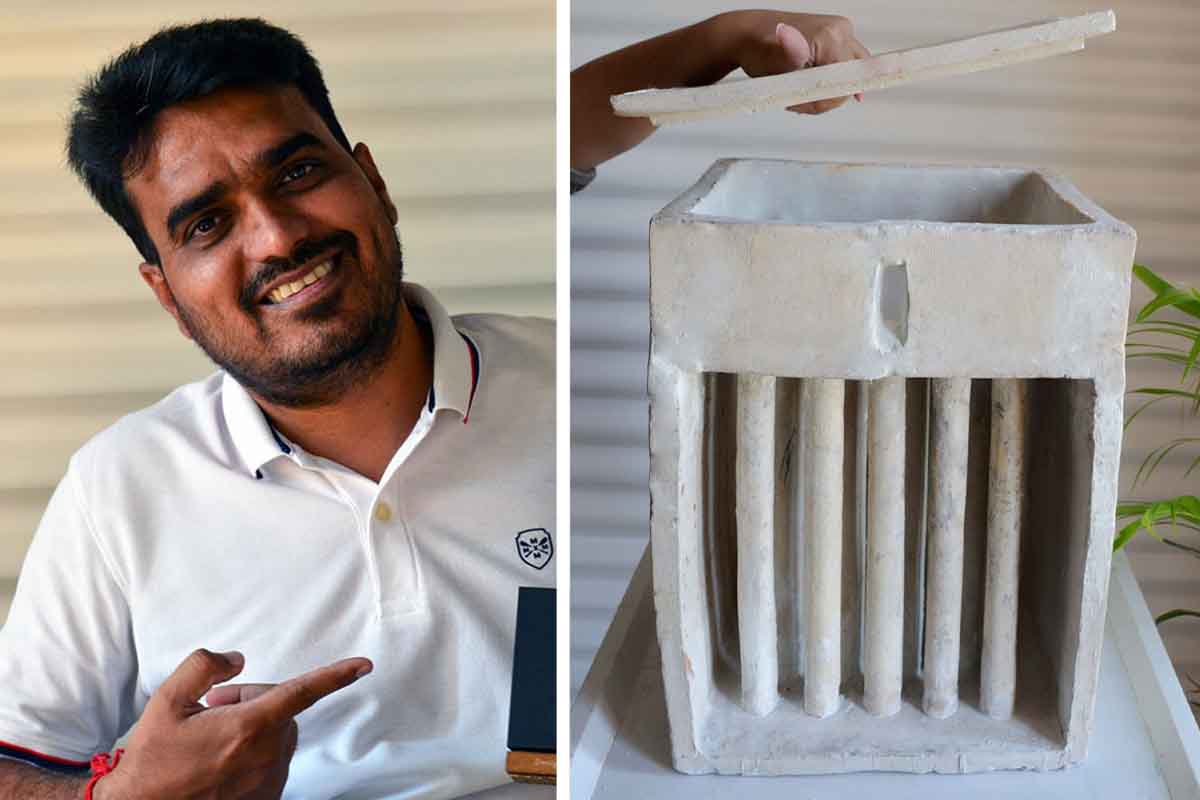
@manojpatel2015/Facebook – ©ekehau
8. 3D printed Cool Bricks
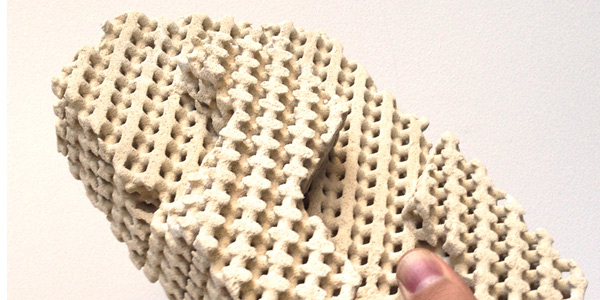
3D printing added another layer. The 3D printed air conditioning passes through porous ceramic blocks that absorb water and slowly release it as the air passes through them. The best-known case is that of Cool Bricks: 3D printed ceramic bricks, designed to create walls capable of shading, retaining water and lowering the temperature through evaporation. They work best in arid climates, where the air is dry enough to aid the process. In a humid house in July, with the windows already sticky, the miracle remains half done. In a well-thought-out architectural project, however, they can become a part of the cooling system.
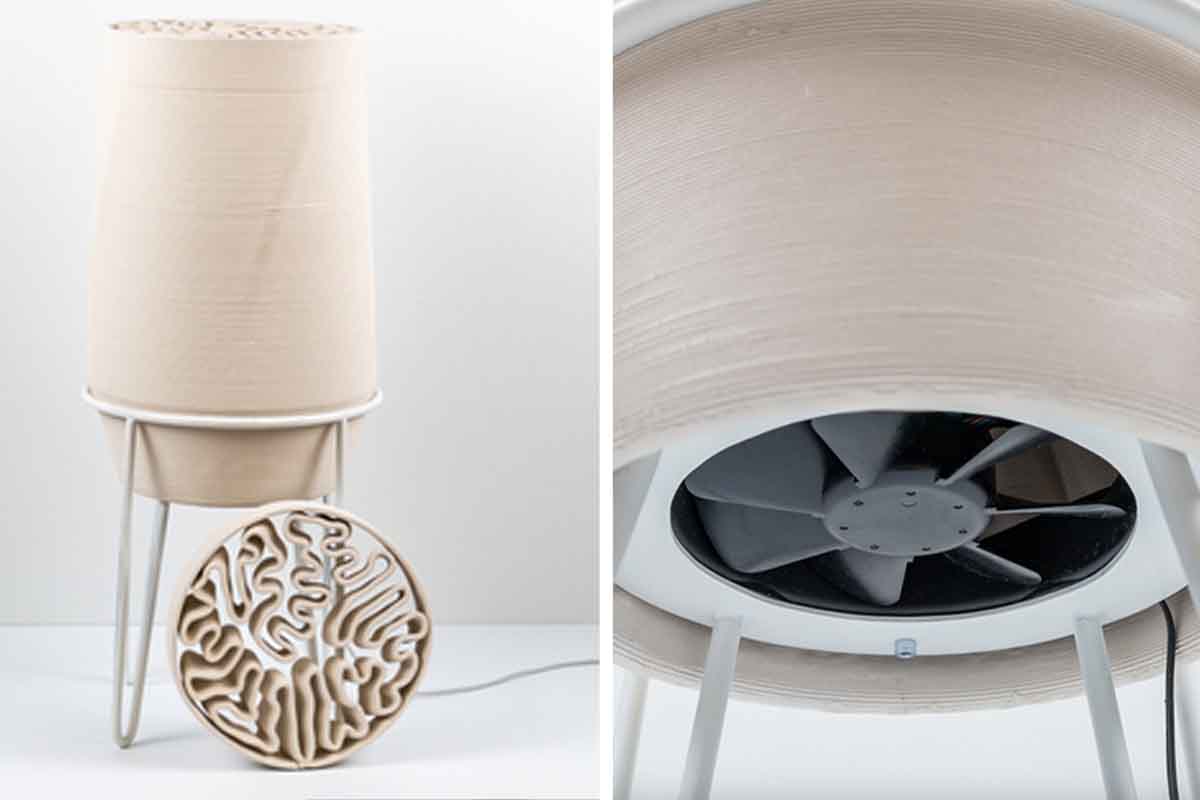
©Simon Pavy
9. 3D climate bricks
Along the same lines are 3D climate bricks, terracotta or ceramic modules designed to be placed in urban spaces, facades or public environments. Some models use fans powered by solar panels and rainwater collection systems. Here too the message must be kept clean: they often consume very little and use renewable energy to move air or water. The leap lies in reducing the work of the machine, leaving the heaviest task to matter.
10. The terracotta fridge without electricity
And then there is the domestic relative, less spectacular and perhaps more endearing: the fridge that works without electricity. Freeijis, created by Italian designer Caterina Falleni, takes up the principle of evaporative containers used in many hot areas of the world. An internal aluminum container, an external terracotta container, water in the cavity, evaporative cooling. It doesn’t replace the home refrigerator full of yogurt, medicines and Sunday leftovers, but it explains the meaning of this whole trend well: before plugging in a plug, it’s worth asking yourself if a material can already do part of the job.

@goenergyless/Facebook
Terracotta alone won’t save summers in Italian homes with hot roofs, asphalt under the windows and buildings built without thought for shade. It would be a comfortable fairy tale, one of those that last the time of a rendering. However, these ten systems say something much less decorative: we have forgotten for too long that fresh air can be designed. In the walls, in the bricks, in the facades, in the courtyards, in the materials. The air conditioner comes later, when everything else has already failed.
You might also be interested in:
