
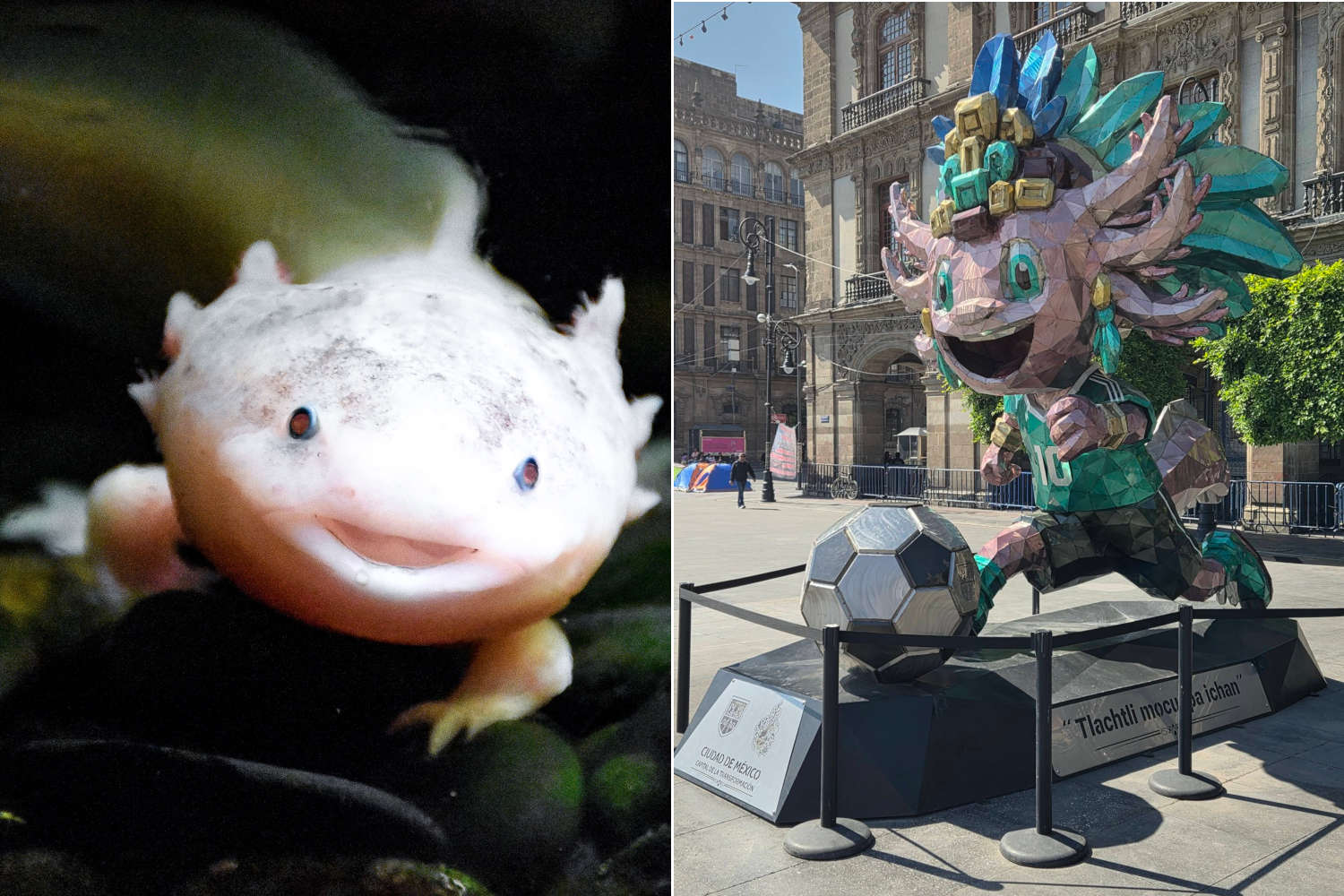
A magnetic smile printed on the walls of the subway, colorful sculptures dribbling in the capital’s key hubs and unprecedented media exposure. With the start of the 2026 World Cup, Mexico City has rediscovered itself as completely “axolotlized”. The famous “water monster”, the neotenic salamander once venerated by the Aztecs, has become by popular acclaim the unofficial mascot of the sporting event.
Yet, behind this colossal urban branding operation led by local institutions, lies a dramatic ecological short circuit. While his stylized effigy welcomes millions of fans from all over the world, scientists launch the ultimatum: the royal species risks disappearing forever from its natural habitat in less than twelve months.
From pop hyper-representation to biological desert
The axolotl’s popularity has transcended the boundaries of biology since it became a global icon thanks to soft toys, social networks and video games Minecraft. Scientists around the world study its miraculous cellular regeneration capabilities, capable of rebuilding limbs, tissues and even portions of the brain. But this virtual and commercial overexposure contrasts violently with the data on the ground.
The censuses carried out by the Ecological Restoration Laboratory of the National Autonomous University of Mexico (Unam) photograph a vertical collapse. If in 1998 there were around 6,000 specimens per square kilometre, in 2014 the figure had already dropped to 36. In the last two years of direct monitoring in the canals, researchers have not sighted a single individual, confirming their provisional presence only through traces of environmental DNA taken from the water.
The plagues of Xochimilco: pollution and invasive species
The biological cradle of this amphibian, the network of canals and floating islands (chinampas) of Xochimilco, is an ecosystem of immense value protected by UNESCO and the Ramsar Convention, but today reduced to the limit. The causes of the disaster are multiple and closely connected: the explosion of over 300 illegal settlements pours sewage laden with salmonella and Escherichia coli into the canals.
Added to this deadly chemical mix are solid waste, wild urbanization and the presence of invasive alien species such as carp and tilapia, introduced in the 1950s, which devour axolotl eggs and young. Ecologists denounce that the last institutional management plan dates back to 2005, highlighting a lethal political inertia summed up in the activists’ provocative phrase: “axolotls don’t vote”.
The mass tourism of the World Cup and the challenge for the future
The shock wave of global tourism linked to the World Cup risks dealing the final blow to this fragile water balance. Moreover, government propaganda prefers to spend millions of pesos on promoting the urban image rather than on the recovery of traditional canals or the installation of plant biofilters.
The great football event therefore represents a historical crossroads: it can transform into yet another veil of commercial hypocrisy that hides its agony, or it can become the international sounding board to force the authorities into an immediate rescue plan. Emptying a symbol of global biodiversity of meaning to transform it into a simple tourism brand would be the greatest defeat, not only for Mexico, but for all of humanity.
You might also be interested in:
