

When you think of a tasting, glasses, vineyards and sommeliers immediately come to mind. One can hardly imagine that the same approach could be applied to an apple. Yet this is precisely what happens in Val Venosta, in Alto Adige, where this fruit is not only considered a healthy and daily food, but a product capable of expressing a complex sensorial identity, made up of surprising consistencies, aromas and aromatic nuances.
In this Alpine valley, where apple cultivation is an integral part of the landscape and local culture, the figure of the apple sommelier was also born. An expert who accompanies consumers and enthusiasts to discover the organoleptic characteristics of the different varieties, teaching them to recognize aromas, textures and flavors just as happens in the world of wine.
The goal is not to transform a simple apple into an elite product, but to help people observe more carefully what they eat every day. Because behind an apparently common fruit lies a universe of sensations that often goes unnoticed.
The territory that gives character to apples
@VIP
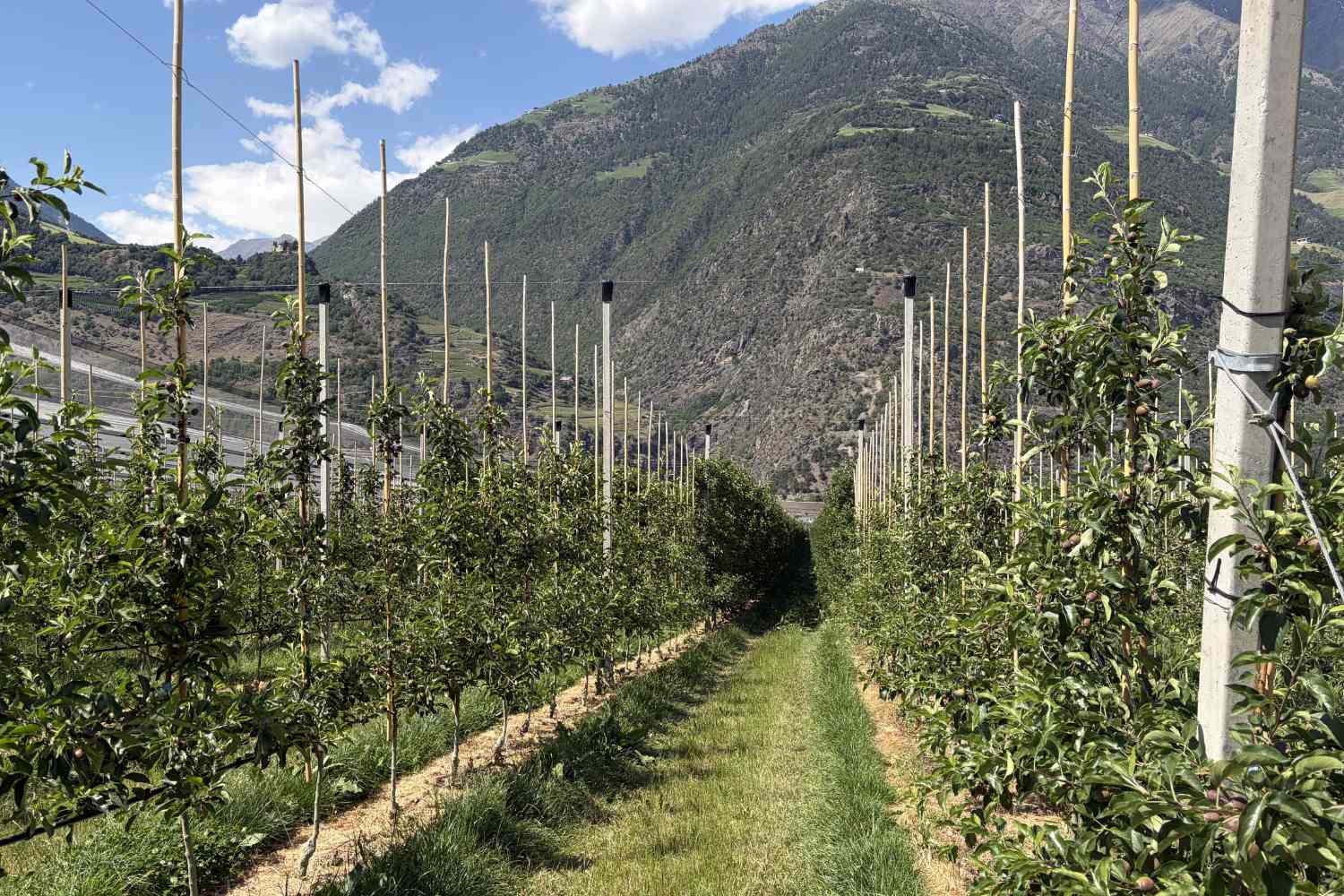
To understand why Val Venosta has become a point of reference for apple culture we must start from the territory.
Located in the western part of Alto Adige, the valley is characterized by climatic conditions particularly favorable to cultivation. Here the apple orchards benefit from a high number of hours of sunshine during the year, a generally dry climate and significant temperature variations between day and night.
It is precisely these temperature differences that play a fundamental role in the development of the characteristics of the fruit. Sunny days favor the formation of sugars, while cooler nights help preserve acidity and aromas. The result is a balanced, intense apple rich in sensorial nuances.
Added to this are the crops at high altitude, distributed along the slopes of the valley. The altitude further contributes to making the ripening process more gradual, allowing the fruits to develop greater aromatic complexity.
It is a natural heritage that can be found directly in the taste and consistency of apples.
@GreenMe
The apple sommelier
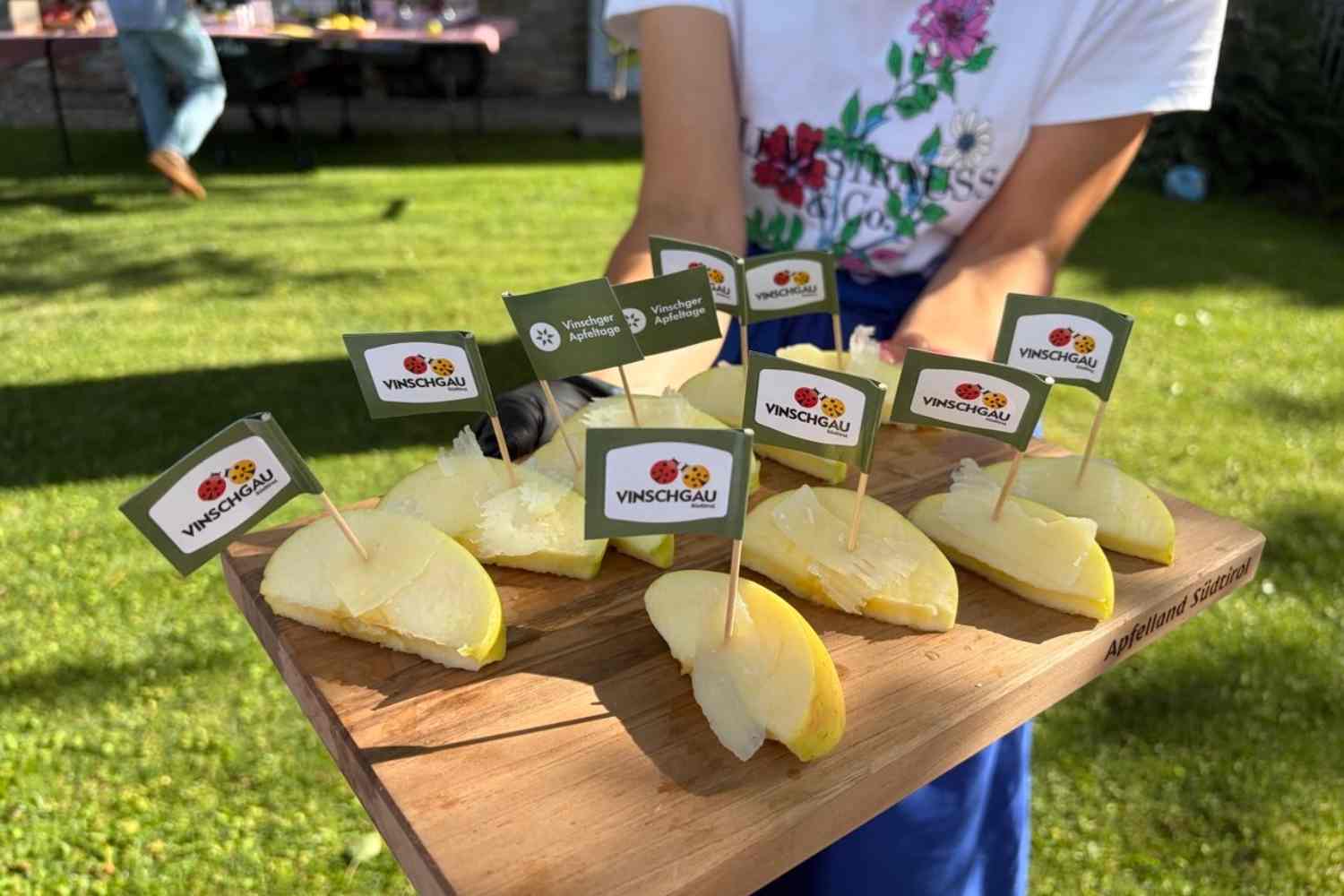
The figure of the apple sommelier was born precisely from the desire to enhance this richness.
As with wine, apples can also be analyzed through a precise sensorial path. The taster observes the fruit, evaluates its consistency, analyzes its taste and finally identifies the aromas that emerge during chewing.
The task of the apple sommelier is to guide the consumer on this journey, helping him to develop greater sensory awareness.
Many are surprised to discover that an apple can express dozens of different aromas and that each variety has a well-defined personality.
It’s a new way of looking at a familiar food, which allows you to grasp all its complexity.
The tasting begins with the sound of the bite: the crunchiness
The first rule of the apple sommelier is simple: to taste you must not rely only on taste. In fact, the tasting begins with an element that is rarely taken into consideration: the sound.
When you bite into a particularly fresh and crunchy apple you hear a clear and decisive noise. That sound sensation represents the first indicator of the quality of the fruit.
Crunchiness is a characteristic much appreciated by consumers and depends on the internal structure of the pulp. A crisp apple immediately conveys an impression of freshness and vitality.
For this reason, professional tasters pay great attention to the first bite, considering it a fundamental part of the sensory experience.
The hardness
After crunchiness, other elements come into play that define the so-called texture of the apple. One of them is hardness. Some varieties require greater pressure from the teeth and provide a feeling of greater compactness. Others are softer and more delicate.
Then there is juiciness, one of the characteristics most loved by consumers. An apple rich in juice quickly fills the mouth and gives an immediate sensation of freshness.
Another important aspect is the fineness of the pulp. Some apples have a particularly soft and uniform structure, while others show a more pronounced texture.
The peel also contributes to the overall experience. Its thickness can influence the duration of chewing and the general perception of the fruit.
According to the Apple Flavor Wheel, used by tasting professionals, crunchiness, hardness, juiciness, fineness of the pulp and thickness of the peel represent the main parameters through which to evaluate the consistency of an apple.
The delicate balance between sweetness and acidity
After analyzing the structure of the fruit we move on to the taste. The two fundamental components are sweetness and acidity. It is from the balance between these characteristics that the personality of each apple is born.
The sweetness offers softness and roundness. It is the sensation that is perceived immediately and which makes the fruit particularly pleasant.
Acidity, on the other hand, performs a different function, it gives freshness and liveliness, stimulates salivation and makes the taste more dynamic.
The most interesting apples are often those that manage to harmoniously balance both components. A balance that depends both on the variety and on the environmental conditions in which the fruit is grown.
Also in this case the Val Venosta area plays an important role, helping to create apples characterized by a pleasant harmony between sugars and acidity.
An apple can smell like lemon, mango or honey
The most surprising part of the tasting, however, comes when we move on to the aromas.
Many imagine that an apple simply smells like an apple. In reality, experts distinguish numerous aromatic families that can emerge during tasting. First of all, there are citrus aromas, which are reminiscent of lemon zest, orange or lime.
Then there are green notes that evoke freshly cut grass, basil, celery and aromatic herbs. Some varieties instead develop tropical hints that recall mango, pineapple, banana or papaya.
Still others express aromas of pear, peach, apricot, kiwi and melon, creating a particularly rich and complex aromatic profile.
For those who taste an apple carefully it is almost like embarking on a journey through a small aromatic garden.
The scents of flowers hidden in the peel
Among the most fascinating shades are the floral ones. Some apples may resemble freshly blossomed rose, flower honey, lychee, muscat grapes or elderflowers.
They are often delicate aromas, which require concentration and a bit of training to be recognised. Yet they represent one of the most distinctive aspects of many varieties.
Apple sommeliers often recommend lingering on the scent of the peel before even biting into the fruit. It is here that many of the aromatic components manifest themselves most clearly. This simple practice allows you to grasp details that normally escape hasty consumption.
From cinnamon to walnut: the spicy notes
The tasting may reserve further surprises. In fact, some apples develop spicy notes reminiscent of cinnamon, fennel, anise, bitter almond, wood or walnut.
These are aromas that contribute to increasing the complexity of the sensorial profile and which explain why the apple pairs so well with many autumn and winter preparations.
Also in this case the taster tries to identify and describe the sensations perceived, building a sort of aromatic identity card of the fruit.
A new way of looking at the apple
Learning to taste an apple means rediscovering one of the most present foods on our tables.
It means slowing down, observing and paying attention to details that normally go unnoticed. It means understanding that behind every fruit there is a territory, a climate, the work of farmers and an extraordinary sensorial richness.
Val Venosta has made this awareness part of its production culture, helping to spread an approach that enhances not only the quality of apples, but also the relationship between man, environment and agriculture.
The next time we bite into an apple we can therefore try to do what a sommelier would do. Listen to the sound of the bite, evaluate the crunchiness of the pulp, look for the balance between sweetness and acidity and let ourselves be guided by the aromas.
We may discover that inside such a simple fruit lies a much richer story than we imagined. And that, at least for a few minutes, even an apple can be tasted like a great wine.
Why you should choose organic apples (especially if grown with passion)
