
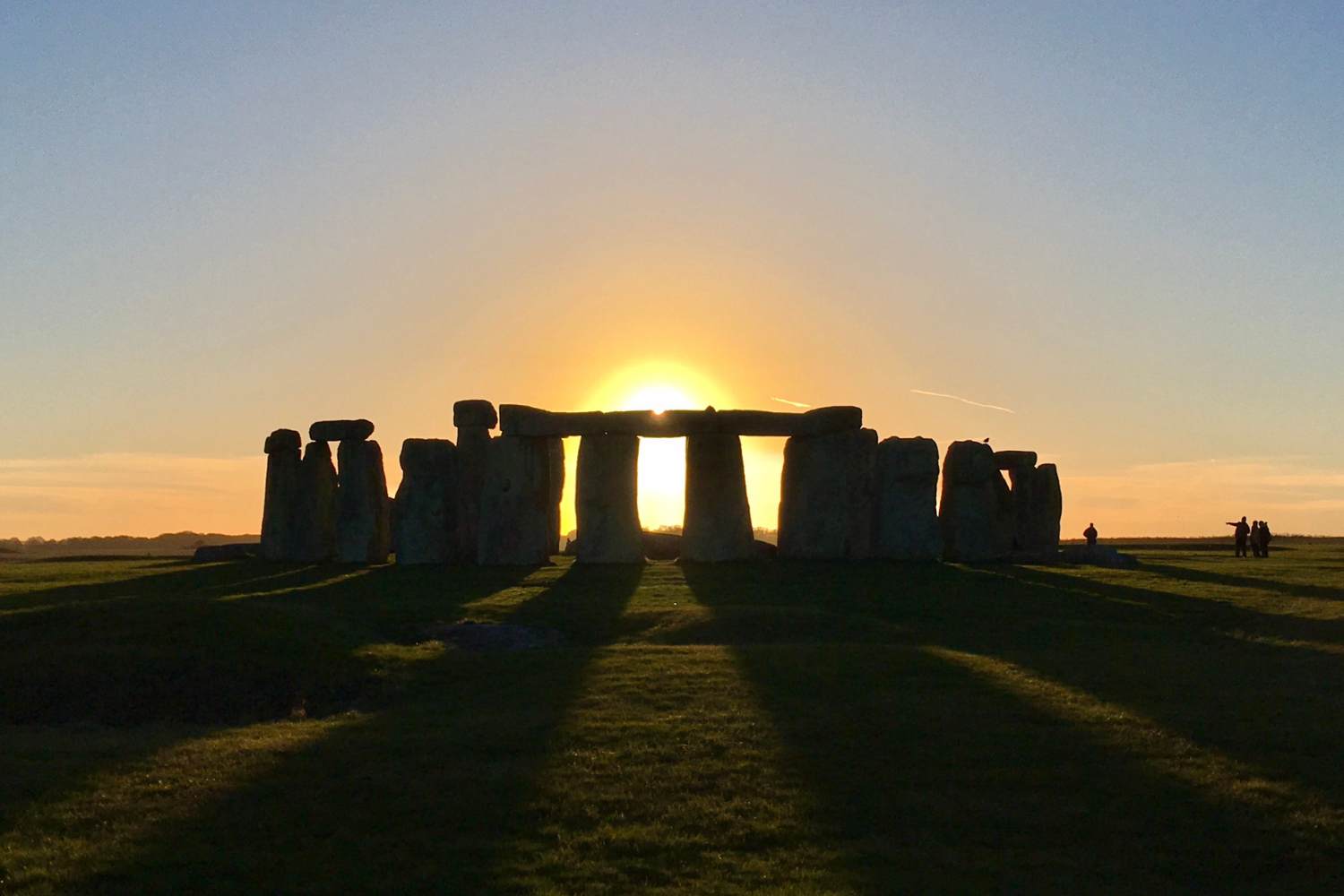
Tens of thousands of people standing in the dark, wrapped in cloaks, wreaths of flowers in their hair, their eyes fixed on those thousand-year-old stones. Every year, on the night between 20 and 21 June, Stonehenge transforms into something unique in the world. And the good news is, you don’t have to be there to hear it: you can experience the dawn of the summer solstice 2026 live streaming, for free, from wherever you are in the world.
Why the summer solstice is so special at Stonehenge
Stonehenge is not a monument born by chance: it was designed with extraordinary astronomical precision between the Neolithic and the Bronze Age (between 3000 and 2000 BC). During the summer solstice, the sun rises exactly in alignment with the Heel Stone – the Heel Stone – and its first rays penetrate to the heart of the circle, illuminating the central altar in an effect that still leaves us speechless today.
More recent studies, including research conducted by the University of Birmingham as part of the Stonehenge Hidden Landscapes project, continue to reveal how this landscape was part of a much larger ritual and astronomical system than previously thought. Not just an isolated monument, but the centerpiece of a sacred territory that stretched for miles. A complexity that makes each solstice dawn even more full of meaning.
The collective ritual that unites druids, hippies and curious people from all over the world
The suggestion of the solstice at Stonehenge goes far beyond the astronomical phenomenon. Every year the event brings together families, young people, tourists, scholars, modern druids and the simply curious. In 2025, around 25,000 people attended in person, while more than 400,000 followed the live stream from home, according to figures released by English Heritage.
THE’English Heritagethe body that manages the site, exceptionally opens free access to the internal stone circle during this special night: it is one of the very few moments of the year in which it is possible to walk among the stones, normally fenced. The celebration begins on the evening of June 20th with sunset and continues until dawn on June 21st, in a vigil that combines millenary tradition and contemporary spirit – and which in recent years has also taken on an increasingly conscious dimension in terms of connection with nature and reflection on seasonal cycles.
When does the summer solstice 2026 take place
The summer solstice 2026 falls on the night between Saturday 20th and Sunday 21st June. According to official information from English Heritage:
How to follow the solstice live streaming from home
To give everyone the chance to experience the summer solstice at Stonehenge, again this year English Heritage is organizing a free live stream on:
They will be broadcast two separate live broadcasts: one for sunset, on the evening of Saturday 20 June (starting at around 8pm BST), and one for sunrise, the real highlight, in the very early hours of Sunday 21 June.
Beware of fake Facebook pages that are sometimes created around this event: English Heritage recommends following only official channels and never providing payment details to alleged organisers.
If you want to be there in person instead: tips for making the most of it
Stonehenge Summer Solstice FAQ
What is the summer solstice and why is it celebrated at Stonehenge? It marks the longest day of the year. At Stonehenge the rising sun aligns with the axis of the monument, highlighting its extraordinary astronomical design.
When will the summer solstice at Stonehenge be held in 2026? On the night of Saturday 20 to Sunday 21 June 2026, with sunrise expected at around 4.52am (UK local time).
Can visitors enter the stone circle during the solstice? Yes. Free and managed access allows you to walk among the stones for several hours around dawn.
Do I need a ticket? No, entry is free and open to all, but there are security checks and crowd management.
What time do I have to arrive to get a good seat? Many people arrive as early as 1:00 am to 2:30 am. The earlier you arrive, the easier the entrance and the better the view.
Is there a dress code? No, but many wear capes, flower crowns, or nature-inspired clothing. The important thing is to dress warmly and with sturdy footwear.
Can I visit the visitor center during the solstice sunrise? No, it opens later in the day; Minimal services are available during Early Access.
Is the event suitable for children? Yes, but be prepared for late hours, large crowds and limited seating – bring warm layers and keep little ones close in the dark.
Is the summer solstice busier than the winter solstice? Yes, it draws much larger crowds — often tens of thousands of people — than the smaller winter gathering.
What happens if it’s cloudy at dawn? The gathering takes place anyway: even without a visible dawn, the participants mark the seasonal turning point with the collective ceremony. And often, in the clouds, something magical happens anyway.
Are visitor facilities open during solstice access? Early access to Solstice operates separately from standard times; the main visitor center usually opens later in the morning.
Article updated with official times and methods of the Summer Solstice 2026 released by English Heritage. It is recommended to check for any last minute changes on official channels before participating in person.
