
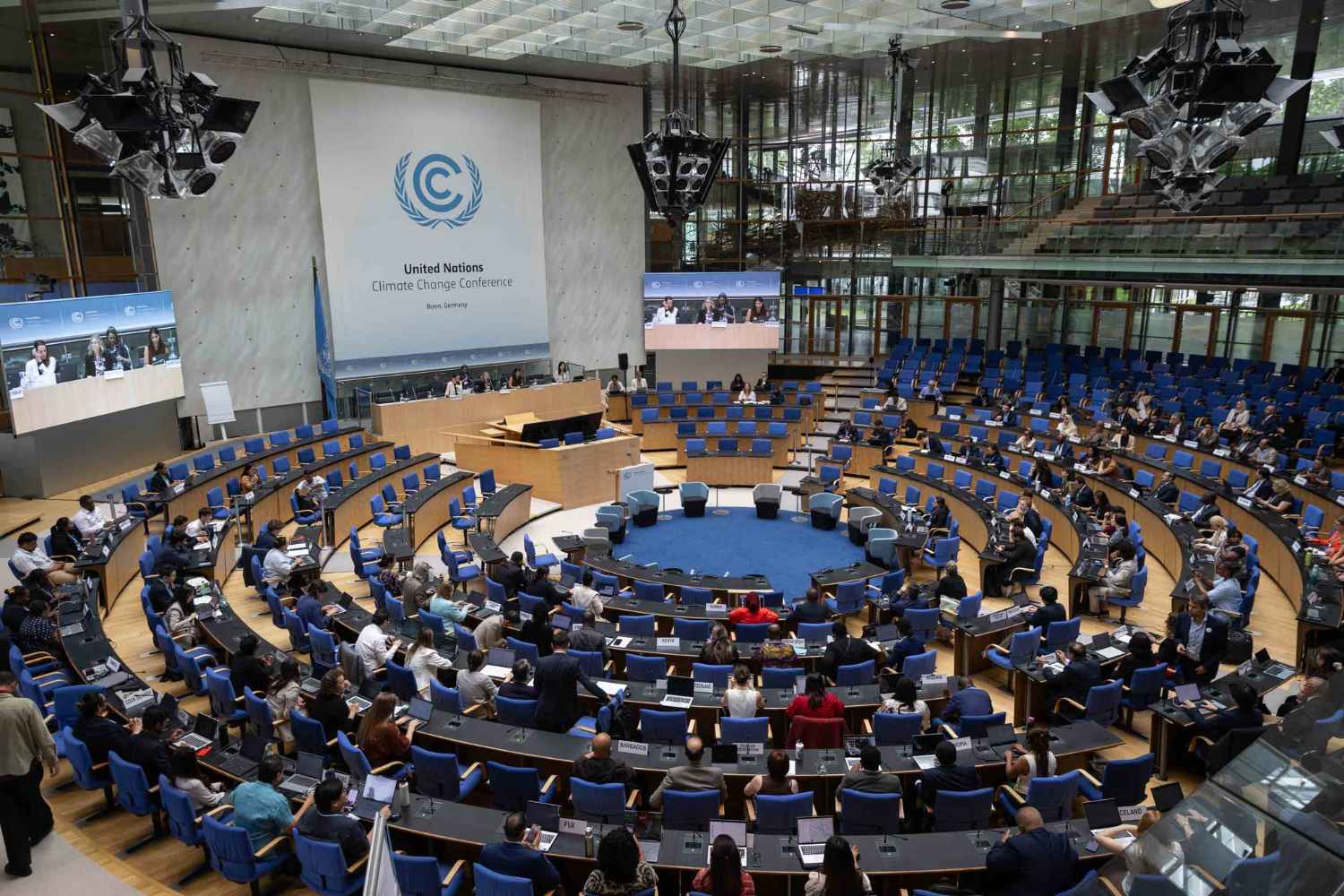
More than preparing the way towards COP31, the intermediate climate negotiations in Bonn have photographed the state of climate multilateralism in 2026: a system that continues to produce dialogue and compromises, but which is increasingly struggling to transform commitments into operational decisions.
The two weeks of work on SB64, concluded on 18 June in Germany, should have consolidated the agreements reached at COP30 in Belém. Instead, the discussion stalled on the most delicate issues: climate finance, adaptation and implementation of commitments already undertaken. What is striking is not only the absence of decisive results, but the political climate that accompanied the negotiations.
View this post on Instagram
Politics enters the negotiating rooms
According to the Italian Climate Network, present in Bonn with its own delegation, the intermediate sessions showed a strong politicization of the discussion. “The negotiating rooms have been highly politicised,” observes the organisation, highlighting how geopolitical divisions have run through most of the dossiers under discussion. The result has been an almost permanent stalemate between developed and developing countries. The former accused of wanting to dilute the discussion on financial commitments; the latter concentrated on defending positions considered essential to guarantee equity and economic support for the transition. The central issue remains that of resources. In Bonn it was not possible to break the deadlock on financing for climate adaptation, despite the commitment made in Belém to triple the funds allocated to the most vulnerable countries. Yet it is precisely here that the credibility of the negotiation is measured. Without funding, climate goals remain statements of principle.
The only positive sign
The exception comes from the Just Transition table, considered by the Italian Climate Network “the only one capable of making concrete progress” during the two weeks of work. Progress has been made on the Just Transition Mechanism, the instrument that should accompany workers and territories in the energy transformation. An important progress, but still preliminary and far from fully operational. UNFCCC Executive Secretary Simon Stiell highlighted this dossier as one of the few concrete achievements of Bonn, saying that “important steps had been taken to turn the promise of the Just Transition Mechanism into reality”.
Stiell’s Call
However, Stiell’s final statement contains above all a political warning. The UN climate chief acknowledged that “significant divisions remain” and that “important work remains to be done” before COP31. Even more significant is the criticism aimed at delegations that continue to subordinate their commitments to those of other countries. In the negotiations, he said, there has been a “you first” tendency, with groups refusing to proceed “unless others take the first step.” An attitude which, explains Stiell, represents “the recipe for a stalemate”. The UN secretary also recalled that it is no longer time to question existing agreements: “We cannot afford to reopen previous decisions, renegotiate existing objectives or take steps backwards.”
The Antalya test
A clear contradiction therefore emerges from Bonn. The international community continues to recognize the centrality of the 1.5 degree limit set by the Paris Agreement, but proceeds at a speed that appears incompatible with that of the climate crisis. COP31 in Antalya will be called to bridge this gap by demonstrating that the commitments already made on adaptation, finance and emissions reduction can become concrete tools for implementation.
