
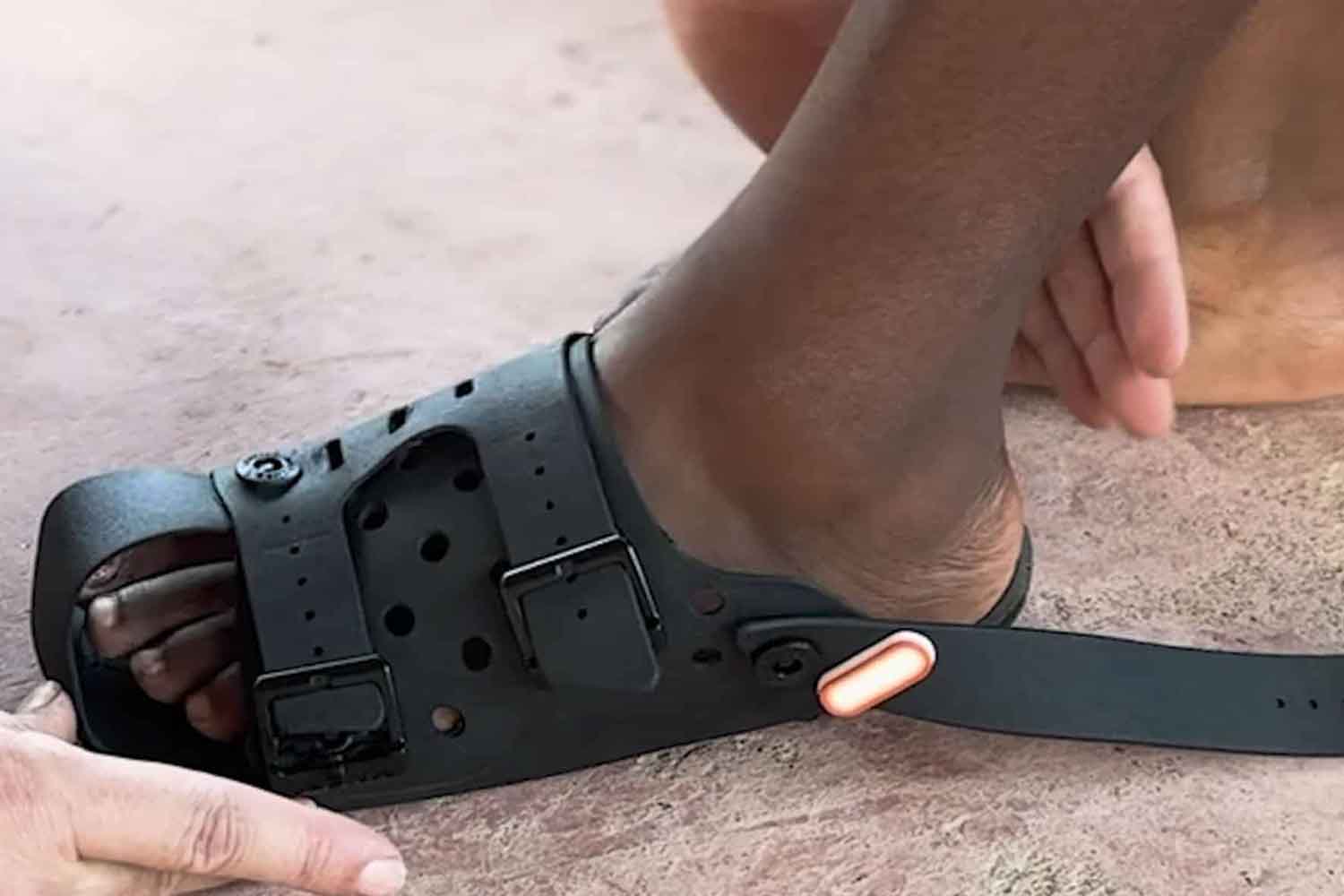
A baby’s shoe can become small in a few months. The toe begins to press, the heel comes out badly, the sole is still usable and the object ends up in a wardrobe, in a bag, in a collection of used clothes. In many families it is a normal nuisance, an expense to be taken into account. In other parts of the world, however, that same growth weighs much more: shoes that are too tight, shoes cut in the front to allow the toes to come out, children forced to walk barefoot on earth, mud, stones and contaminated soil.
From such a concrete scene, The Shoe That Grows was born, the “shoe that grows”: an adjustable model designed to accompany children’s feet for several years, lengthening and widening up to five sizes. The idea comes from Kenton Lee, who in 2007, while working in a small orphanage near Nairobi, Kenya, noticed a little girl wearing shoes that were now too small, open at the toe to make room for her toes. The foot grew, the shoe stayed put. From there a very practical question arose: why does a shoe intended for children have to remain limited to just one size?
How it works
The system is simple. The shoe can be adjusted in several points thanks to buckles, buttons and closures that allow you to change its length and width. So it can follow the growth of the foot without having to be replaced after a few months. According to Because International, the organization carrying out the project, the model can expand up to five sizes and is designed with resistant materials, suitable for daily use even in difficult contexts.
The strength of the idea lies precisely in its essentiality. It’s a shoe, it does the job of a shoe, but try to do it for longer. In many vulnerable areas, receiving a pair of shoes only once helps a little: children grow quickly, sizes change, what was fine at the beginning of the year can become tight after a few months. With an adjustable shoe, the protection lasts longer and the donation becomes more effective.
Today, The Shoe That Grows has been distributed in over 120 countries, with more than 500,000 pairs reaching children and communities in poverty or crisis. These are important numbers, above all because they talk about a very small, almost ordinary object, yet capable of impacting daily life.
Health, street and school
Walking barefoot or with broken shoes exposes children to cuts, abrasions, parasites and infections. The World Health Organization estimates that soil-transmitted helminth infections affect approximately 1.5 billion people worldwide, mostly in the poorest communities, where access to clean water, sanitation and adequate sanitation remains limited.
The CDC, the US health body, also reminds us that some infections can spread through direct contact with contaminated soil, even by walking barefoot. A shoe, in this case, becomes a very simple physical barrier: a sole between the foot and the ground.
Then there’s school. A child who is injured, ill, or without proper shoes may miss lessons and activities. In some rural communities, getting to class means walking for a long time on dusty or muddy roads. For this reason The Shoe That Grows is also presented as a tool to reduce a barrier to education: it protects feet, lightens family expenses and makes it easier to go to school continuously.
Made in Kenya
Since 2019, all pairs of The Shoe That Grows have been produced in Mombasa, Kenya, at Umoja Shoe Company. It is a significant choice, because it brings part of the production close to one of the territories where the shoes are distributed. According to the organization’s official materials, every 10,000 pairs produced support nine full-time jobs for one year.
The donation program has a very concrete threshold: 10 dollars finances a pair of shoes for a child in Kenya, also supporting distribution operations. For many people it is a small expense. For those who receive those shoes it could mean walking better, protecting themselves more, going to school with fewer obstacles.
In 2018, the United Nations also discussed the project in an in-depth study linked to the Sustainable Development Goals. The frame is large, but the object remains tiny and very concrete: an adjustable sandal, designed to last, protect and reduce waste.
A shoe that lasts longer can limit replacements, shipments, waste and accumulation of products used for a short time. The main value remains social: it starts from the foot of a child, from the road he has to travel, from the family who has to choose how to spend the money, from the school which becomes a little more accessible. A moved buckle, a sole that holds up, a few sizes bigger. Sometimes all you really need is a better made object.
You might also be interested in:
