
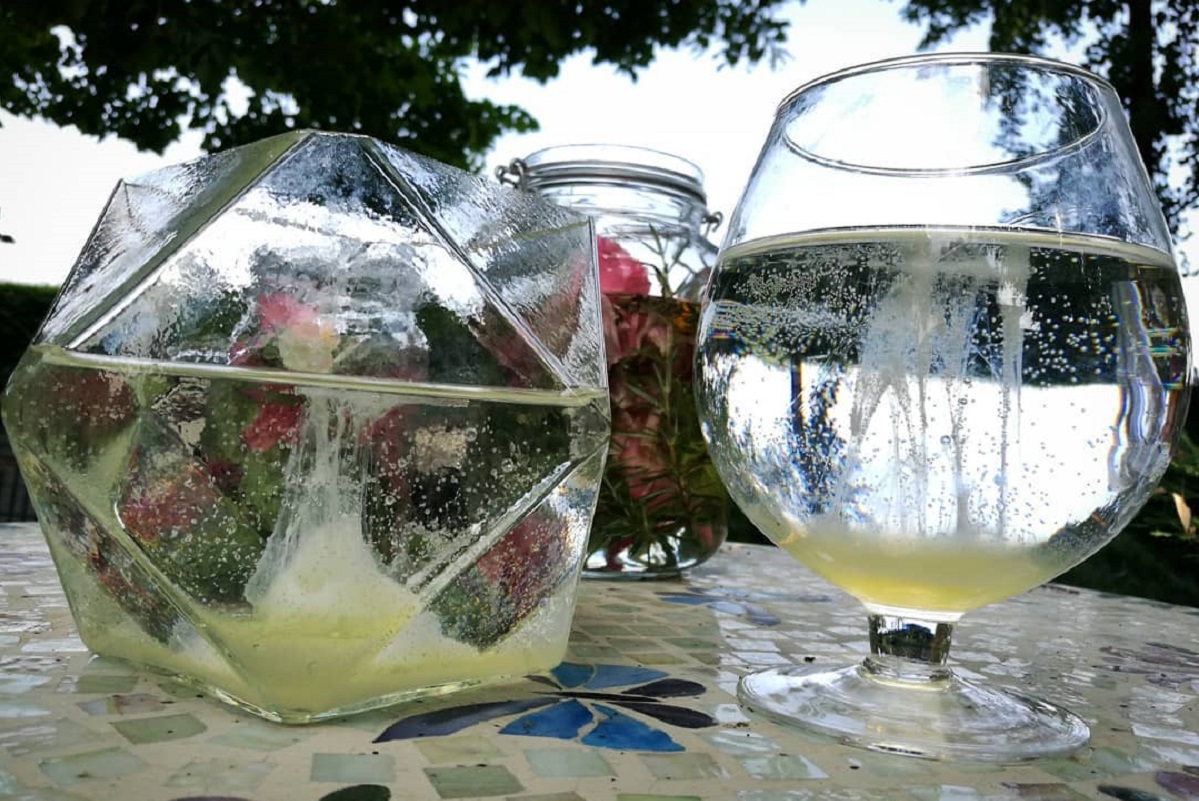
On a night suspended between reality and legend, between bonfires and whispers, Florence prepares to experience one of its most mysterious rites: the boat of San Giovanni. A tradition that combines superstition, faith and predictions for the coming year, between peasant magic and ancestral rites.
The boat of San Giovanni is one of the oldest traditions of the city of Florence (and not only), which is celebrated on the night between 23 and 24 June. A rite with very ancient origins, halfway between sacred and profane, and whose purpose is to predict how the entire year to come will go.
This is an event very similar to the one in honor of Saint Peter and Paul, celebrated in Rome on 29 June, i.e. the so-called Barque of Saint Peter and Paul.
According to ancient peasant tradition, to see the boat of San Giovanni you need very few ingredients, namely a glass or plastic container, water, approximately a finger, and an egg white.
The magic takes place on the night between 23 and 24 June, on the magical night of San Giovanni; here’s what to do:
The following morning, you can admire the boat of San Giovanni and, depending on the position of the sails, you can predict how the year will go.
View this post on Instagram
The shape that egg white takes on, driven by the thermal variation between night and dawn, recalls the sails of a boat: open and unfurled sails indicate luck and success; sagging sails or indistinct shapes, on the contrary, could portend a difficult or stagnant year.
The origins of the tradition of the boat of San Giovanni
The tradition of the boat of Saint John is linked to Christianity, which integrated this pagan festival, also associated with the summer solstice, into its liturgy.
Furthermore, there are numerous popular beliefs around this anniversary; the oldest tells that during the night of June 24th a beam of fire crosses the sky, and on it are Herodias and her daughter Salome, who had obtained the head of Saint John the Baptist on a silver plate from Herod.
According to the older ones, however, at dawn on June 24th if you turn your gaze towards the sun you can glimpse something dark; and it is believed that whoever among the marriageable girls manages to see the head of the decapitated Saint John will marry within the year.
Read also: San Giovanni water: legends, how to prepare it and healing benefits
Finally, tradition says that those born on this night will have special powers and will be protected both from the evil eye and from negative and evil energies.
Pre-Christian roots: a solstice rite older than Christianity
To truly understand this ritual we need to take a step back from Christianity. The night between 23 and 24 June falls a few days after the summer solstice, a celebration that has its roots in Celtic tradition and was deeply linked to the agricultural world and the rhythms of the earth. Originally, the purpose of the rites was not Christian at all: they wanted to give more strength to the sun, which from then on slowly began to weaken, with the days becoming increasingly shorter until the winter solstice.
When Christianity spread, it felt the need to legitimize these ancient agrarian and solar cults by linking them to an important figure in the history of faith, and so it was that the birth of Saint John the Baptist ended up overlapping almost perfectly with the pre-existing pagan calendar. It is no coincidence that this same night is also known as “witches’ night”: it was in fact believed that it was one of the moments of the year in which witches gathered for the sabbat, a legacy of ancient pre-Christian female cults which only later became associated, in the popular imagination, with the figure of the devil. The rite of the boat with the egg white, therefore, is only one of the many divinatory practices linked to water that have been preserved to this day, together with the collection of herbs and the famous water of San Giovanni.
Regional variants: from Piedmont to Sardinia
Similar rites are also found in Southern Italy, where the egg was used to predict the future of crops or the outcome of an imminent marriage. In Campania, for example, marriageable girls looked at their egg whites to find out if they would find a husband within the year.
The beliefs linked to this magical night do not stop at Tuscany and Campania, but cross the entire peninsula with surprisingly different declinations. In Sardinia, where the tradition of the solstice remains particularly heartfelt, the celebrations open on June 21st with the fireworks celebrating the summer solstice and end on June 29th with the feast of Saints Peter and Paul.
Here the most widespread ritual does not involve the egg, but the fire: jumping over the bonfire, holding hands, is a gesture that once served to establish bonds of friendship or comparison destined to last a lifetime. In the Alps, particularly in Piedmont, the night of San Giovanni is intertwined with the folklore of the “masche”, the witches of the local tradition, while in many regions of central and northern Italy the custom of the so-called “guazza di San Giovanni” persists: a basin with aromatic herbs such as St. John’s wort, lavender, rosemary and lemon balm left out all night, whose water is then used in the morning to wash the face and hands, in a gesture of purification and good hope. Finally, in Rome, the night is linked to an even different ritual: that of the snails eaten in the ancient taverns, whose horns would once have been considered protective against misfortunes.
What really happens to egg white: the scientific explanation
It must be said, in fairness, that the scientific mechanism behind the “boat” is more subtle than is usually said. The actual coagulation of egg white proteins — what is observed, for example, when cooking an egg — is a denaturation process caused by exposure to heat, acids, salt solutions or mechanical stress such as beating, and typically occurs starting from temperatures of around 60°C: conditions that a night outdoors, however warm, cannot replicate. What we observe in the “St. John’s boat” is therefore a different and more delicate phenomenon: the egg white, immersed in water for several hours, hydrates and slowly relaxes, while its proteins – in particular ovomucin and ovalbumin, which naturally give it a filamentous structure – reorganize on the surface creating the characteristic sail or plume shapes.
The temperature range between night and dawn, together with the minimal movements of the water and surface tension, contributes to “sculpting” these shapes, which however remain unpredictable and never completely the same. It is therefore not a question of real “cooking”, but of a natural play of hydration and surface tension: science here explains the “how”, leaving intact the charm of “what it means”, which remains up to everyone’s interpretation.
Believe it or not, on the night between 23 and 24 June, an egg white is enough to read the future. The real magic? It lies in rediscovering ancient gestures that combine past, present and a pinch of mystery.
Have you ever tried to “read” your St. John’s boat?
You might be interested in other ancient traditions:
