
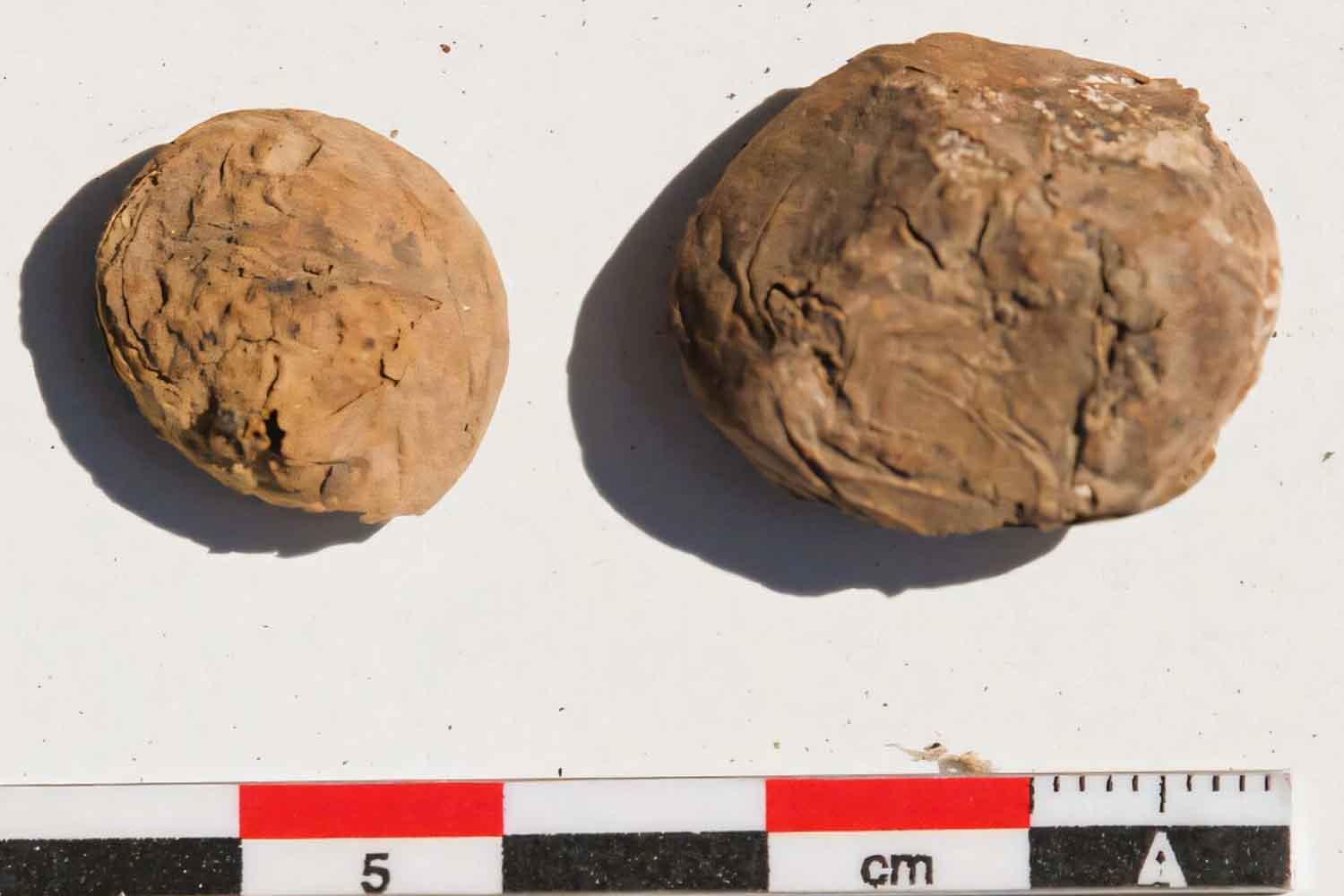
In the desert of southern Peru, where the sand preserves better than any archive, two shriveled, light, almost empty potatoes have re-emerged. Looking at them today they seem like two very poor remains, two things that in a modern kitchen would end up in the waste bin without too much ceremony. And instead those tubers have passed through about five centuries inside a ceramic container, protected by the aridity of the Acarí valley and by a food technique so effective that it seems to have been invented yesterday: the chuñothe Freeze-dried potato from the Andes. The study describing the finding, published in 2026 on Journal of Field Archaeologyidentifies the two specimens as freeze-dried potatoes found at the Inca site of Tambo Viejoa coastal administrative center of the Acarí Valley.
The potato has come a long way before becoming a universal side dish, fryer ingredient, canteen puree, Sunday dumpling, frozen bag stuck in the freezer. Its history was born in the Andes, between present-day Peru and Bolivia, where domestication began thousands of years ago, in a severe, high, cold environment, capable of yielding precious harvests and at the same time ruining them quickly. Right there the Andean communities learned to treat the tuber with very harsh practical wisdom: night frost, daytime sun, water, foot pressure, drying. A small food industry without machines, without plastic, without refrigerated warehouses. Just climate, experience and repetition.
A potato that resists
Two o’clock Inca potatoes they were found during excavations conducted in Tambo Viejo, inside a ceramic jar embedded in the floor, probably used as a storage container. There were two whitish-brown chuños in the jar, with bits of peel still attached to the wrinkled surface. Alongside the tubers, a fragment of Inca pottery and a deteriorated spindle also appeared, elements that helped place the find in the imperial period, between the 15th and 16th centuries.
The most interesting detail lies in the type of conservation. The chuño was created to solve a very real problem: the fresh potato, especially in hot climates, deteriorates rapidly, while some Andean varieties are bitter or toxic if eaten without treatment. The solution developed in the mountains was to expose the tubers to intense frosts at night and then let them thaw in the strong daytime sun. The cycle was repeated several times, until the internal humidity was drastically reduced. After this phase, the potatoes were trampled and left to dry. For the white chuñothe one recognized in Tambo Viejo, the process required an additional step: a long soak after freezing, followed by a new drying. The result was a light food, transportable and capable of being preserved for years.
Seen from here, from our habit of putting everything in the fridge and considering the expiry date printed on the package as a kind of domestic oracle, this technique almost seems like an ethnographic oddity. Seen from the Andes, it was organized survival. The cold of the night did the first job, the sun completed the rest, the hands and feet transformed a fragile tuber into a food reserve. Modernity would call it the supply chain. They had been practicing it for centuries, with a precision that had little that was romantic and much that was necessary.
From the mountains to the desert
Tambo Viejo is located on the southern coast of Peru, in an arid area where the conditions for producing chuño are simply lacking. The Andean frosts serve to create this food, and the Acarí valley offers another landscape: desert, fertile strips along the waterways, administrative centers created to control populations, work, products and travel. It is precisely this distance that makes the discovery so important. If the chuño was there, it means that someone had brought it from the high lands to the coast, within an extensive and well-organized logistical network. Tambo Viejo, according to archaeological reconstructions, was founded after the incorporation of the Acarí valley into the Inca empire and functioned as a control center in a strategic territory on the south coast.
The Inca empire, the Tawantinsuyu, held together plateaus, coasts, valleys, and very diverse communities through roads, warehouses, labor tributes, llama caravans, and impressive administrative capacity. The freeze-dried potato fit perfectly into this system: it weighed little, took up less space, lasted a long time and could feed workers, officials, communities and groups engaged in services for the State. Spanish chroniclers described the potato as a sort of “bread of the people”and the llama caravans transported preserved foods to the deposits scattered throughout the territory.
The comparison with bread helps a European reader to understand the cultural weight of this food. The potato in the Andes performed a similar function to that of cereals in many Mediterranean societies: daily basis, energy, supply, security. The chuño added a decisive advantage, because it made the crop available long after the time of harvest. In an empire without money in the modern sense and without alphabetic writing, the ability to accumulate and redistribute food became pure power. No proclamations, no textbook epics: sacks, deposits, cargo animals, dried tubers.
The rarity of the everyday
The paradox is precisely this: chuño was a common, perhaps fundamental, food, yet its archaeological remains are very rare. Organic matter decomposes, disappears, leaving faint traces. In the case of Tambo Viejo, two fortunate conditions worked together: the extremely dry climate of the Peruvian coast and the protection of the ceramic vessel. This is why the two tubers have reached us still recognisable, with their reduced shape, the contracted surface, the peel still partially attached. The only known comparable find dated back over a century ago in Pachacámac, also in Peru.
The discovery is also interesting because it puts indigenous knowledge back at the center, often treated as background. The Incas are remembered for the streets, the perfect walls, Machu Picchu, the quipu, the cities built in unlikely places. Then two dried potatoes arrive and move their gaze. An empire also lives on less monumental things: conservation techniques, supplies, food brought where it is needed, the ability not to lose a harvest when the climate changes. Inside those two tubers passes a form of concrete intelligence, the one that knows how to transform an environmental limit into a resource.
Now the researchers hope to use chemical analyzes to figure out which mountains those potatoes came from. It would be an important step, because it would allow the find to be linked to a more precise production area and, perhaps, to a transport route. From two tubers a small map could be obtained: hills, roads, warehouses, coast, imperial administration. Material history often works like this. It starts from a minimal object and forces the system that produced it to be put back together.
Food as infrastructure
These Inca potatoes they tell something that also concerns the present, without the need to force comparisons. In a world debating food security, the climate crisis, vulnerable crops and long supply chains, the chuño reminds us of a simple truth: preserving food well is as much a part of civilization as building roads or temples. The ancient Andean people had learned to use the cold, the sun and water to give food time. Time, when it comes to food, is almost as important as the harvest.
The discovery of Tambo Viejo, therefore, tells the story of the Incas from a side door, less solemn and much more concrete. Two potatoes closed in a jar, arrived from the mountain to the desert, remained there while the empire ended, the sand covered the floors and the world changed its language. Five hundred years later they are still intact enough to say one precise thing: an empire keeps itself standing even like this, with food arriving before hunger.
