
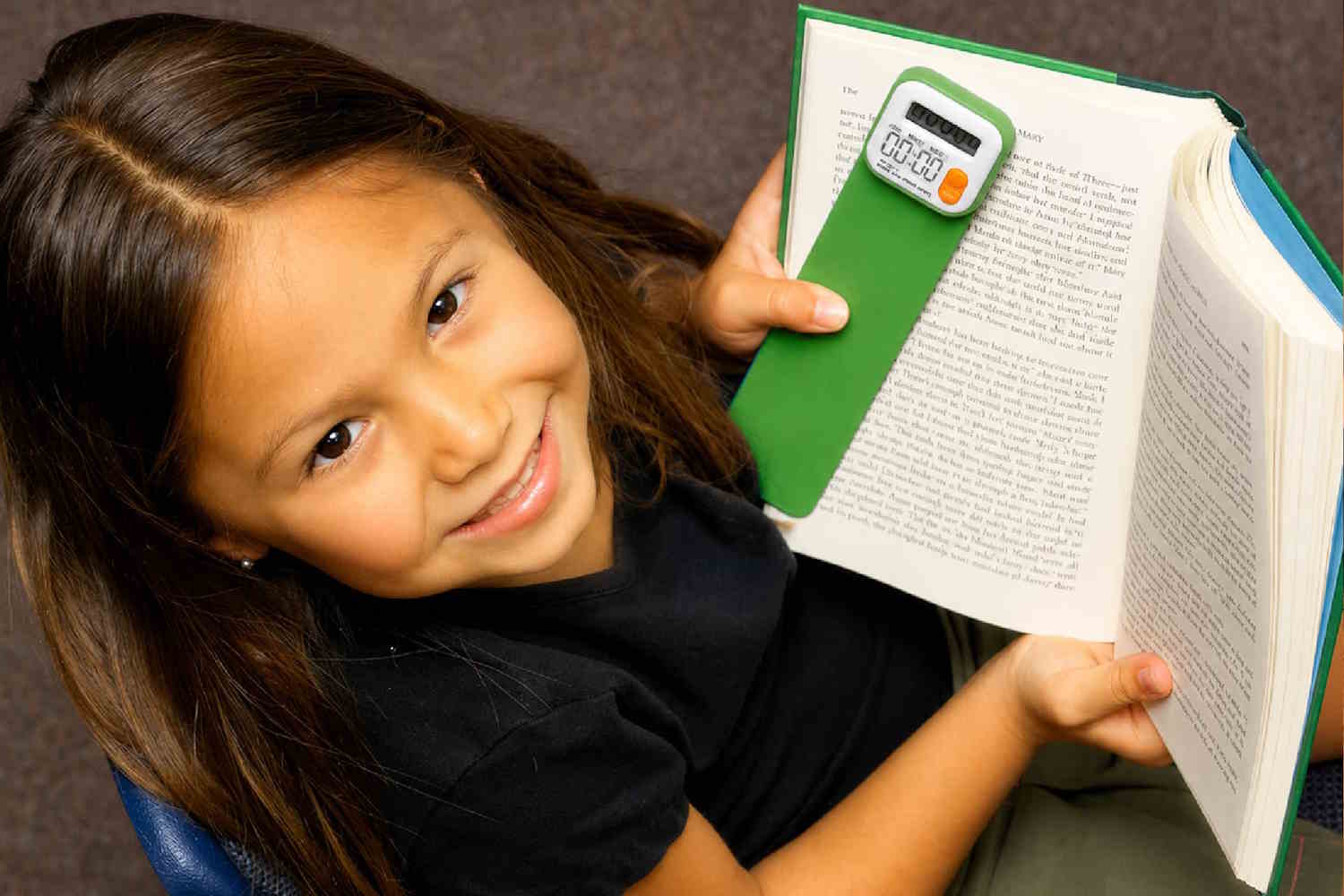
There is a tiny gesture that, in a house full of notifications, seems almost out of time: opening a book, slipping something between the pages, deciding to stay there for a few minutes. The Mark My Time electronic bookmark starts from this very simple scene. It has the shape of a normal bookmark, it remains inside the book, it barely appears with a small LCD display and it does only one thing: it measures the time spent reading.
The full name is Mark My Time Digital Reading Tracker Bookmark, an accessory designed especially for children and teenagers. The idea comes from the United States and seems to have been built precisely for those readers who need a concrete basis: a button to press, a timer that starts, the minutes that accumulate. No apps, no profiles, no notifications knocking on the door while you try to follow a story. Just paper, time and a small counter.
According to Istat, in 2024, 57.1% of people aged 6 and over have read at least one book in the last twelve months, including paper, ebooks, online books and audiobooks. The data seems encouraging, but it also tells of a fragile, often discontinuous habit that needs time, space and repetition to become truly daily.
Istat also reports that reading remains more widespread among the very young: between 11 and 14 years old the share of readers reaches 58.2%. Then, as we grow up, something thins out. According to data from the Italian Publishers Association, in 2024 the average weekly time dedicated to reading fell to 2 hours and 47 minutes, compared to 3 hours and 16 minutes the previous year. And here the electronic bookmark finds its small space: helping children and young people to transform reading into a measurable, concrete practice, less vague than a generic “you should read more”.
A timer between pages
©Eyeseeme.com
Mark My Time works immediately. Before starting to read you press the button, at the end of the session the counting stops. The time is recorded and can be consulted later. The manufacturer also indicates a countdown function with alarm and a cumulative timer capable of maintaining up to 100 hours of reading spread over multiple sessions. The format remains thin, made of plastic, designed to slip between the pages like any bookmark; in the upper part remains the small digital clock powered by a replaceable battery.
The interesting part lies in its technological poverty. This object is almost endearing in a market that tends to put Bluetooth, apps and synchronizations even inside a cereal bowl. Here the telephone remains out of the scene. For a child it can become a ritual: you open the book, press the button, off you go. A kind of countdown before the adventure, with the advantage of making visible a practice that often seems abstract. “I read” becomes “I read for twenty minutes”. And for many kids, accustomed to seeing steps, calories, hours of screen time and game results transformed into numbers, this can make a difference.
Reading as a habit
The strong point of the electronic bookmark lies precisely in the transformation of reading into a small daily challenge. Fifteen minutes may seem like a short time, but then it becomes an achievable threshold. Thirty minutes begins to feel like a milestone. The hours accumulated over the weeks give concrete, almost physical satisfaction, especially to those who struggle to immediately see the result of a book.
Of course, reading should remain a pleasure, otherwise it becomes yet another box to tick. However, many children also enter reading through a routine. They do it at school, when they have to record the minutes read at home. They do it with their parents, when they are asked to dedicate a quarter of an hour to a book before going to sleep. A tool like this can remove some friction: it measures instead of the adult, avoids continuous control, leaves the child with a small responsibility.
And here the discussion broadens. For years we have been talking about reading education as if it were enough to repeat that reading is good for you. Enrichs vocabulary, trains imagination, improves concentration, opens worlds. All true. However, to a teenager who has grown up in an infinite flow of stimuli, this formula may sound distant. The book asks for slow tempo. He asks to stay. He asks us to tolerate even the first pages, those in which the story has yet to take a breath. A timer, in its almost comical simplicity, can help right there: it makes the beginning bearable.
Small, useful, very concrete
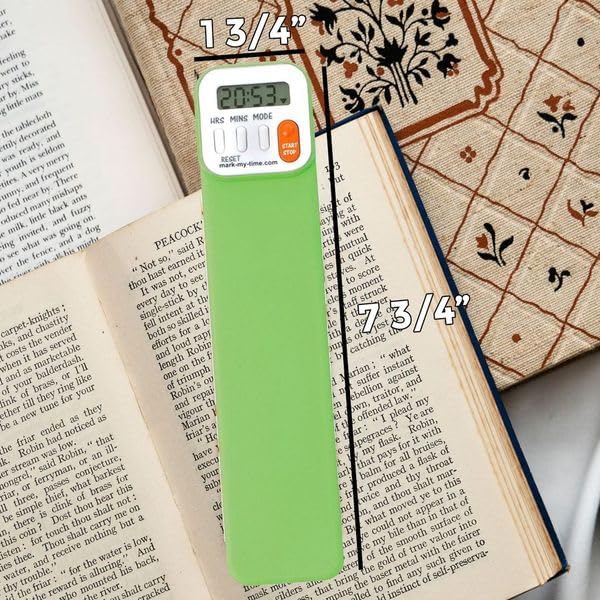
The Mark My Time remains a basic accessory. On the official website it is also presented as a useful tool for homework, timed math exercises, music practice, cooking or interval training. The indicated price is $11.95, even if the product is currently sold out in the official store, it is also available on Amazon in a version with built-in light:
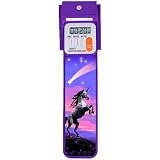
Mark-My-Time Digital Bookmark with 3D Unicorn and Reading Light
It should be taken for what it is: help, not a magic wand. No bookmark alone will convince a boy to fall in love with novels, especially if around books are treated as tasks disguised as virtues. But an object like this can lower the entry threshold. It can work with those who love small challenges, with those who need to see progress, with those who find it reassuring to know that they have to stay on those pages for a defined time.
There is also a side advantage, perhaps the most sensible: the phone can stay away while reading. It doesn’t seem like much, today it’s almost an athletic act. Reading needs a sheltered space, even a short one. A quarter of an hour without scrolling, without checking messages, without opening a notification “just a second” and finding yourself ten minutes later inside a video of a stranger arranging the pantry by color.
The electronic bookmark will not change the fate of books. However, he can remember one concrete thing: the time spent reading exists, it weighs, it accumulates. Even when it seems like little. Even when it starts from ten minutes torn away from the phone, from the sofa, from distraction. Sometimes a page comes back into life like this: with a tiny button and a book left open on the bedside table.
You might also be interested in:
