
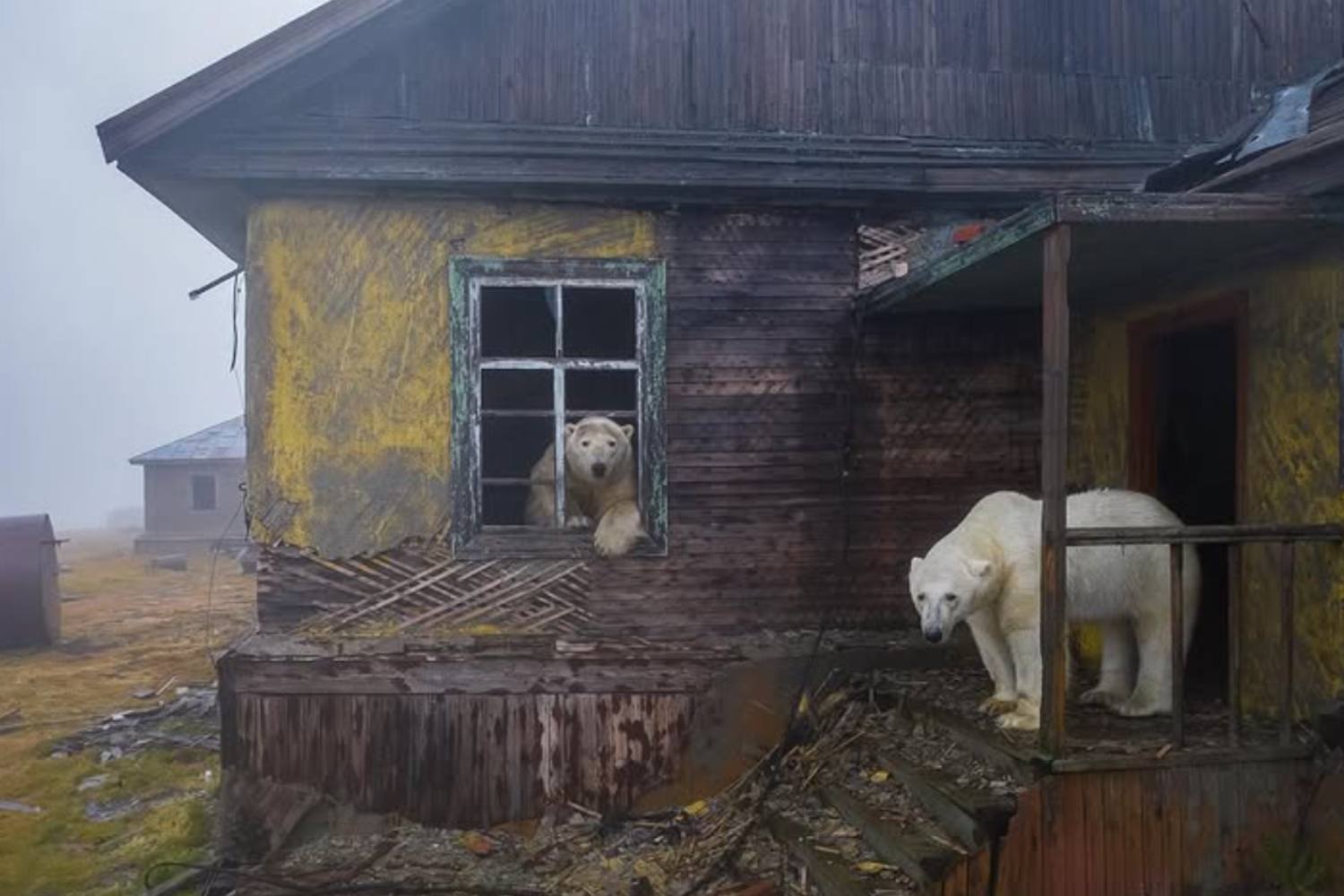
Russian photographer Dmitry Kokh, who specializes in capturing the wildlife and extreme panoramas of the Arctic, has captured a series of images destined to make history in nature photojournalism. During a summer expedition aimed at reaching Wrangel Island, the unusually cold temperatures had pushed the large mammals to move elsewhere, changing the Moscow reporter’s original plans.
The turning point occurred while sailing near Kolyuchin Island, a tiny strip of land covered by tundra just four and a half kilometers long and less than a kilometer and a half wide, located in the Chukchi Sea between Siberia and Alaska. As they approached the coast of the Chukotka Peninsula, the team noticed unusual movement behind the broken glass of a complex of abandoned buildings, and were astonished to discover that a group of polar bears were occupying the structures, behavior never before documented in that area.
View this post on Instagram
The return of nature among the remains of the Cold War
The outpost where the animals have settled is an old Soviet meteorological station, originally established in the 1930s to monitor the routes and the Arctic climate during the development of the region, then strengthened by the Soviet Union at the height of the Cold War and finally definitively decommissioned in the 1990s after the collapse of the USSR.
Today this ghost settlement, which also includes historical traces of walrus hunters, has changed its use. Polar bears do not use corridors and dilapidated rooms as permanent dens, but use walls to find temporary shelter from freezing winds and storms. To immortalize predators without taking risks and respecting the well-being of the fauna, Dmitry Kokh applied a rigorous non-disturbance tactic, avoiding direct approaches and taking shots from a distance.
View this post on Instagram
Climate adaptation and international triumph
The value of Dmitry Kokh’s visual work goes beyond aesthetic appeal, as the image of a bear looking out the window won first place overall in the wildlife category of the prestigious photography competition “Nature Photographer of the Year” (organized by National Geographic Russia). However, behind the visual poetry of these reconquered ruins lies the threat of global climate change. The structures created to study the environment are now an integral part of the landscape, a symbol of nature that reclaims its spaces. A phenomenon given by the fact that progressive overheating drastically reduces the extent of sea ice, forcing plantigrades to prolong their stay on land due to difficulties in hunting seals.
View this post on Instagram
You might also be interested in:
