
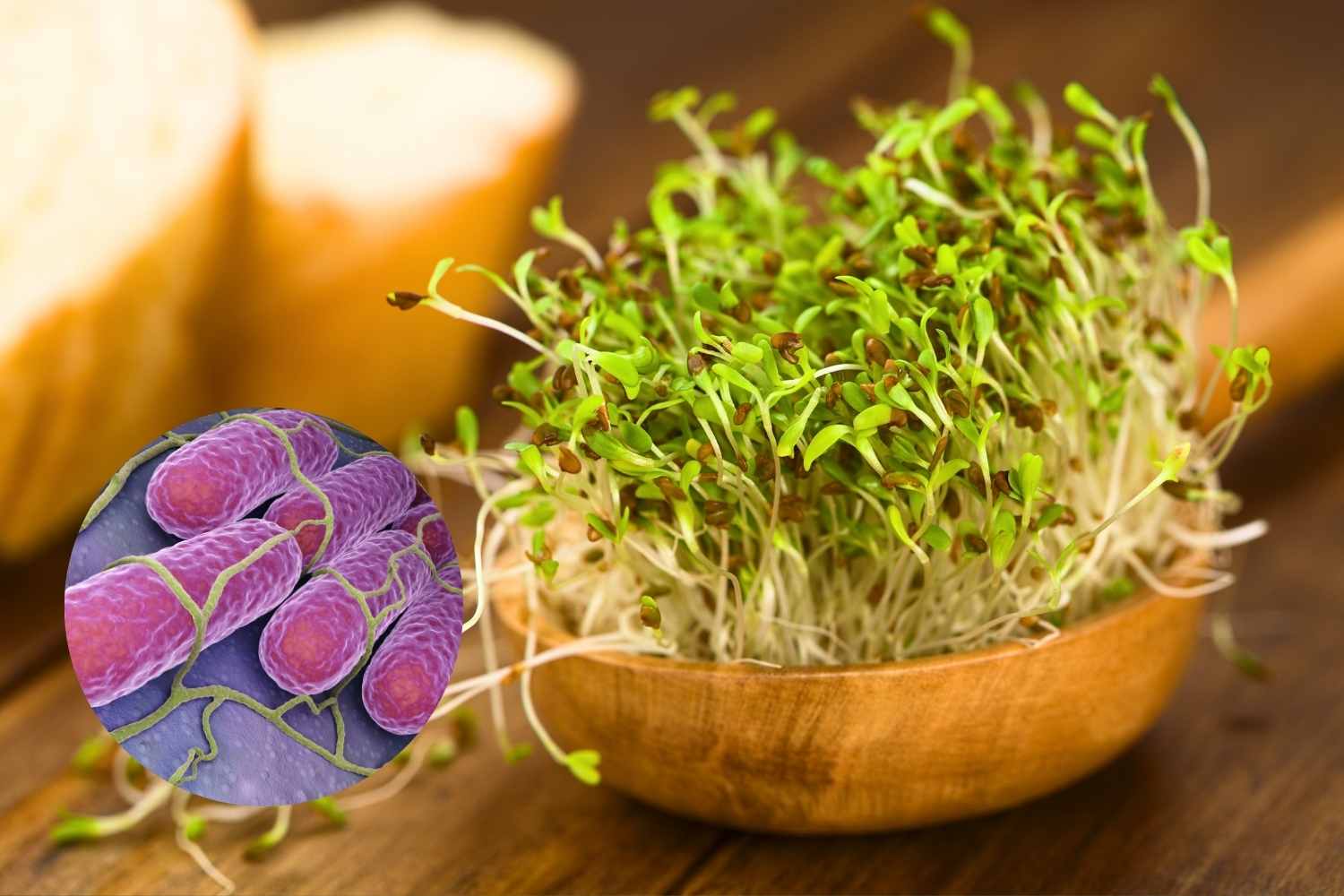
Three infections reported by Ireland to the European portal EpiPulse, dating back to April, were enough to reveal a network of infections that is crossing half the continent. From that first alarm, epidemiologists have pulled a thread which, from country to country, has reconstructed an outbreak from 109 confirmed cases of Salmonella Bovismorbificans11 states involved, with 18 hospitalizations and 2 deaths, which occurred in Finland. This is certified by the Rapid Outbreak Assessment published on 25 June by ECDC and EFSA, the two European agencies for disease control and food safety. The vehicle, investigators say, is alfalfa sprouts. And the contamination, in all likelihood, was already in the seeds before they even set foot in Europe.
Where it hit
Confirmed cases are concentrated between January and May 2026. Finland is the most affected country with 35 infections, followed by the United Kingdom with 30 and the Netherlands with 17. The full list also includes Austria, Belgium, the Czech Republic, Denmark, Germany, Ireland, Luxembourg and Spain. Adults paid the highest bill, with a clear female prevalence: seventy-seven women against thirty-one men, in an age range from 4 to 88 years.
The two deaths, both in Finland, involve one confirmed and one probable case. They had previous pathologies and one was already in terminal care, a detail that matters when evaluating the actual role of the bacterium.
An Indian seed, an Italian company
The traceability investigations led to a common supplier of seeds and, going back up the supply chain, to an origin outside the European borders: as mentioned, the alfalfa seeds appeared to be imported from India and then distributed across half of Europe. According to the reconstruction of ECDC and EFSA, the contamination would have occurred upstream, before the consignments arrived on the continent to be then distributed and processed in the various countries. Italy appears as a distribution hub: it is here that the suspect seeds were received, distributed and relabelled before continuing on to other markets. A position that also weighs in light of a precedent, a European Commission audit conducted in Italy between May and June 2025 had already detected the presence of sprouts produced by unregistered companies and found a lack of effectiveness in the controls.
What the authorities did
The response was that of the protocol, therefore withdrawal of the offending seed lots, recall of the derived products and destruction of the suspect batches. In some countries, production has been suspended, and new cases have decreased accordingly, in fact already in June, at the time of the publication of the report, no more cases were recorded. There remains a certain margin of uncertainty, and the agencies do not hide it, linked to the source of the contamination, which will have to be identified and neutralized, the only way to totally exclude the possibility of new outbreaks of infection.
The advice to consumers is the same as always, and for this reason it must be repeated: fresh products must be rinsed and the storage and consumption instructions given by the manufacturer must be followed.
