
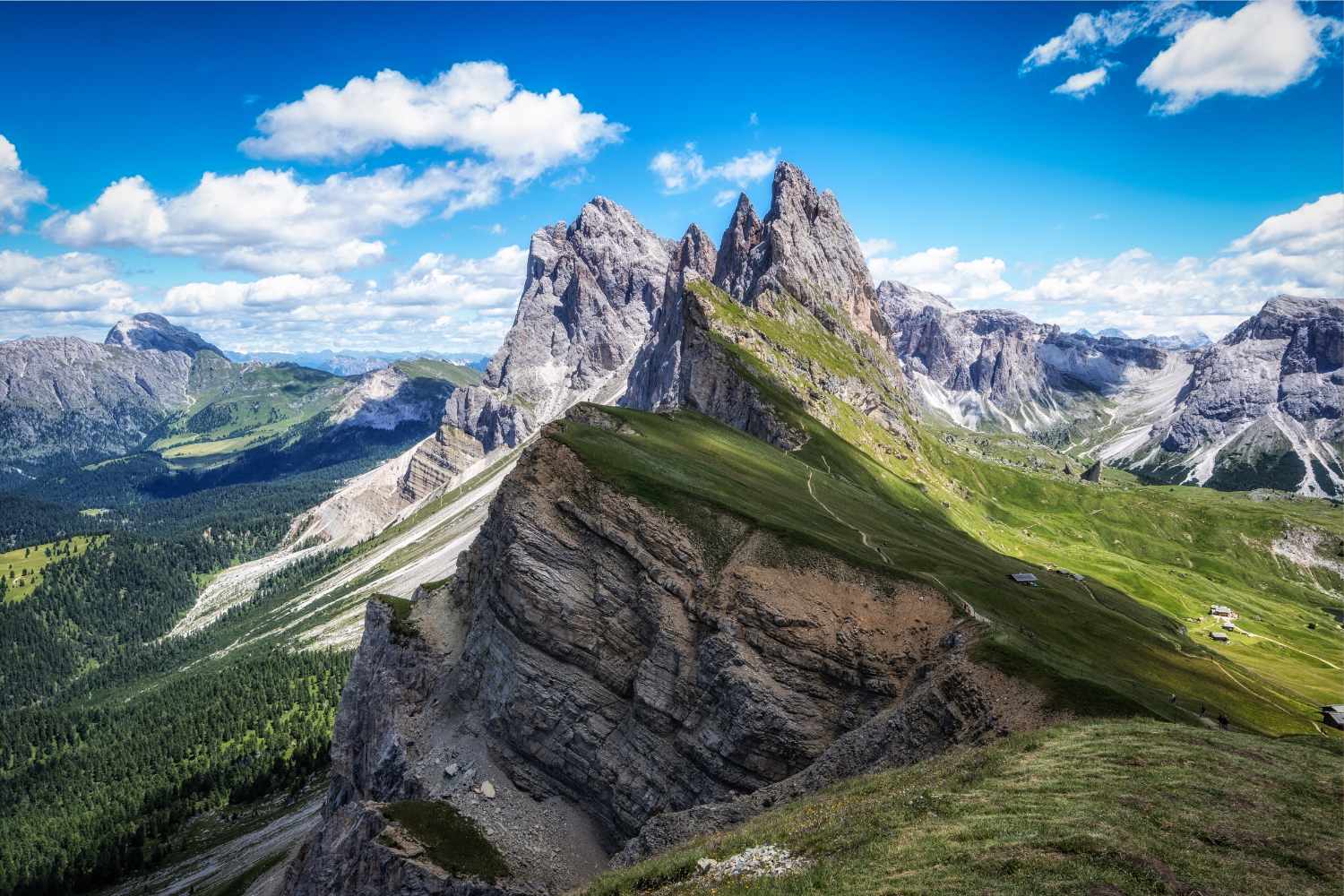
From summer 2026, the Südtirol Alto Adige Rangers will enter into service, fifteen operators tasked with guarding some of the most popular locations in Alto Adige, which in recent years have become essential destinations for thousands of tourists and photography enthusiasts. Regular visitors to the Dolomites know the places involved in the initiative well: the Rangers will be present at Lake Braies, on the Seceda, along the main Dolomite passes, in the surroundings of the small church of Ranui and Santa Maddalena in Val di Funes, at the Alpe di Siusi, at Lake Carezza and in the Bletterbach gorge. They are all famous destinations, which season after season attract a growing number of visitors and regularly end up on social networks around the world.
More than control and repression, the initiative aims to promote dialogue with tourists, aimed at adopting a series of environmentally friendly behaviours. The Rangers will have the task of raising people’s awareness, explaining why it is important to keep a distance from wildlife, avoid drones flying over sensitive areas and follow the basic rules of coexistence with nature. The project directly involves the tourist organizations of Braies, Val Gardena, Alta Badia, Funes, Val d’Ega, Alpe di Siusi, Fiè and Siusi, together with the respective municipalities and GEOPARC Bletterbach. The new operators will work in collaboration with the provincial Forestry Service and will support, without replacing them, the Rangers already active in the natural parks. The initiative arises from the growing tourist pressure recorded in recent years, given that in some areas the number of visitors has increased faster than the territory’s capacity to manage the flows. The new Rangers will operate mainly in areas outside protected areas, where the presence of personnel dedicated to surveillance and information is more limited.
Training between nature, safety and conflict management
Before entering service, the fifteen Rangers underwent a training course lasting two and a half days. The program addressed very different topics, from the rules of behavior in the natural environment to the legal aspects of protected areas, passing through the value of the Dolomites as a UNESCO World Heritage Site. There was no shortage of in-depth studies dedicated to meteorology, the bark beetle and the processionary moth, as well as modules on communication and conflict management. After all, convincing a tourist to give up bad behavior often requires interpersonal skills and a good dose of diplomacy. The supervision of the project is entrusted to Provincial distribution of Nature, Landscape and Territorial Developmentin collaboration with Forest Service Breakdown and with the support ofProvincial Association of Tourism Organizations (LTS) and of IDM Südtirol-Alto Adige. According to Elisabeth Berger, head of the Dolomites UNESCO World Heritage Coordination in Alto Adige, the first results of the pilot project are encouraging. During the season the Rangers will also be able to interact with the Visitor Centers of the natural parks and with the forestry stations present in the area, consolidating skills and tackling together the most complex situations encountered in the field. The Province is also keen to clarify an important distinction: the Südtirol Alto Adige Rangers do not coincide with the Rangers of the natural parks already operating in the protected areas. The latter are employed directly by the Provincial Nature Office and carry out environmental education and protection activities within the parks. The new Rangers, however, will concentrate their activities mainly in areas outside the protected borders, where the tourist influx is high but the management tools are more limited.
A widely shared project
The idea was not born from scratch, given that the project is the result of shared work between the tourist associations involved in the management of the UNESCO site of the Dolomites and is based on experiences already tested in recent years in places such as Braies, Val Gardena, Funes and Alta Badia. Fifteen people certainly cannot solve the problem of overtourism alone, but they could help restore some balance in the places most exposed to the effects of mass tourism. Whether they will be enough to curb selfies bordering on common sense, out-of-control drones and behavior that doesn’t respect the environment, the summer season will tell.
