
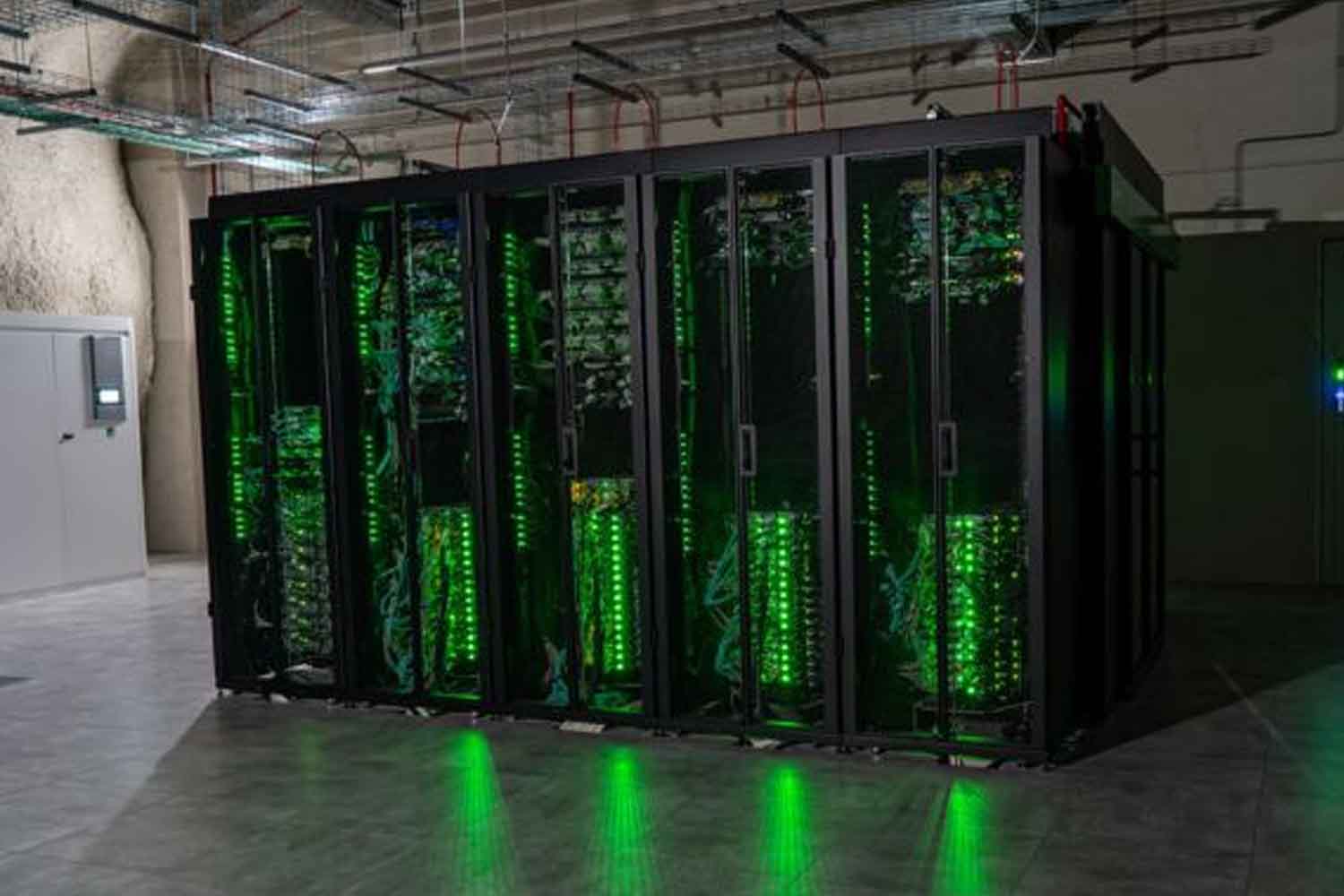
A hundred meters below the Val di Nonartificial intelligence works in the cold. Right in the cool: inside a dolomite mine still activein the municipality of Predaia, where the natural temperature remains around 12°C and the rock acts as an envelope, as a barrier, as a gigantic geological refrigerator. He was born here Intacturethe first European data center built in an operational mine, designed to host servers, data and supercomputing by exploiting a condition that the mountain already offered before the arrival of cables and racks.
The idea is simple, almost brutal in its evidence: servers heat up, AI demands more and more computing power, data centers also consume energy to cool the machines. If the location helps keep the temperature low, some of the waste can be reduced. Intacture was born within this intuition, with rooms protected by approximately 100 meters of rocknatural cooling, declared power supply from renewable sources and a system that aims to eliminate water consumption for cooling. The Trentino project therefore speaks the language of sustainability, as long as it is pronounced without fanfare and without the illusion that it is enough to go under a mountain to make the entire digital industry light.
The natural cold helps, the electricity consumption remains
The most interesting part of Intacture concerns the cooling. The underground environment allows you to exploit free-cooling, i.e. the natural cold of the rock, reducing the use of traditional systems which in many data centers absorb a significant share of the overall energy. PUE, the index that measures the energy efficiency of a data center, is expected to remain below 1.25: the closer this value is to 1, the more energy is used to make the servers work and the less it is wasted in accessory systems. For a computing infrastructure, this is significant.
Then there is the theme of water. Many data centers use cooling systems that can take a toll on water resources, especially in areas already experiencing drought or climate stress. Intacture declares a system a closed circuitwith water consumption for cooling essentially eliminated. It is one of the most solid aspects of the project: in a country where the water crisis is now a recurring issue, building digital infrastructures that do not require water to keep the servers alive has a concrete value.
The critical issues, however, remain nearby. Cooling a data center better relieves part of the requirement, while the overall electricity consumption remains. According to the International Energy Agency, global data center electricity demand could reach approx 945 TWh by 2030almost double compared to current levels, with growth also driven by artificial intelligence. In 2024, data centers have already absorbed approximately 415 TWhequal to approximately 1.5% of global electricity consumption. Cooling matters, of course. Hunger for computation matters more.
This makes Intacture a useful experiment, not a magic wand. The cold of the mountains reduces part of the problem, the renewable power supply helps, the absence of direct water consumption for cooling weighs positively. The AI energy node remains open: more models, more inference, more digital services, more computing demand. Even the most efficient data center lives within this curve.
A mine, a supercomputer and a valley that changes function
The tunnels of Val di Non already had a life before the arrival of the servers. In the cavities dug to extract dolomite, apples, matured forms of cheese and refined bottles of sparkling wine were preserved. The logic was the same: stable temperature, protection, space. Now that same environment hosts digital infrastructures, with cables, pipes, technical rooms and a supercomputer connected to the University of Trento.
When fully operational, the system can reach a power of up to 6 megawatts and an estimated computing capacity of up to 200 petaflops for artificial intelligence applications. Translated less lunarly: a huge amount of operations per second, useful for scientific research, data analysis, cloud services, cybersecurity, industry, digital health and AI models. The structure also aims to offer services to businesses and transform Val di Non into a small technological hub, with a mixture of public research, private investments and European funds.
The project was carried out through Trentino DataMine, a company born from a public-private partnership: 49% is in the hands of the University of Trento, the remaining 51% by Trentino companies selected through a public tender. The total investment exceeds 50 million euroswith 18.4 million of PNRR funding under Mission 4, dedicated to education and research. In the first phase they were extracted and reused 63 thousand cubic meters of rocklay down 54.4 kilometers of cables and beyond 3 kilometers of pipes. Heavy construction site numbers, nothing more than an immaterial cloud.
Here another critical issue emerges, more territorial than technical. A data center is never just a room full of servers. It brings with it electrical lines, connections, maintenance, security, access, materials, specialized personnel. In the case of Intacture, the reuse of a mining void avoids new consumption of surface land and exploits an already existing structure, a decidedly positive element. However, it remains an industrial infrastructure with a high technological intensity, inserted in a fragile Alpine territory, where every new economic function must also be measured in its relationship with the landscape, resources, mobility and local communities.
©University of Trento
A truly sustainable project?
The mountain protects. Beyond 90 million cubic meters of rock act as a barrier against physical, seismic and electromagnetic risks; the infrastructure has obtained high-level international certifications for reliability and operational continuity. For this reason the project is also told through words data sovereigntynow a central theme in Europe: preserving information and computing capacity within a national and European perimeter, with greater control over sensitive infrastructures. The issue is real, especially in a world where data, cloud and AI have become economic and geopolitical tools. Here too, however, the word must be handled with care: digital sovereignty requires infrastructure, rules, transparency, skills and effective public control. A mine full of servers is one piece, not the whole puzzle.
The European Union has started calling for more transparency on the energy performance and water footprint of data centers, with monitoring and reporting obligations. The reason is very concrete: these infrastructures have become too large to remain invisible. They consume energy, may use water, produce heat, depend on global supply chains of chips and components, require electrical continuity, and impact local networks.
This is why Intacture must be told well. Not like “miracle”, a word that usually serves to cover rather than explain. It is an interesting project because it starts from a concrete question: where can we put energy-intensive infrastructures while reducing at least some environmental pressures? The Trentino response has several strong elements: natural cold, zero water consumption for cooling, use of renewables, reuse of underground spaces, physical protection, link with research and local businesses.
©Autonomous Province of Trento
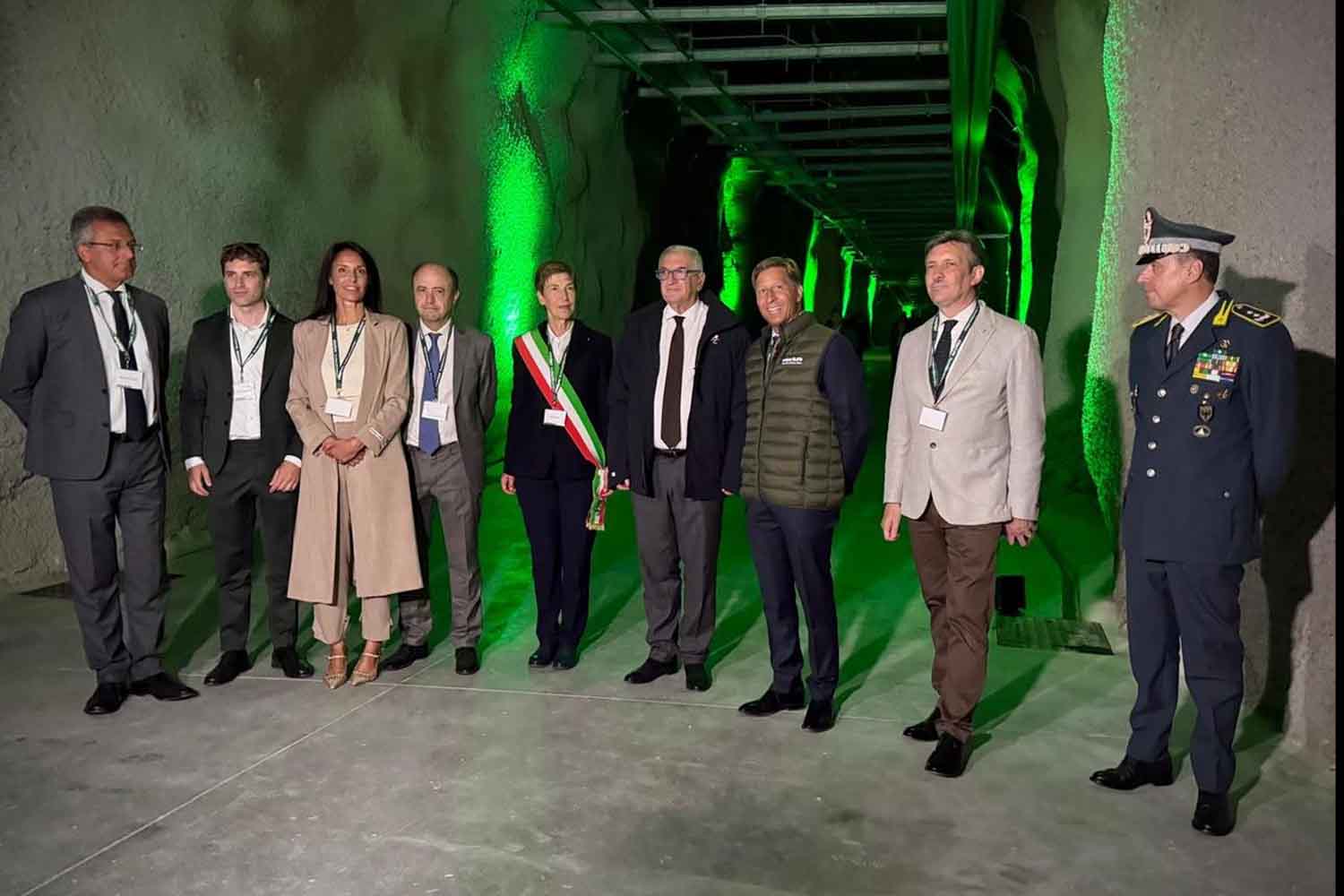
Alongside these points, there remain the questions that every data center in the AI era should carry with it: how much energy it will really use at full capacity, how much new renewable power will be needed, what the impact will be on the network, how long the installed machines will last, how updates and electronic components will be managed, and what environmental data will be made public over time. The sustainability of Intacture is not played out at the inauguration, between declarations and guided tours. It will be measured over the years, bills in hand, consumption in hand, maintenance in hand.
The best thing about this mine, perhaps, is its physical reminder. Even digital has a body. It stays in cold rooms, eats electricity, requires materials, produces heat. If we can look at it like this, without glitter and without fear, maybe we’ll even start to build it better.
