
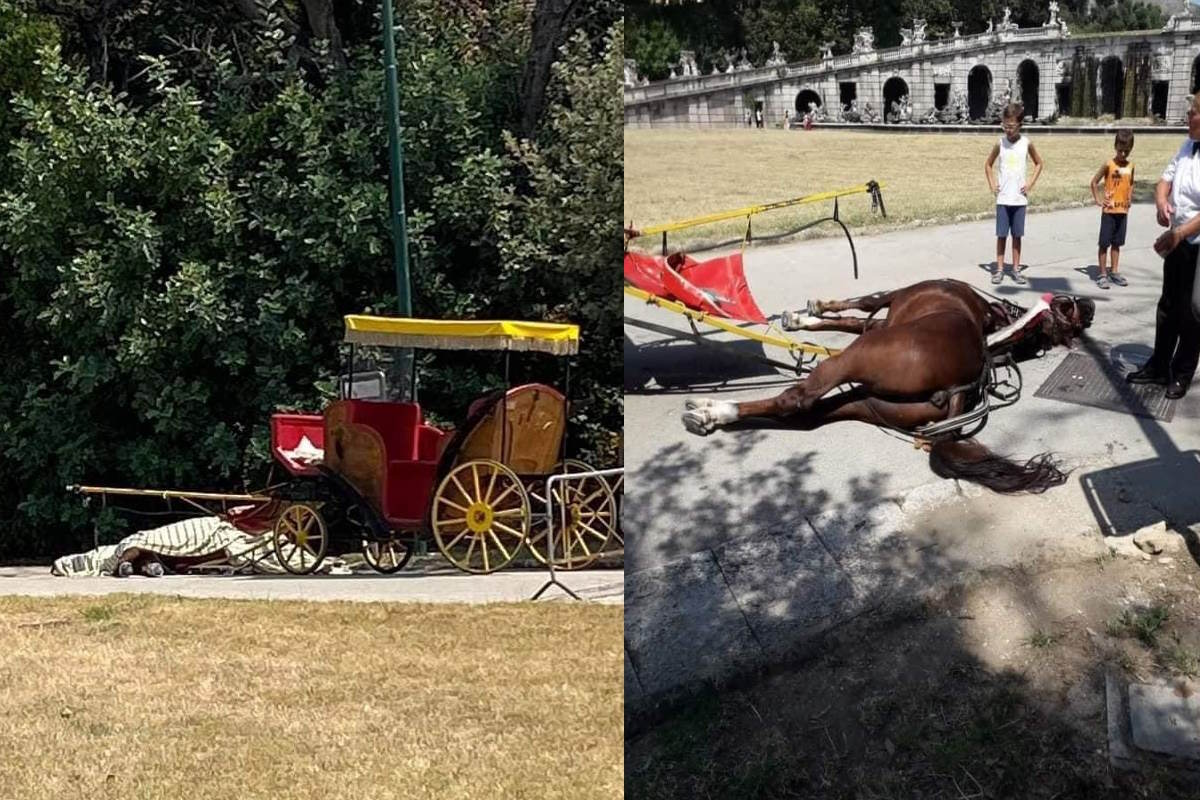
The final word has arrived on the tragic story of Found Goal Pag, the horse who died on 12 August 2020 while pulling a tourist carriage inside the Royal Palace of Caserta. The Court of Cassation definitively confirmed the conviction of the former coachman, thus closing the long judicial process that began after the animal’s death.
The woman had already been sentenced to one year in prison for the crime of killing animals by the Court of Santa Maria Capua Vetere. With the decision of the Supreme Court, the sentence now becomes final.
The collapse before the eyes of tourists
The tragedy occurred on a scorching summer day. Found Goal Pag was employed in the tourist carriage transport service within the Bourbon complex when he suddenly collapsed to the ground in front of dozens of visitors, including numerous children.
The images of the lifeless horse on the asphalt quickly went around the web, sparking indignation and reigniting the debate on the use of equines to tow tourist carriages, especially during the hottest months of the year.
According to what emerged during the judicial proceedings, the death was caused by heat stroke attributable to the conditions in which the animal had been forced to work. For Found Goal there was nothing that could be done.
A sentence destined to make jurisprudence
The confirmation of the conviction by the Court of Cassation represents a significant step in the protection of animals. The decision in fact confirms the responsibilities ascertained in previous levels of judgment and makes the sentence irrevocable.
For the animal rights associations that have followed the case from the beginning, this is a historic ruling, intended to strengthen attention on the welfare of animals used in tourist activities and to counteract practices considered incompatible with respecting their ethological needs.
The horse-drawn carriage debate
The death of Found Goal Pag has over the years become the symbol of a broader battle against the exploitation of horses used for tourist transport. Many organizations have long called for the elimination of animal-drawn carriages, arguing that road work, traffic, high temperatures and the rhythms imposed by the activity represent risk factors for the health and well-being of equines.
The Supreme Court ruling cannot bring Found Goal Pag back to life, but it marks an important precedent. A pronouncement that draws attention to the need to guarantee greater protection for animals and which, according to activists, should represent a turning point to prevent similar tragedies from happening again.
Almost six years after his death, the story of Found Goal Pag continues to question institutions and citizens on the relationship between tourism, tradition and respect for animals.
You might also be interested in:
