
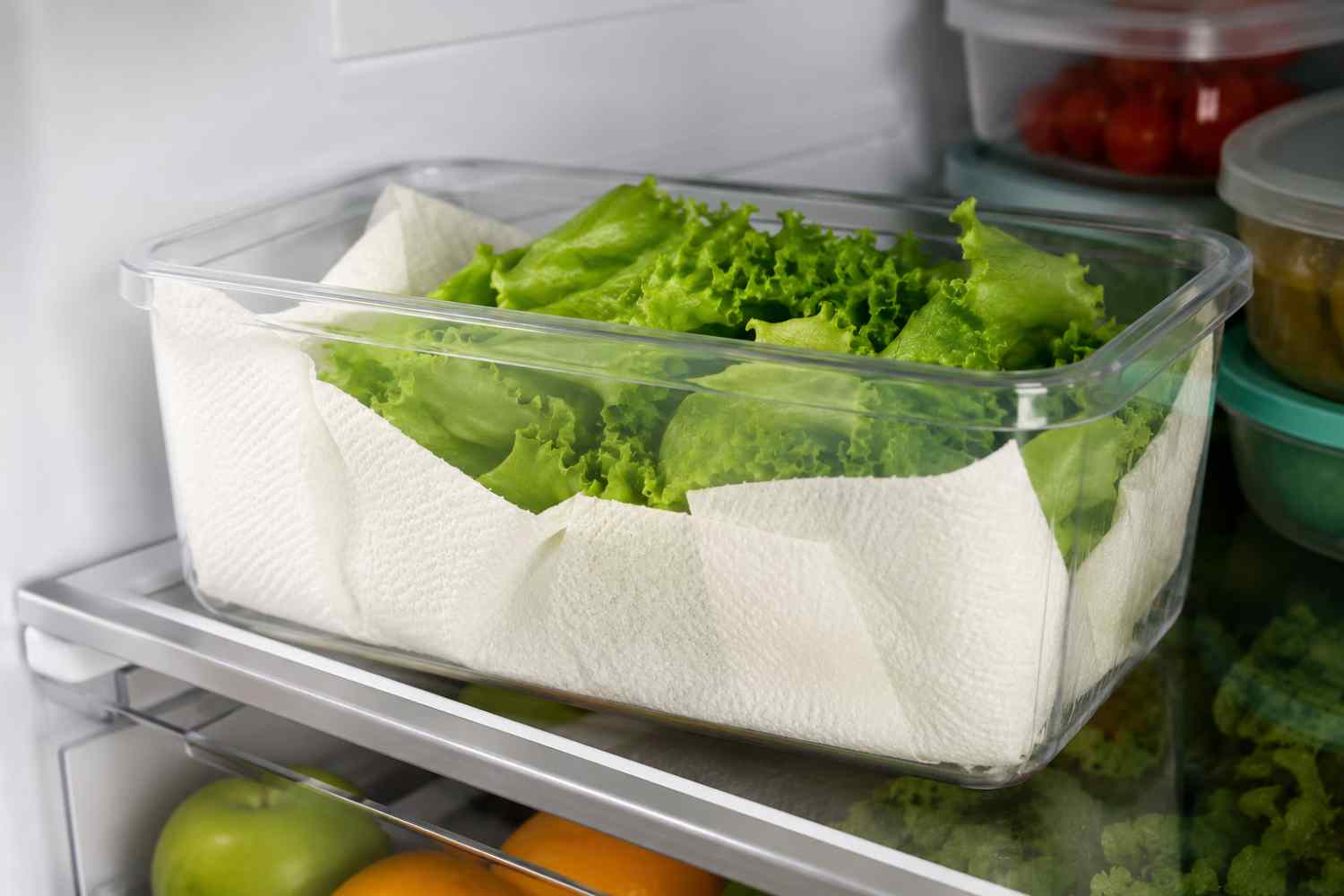
With the arrival of summer, lettuce returns to the protagonist of salads, sandwiches and light lunches. Yet there is a problem that many know well: a few days in the refrigerator is enough for the leaves to start to wither, become slimy or even develop mold.
The result is that one of the most purchased vegetables during the hot season often ends up in the garbage before being completely consumed. A real shame, especially in a period in which reducing food waste has become a priority both for the environment and for the wallet.
The good news is that there is a very simple trick that can help keep lettuce fresh for longer: use an ordinary sheet of kitchen paper.
Why does lettuce spoil so quickly
Unlike many other vegetables, lettuce contains a very high amount of water. This characteristic makes it crunchy and fresh, but also particularly delicate.
In fact, the leaves continue to release moisture even after being harvested. When this moisture becomes trapped inside plastic packages or closed containers, it creates an environment conducive to the growth of bacteria and mold.
It is precisely for this reason that often, when opening a bag of salad purchased a few days before, you find yourself with soft leaves, dark spots or already deteriorated parts.
The most common mistake is leaving it in the original packaging
Many people store lettuce directly in the refrigerator without removing the supermarket packaging. While these packages are useful during transportation, they are not always the best solution for extended storage.
In fact, plastic tends to retain the condensation that naturally forms inside the package. As the days pass, the accumulated humidity accelerates the deterioration of the leaves and favors the appearance of rot.
For this reason, experts recommend transferring the lettuce into a clean container as soon as you return from shopping.
The kitchen paper trick
The secret to storing lettuce longer is to absorb excess moisture before it can cause damage.
Simply place the leaves in a container and add a sheet or two of kitchen paper. The paper will act as a sort of natural sponge, capturing the water released by the vegetables and helping to keep the environment drier.
This way the leaves remain crunchier and the risk of them becoming slimy or developing mold is reduced.
Many home preservation experts consider this method to be one of the most effective for prolonging the freshness of leafy salads.
How to properly store lettuce
For best results it is advisable to separate the most damaged leaves before placing the lettuce in the container. Even a single deteriorated leaf can accelerate the deterioration of the others.
The container should not be hermetically sealed. In fact, minimal air circulation helps to disperse humidity and keep the internal environment more stable.
If the kitchen paper becomes very damp, it can be replaced after a few days to continue to absorb excess water.
Be careful with already dressed salads
Another common mistake is preparing the salad in advance by mixing lettuce, tomatoes, cucumbers and other water-rich ingredients.
Tomatoes and cucumbers release additional moisture, accelerating the deterioration of green leaves. For this reason it is preferable to store the ingredients separately and assemble the salad shortly before consuming it.
A small gesture that helps reduce food waste
Every year tons of fruit and vegetables end up in the garbage because they are stored incorrectly. In the case of lettuce, a few tricks are often enough to extend its shelf life by several days.
Using simple kitchen paper may seem like an insignificant detail, but it allows you to keep the leaves fresh for longer, reducing waste and limiting the need to purchase new products before necessary.
A small domestic gesture that is good for the wallet and also contributes to a more sustainable consumption of food resources.
