
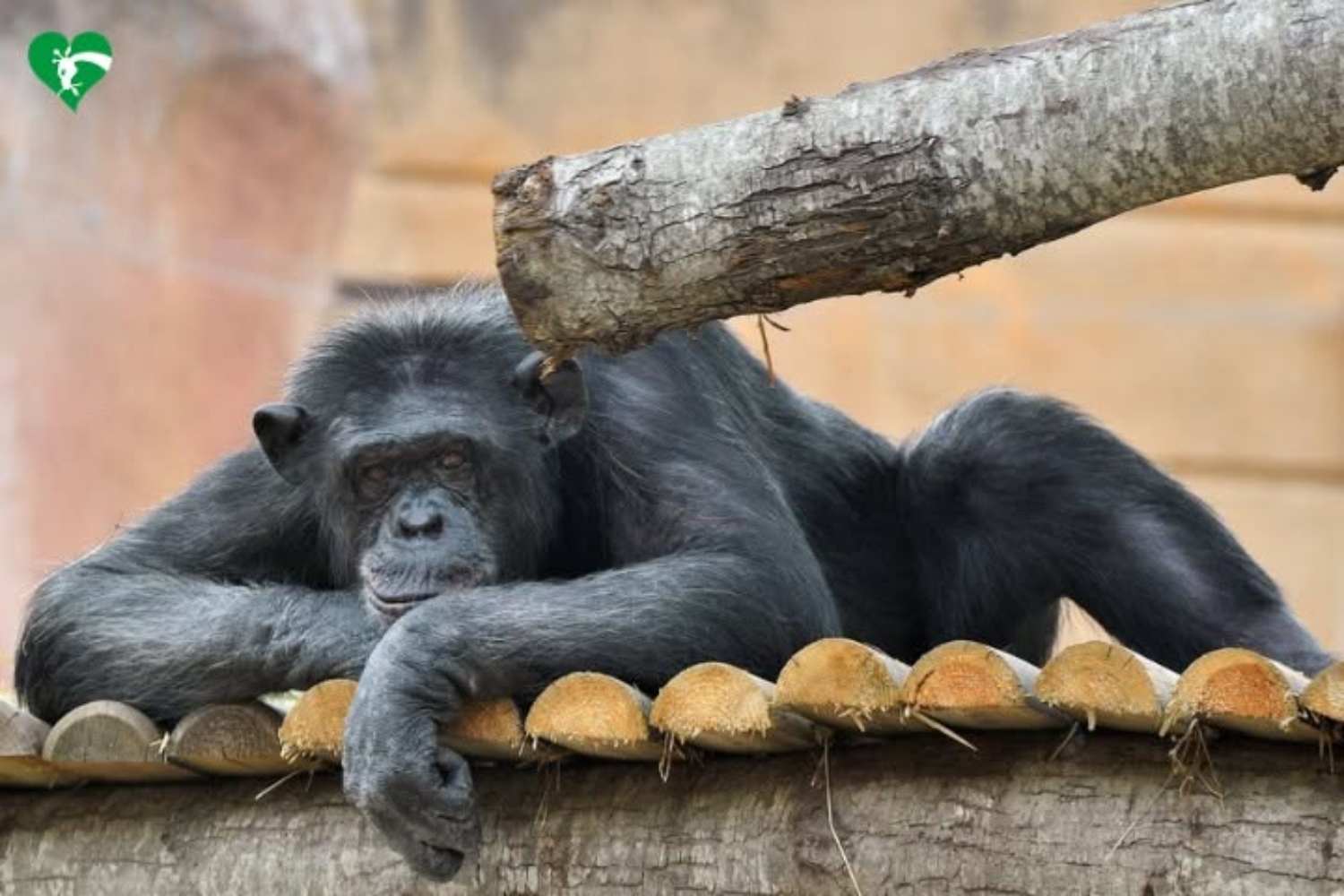
The capital’s world of records loses one of its most charismatic and influential figures. The chimpanzee Susy, the cornerstone of the community of anthropomorphic apes hosted at the Bioparco of Rome, died at the age of around fifty, most likely killed by a sudden heart attack. The announcement of his death, shared with strong emotion by the president of the Roman structure, inevitably redefines the balance of the clan. The disappearance of the elderly female represents a relational earthquake for her historic ward companions, the three exemplary Edy, Pippi and Bingo, who saw in her a charismatic daily guide.
Within a species characterized by extremely complex and competitive group dynamics, Susy had earned the title of true peacemaker in the field. Thanks to a resolute temperament combined with an uncommon sensitivity, the chimpanzee possessed the rare ability to defuse internal tensions and promote reconciliation between clan members after frequent generational squabbles. The guardians and keepers who looked after her for decades underline how her authority linked to experience was the only glue capable of guaranteeing the emotional stability and cohesion of the group, avoiding aggressive tendencies.
View this post on Instagram
From seizure to veterinary care in a protected environment
Susy’s biological parable began under the worst auspices of judicial news. The chimpanzee had in fact arrived at the Capitoline facility way back in 1995, following a timely seizure by the police which had freed her from illegal detention. Its geographical origins and the first twenty years of its existence have remained shrouded in mystery, since the records have never allowed us to reconstruct its exact origin.
From that moment, the former zoo of the capital became its definitive home for the last thirty years, a place where the animal was able to benefit from controlled nutrition and constant medical monitoring. Exceeding the fifty-year mark represents an exceptional achievement for the species Pan troglodytes. If in nature and in the wild the average life expectancy generally varies between thirty and forty years, the specialized medical assistance of modern structures sometimes allows this biological barrier to be overcome.
The weight of captivity
Although the excellence of the veterinary attention and the obvious affection of the human staff have radically transformed her conditions for the better compared to the trauma of the kidnapping, we cannot forget that Susy spent her entire existence in a condition of captivity. The delimited space of the monkey department, although enriched by biological stimuli, constituted the only possible horizon for a creature born to travel in many other wild areas. This forced imprisonment, although necessary for its survival after confiscation, highlights the paradox of modern sanctuaries, where the protection of life inevitably clashes with the limitation of original freedom.
You might also be interested in:
