
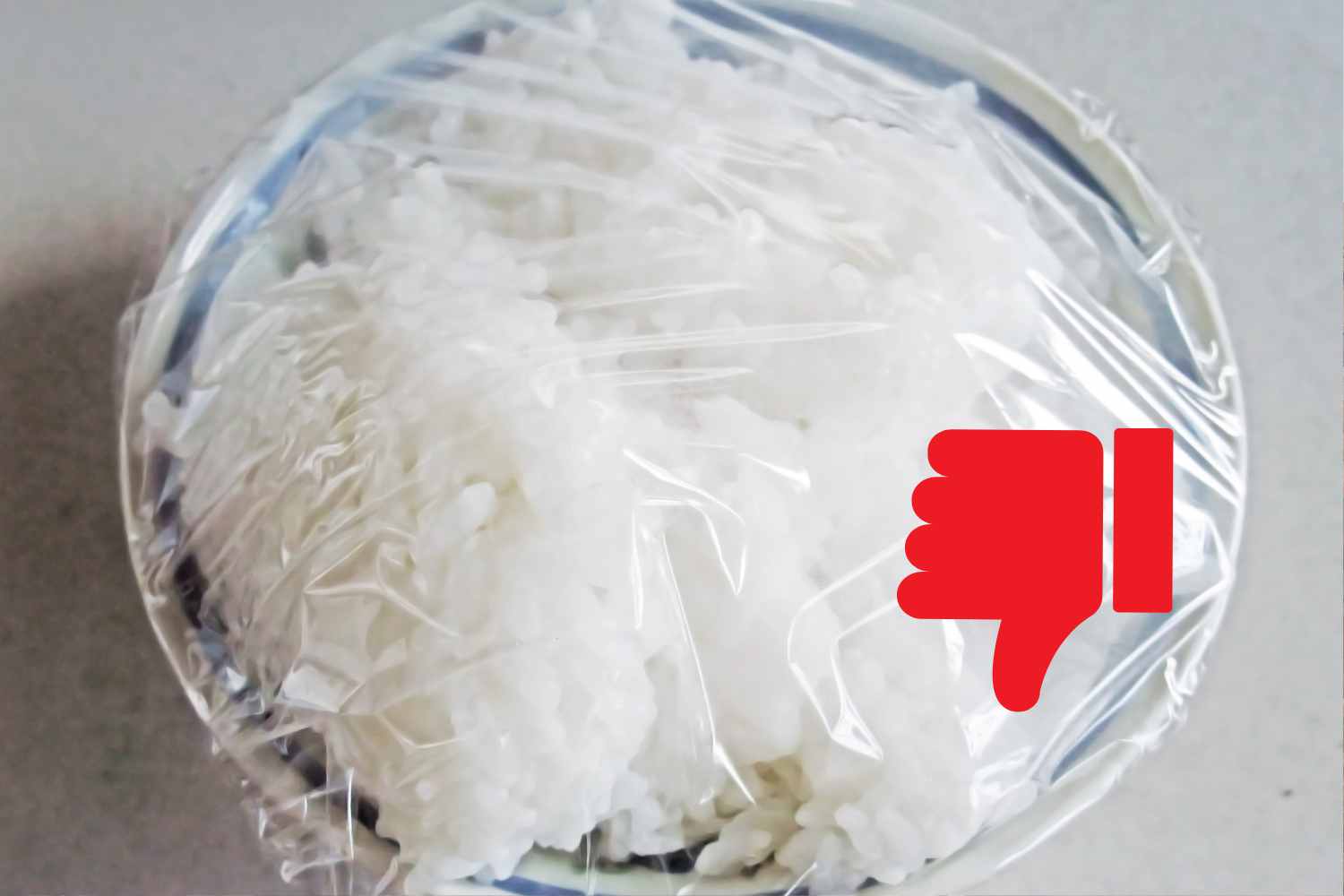
Almost all of us do it: we cook too much rice, leave it on the stove to cool and then put it in the fridge — maybe after a while. It seems like a simple thing, but this seemingly harmless gesture can turn a healthy dish into a source of food poisoning. And no, that’s not an exaggeration.
The topic has become forcefully back in the news, especially with the arrival of the heat, when domestic temperatures accelerate bacterial proliferation and the risk increases exponentially. It’s not just the National Health Service British, but also the EFSA (European Food Safety Authority), which reiterated how the Bacillus cereus is one of the main causes of food poisoning linked to cooked cereals.
The real problem: it’s not the heating, it’s the waiting
Contrary to popular belief, the danger lies not in reheating the rice, but in what happens beforehand: the time the cooked rice spends at room temperature. Uncooked rice may contain spores of Bacillus cereus, a particularly resistant bacterium that survives cooking. Once the rice is ready and slowly cools on the kitchen counter, these spores awaken, multiply and produce heat-stable toxins — meaning that simply reheating them again doesn’t get rid of them.
Symptoms of intoxication Bacillus cereus they can appear as early as 1 to 5 hours after consumption and include nausea, vomiting and diarrhea. They usually resolve within 24 hours, but they can be very uncomfortable — and in frail individuals, such as the elderly or young children, they require medical attention.
Recent studies published in food microbiology journals confirm that the critical window is the first two hours after cooking: beyond this period of time at room temperature (especially above 20°C), the bacterial load can reach risky levels.
How to store leftover rice safely: the updated rules
Fortunately, a few precautions are enough to sleep peacefully. Here are the good practices validated by food safety:
An extra note for those who love cold rice salad, much loved in summer: the rules apply in this case too. The rice for the salad should be cooled quickly, seasoned and kept in the fridge until ready to serve. Don’t leave it on the table during the entire outdoor dinner without putting it back in the fridge between one course and another.
A small gesture, a big difference
The good news is that prevention is very simple: all it takes is a little attention in the minutes immediately after cooking. With the summer heat, it’s worth remembering that cooking isn’t just about taste, but also about safe food handling.
Do you already follow these precautions when preparing and storing rice?
