
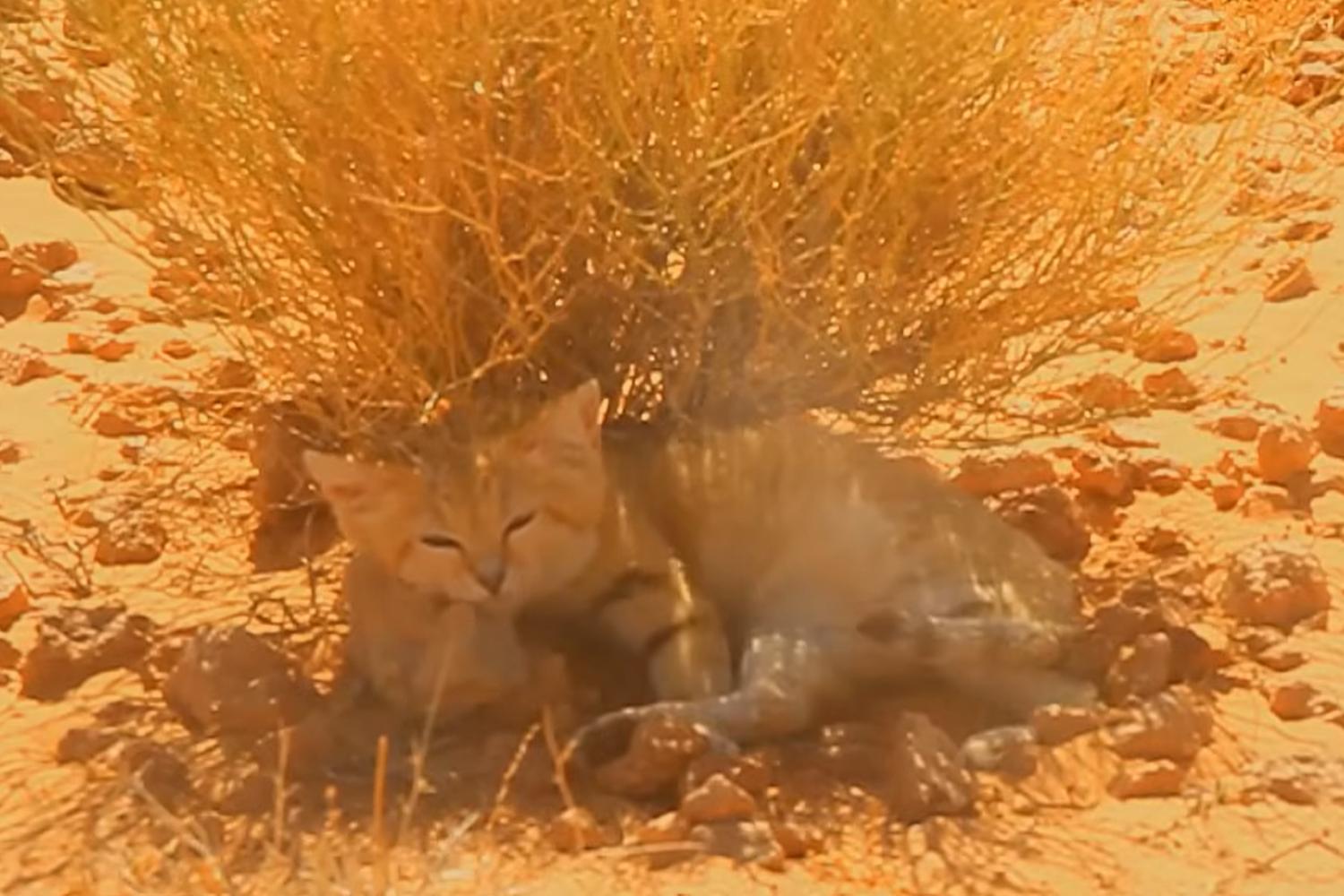
An amateur film lasting just 18 seconds has rewritten the boundaries of North African zoology. When in 2017 the nature photographer Mohammed Saad Muntser (also known as Mohammed Almuntasir) uploaded images of a small feline intent on digging in the dunes to his YouTube channel, the scientific community greeted the news with total skepticism. The exceptional mimicry of the sand cat (Felis margarita) and the fragmentation of its habitat made sightings almost impossible, especially in Libya, a territory previously excluded from the official ranges of the species.
The one who changed the fate of this discovery was the zoologist Firas Hayder, who, believing in the authenticity of the material, proposed a close collaboration to Muntser. The partnership, later supported by a team from Sol Plaatje University, gave rise to field monitoring that lasted about eight years. The results of this exhausting research have finally been validated and published in the prestigious scientific journal Journal of Arid Environments.
A scientific expedition between Tuareg and smugglers
The collection of evidence had to deal with an extremely complex geopolitical context. The desert in the south-west of Libya, near the city of Zintan, is in fact one of the least explored areas of the continent, without protected reserves and systematically attacked by gangs of armed smugglers along the borders with Algeria, Niger and Chad. On one occasion the researchers were even forced to interrupt their activities due to a firefight.
To overcome logistical and environmental barriers, scientists have integrated GPS localization technologies and camera traps by collaborating directly with local Tuareg communities, who have profound knowledge of the desert. This synergy has made it possible to record 13 sightings of the feline in the same area, confirming the presence of a real biological stronghold for the conservation of the species.
Poaching and black markets threaten biodiversity
The field investigation also held surprises for other wild species. Scientists have documented the expansion of the range of the Libyan zorilla (or Saharan striped skunk, Poecilictis lybica), identified in eight previously unpublished locations that redefine the official maps established by the IUCN. In the Libyan Sahara there are also species in serious danger of extinction such as the North African cheetah, the dama gazelle and the sand gerbil.
However, alongside scientific success, serious threats emerge linked to illegal anthropization. Monitoring has revealed that the sand cat is regularly captured to be sold as a pet in local markets, while the zorilla suffers systematic poaching due to the high demand for its components in traditional medicine. Scholars have launched an urgent international appeal to launch targeted protection programs, before the black market definitively erases the secrets of this fragile ecosystem.
You might also be interested in:
