
The watering can forgotten on the balcony, the neighbor who “comes by when he can”, the plants all moved into the shade like a small colony in emergency: before leaving for holidays, those who have vases at home or on the terrace know that slightly awkward liturgy well. You water too much, then too little, then you look at the weather, then you hope. Some plants resist with dignity. Others, upon returning, look as if they have crossed the Gobi desert with a paper hat.
Among the most practical solutions to avoid this drama is the self-watering pot, a container with an integrated water reserve that feeds the plant from below. The principle is called sub-irrigation: the water remains in a tank under the substrate and rises towards the root area by capillarity, a bit like a sponge absorbing liquid from a basin. The Mississippi State University Extension also explains this, recalling that in sub-irrigated containers the movement of water occurs from bottom to top, through the cultivation material.
The tank works underground
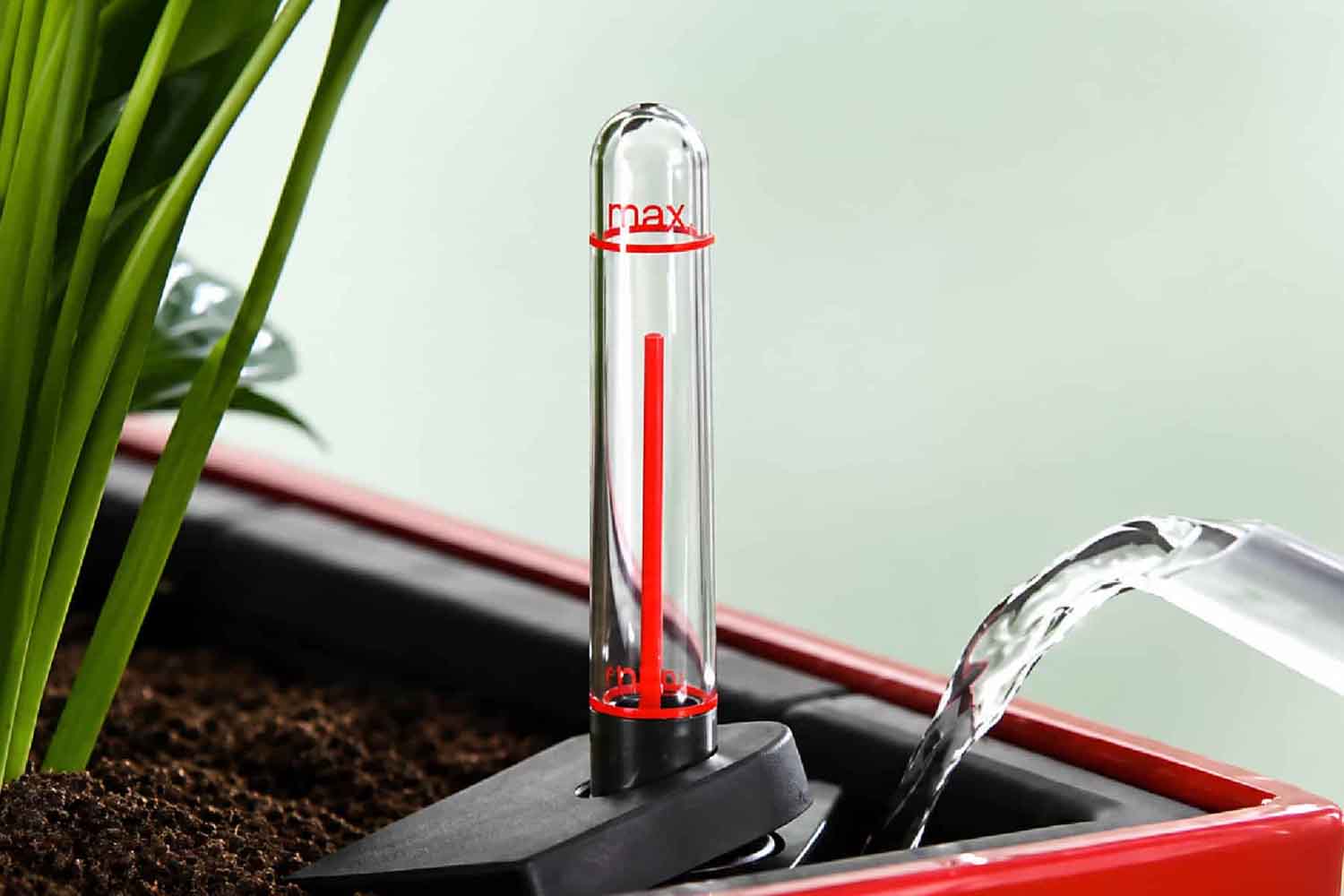
The system proposed by LECHUZA follows precisely this logic. A water reserve is placed under the soil separated from the roots by a drainage layer, often associated with the LECHUZA-PON mineral substrate. The plant, once established, reaches that humid area and withdraws water according to its own rhythm. The vase remains above, the tank works below. Something much less spectacular than a smart system with apps and notifications, and perhaps also for this reason more sensible.
The initial step requires patience. In the first few weeks the plant must still be watered from above, because the roots must adapt and reach the area from which they will take humidity. In the instructions for the Classic system, LECHUZA talks about a growth phase that can last around twelve weeks, after which you fill the tank through the side tube and check the level indicator. When the indicator drops to the minimum, the plant is allowed a short dry phase, then it fills up again to the maximum.
Here is the useful part: the self-watering pot reduces two very common mistakes, forgetfulness and excess zeal. Because yes, killing a plant with thirst is bad, but drowning it with domestic enthusiasm has the same aesthetic effect: soft leaves, suffering roots, a sense of guilt in the background. In outdoor models, the drainage cap and overflow serve precisely to prevent rain from transforming the tank into a private swamp.
Useful, as long as the plant is the right one
Subirrigation works well especially with plants that like constant, regular humidity. The Royal Horticultural Society, in its advice for holiday houseplants, cites self-watering containers as a long-term solution, best suited to species that tolerate a consistently moist substrate. For cacti, succulents and plants that like to dry well between one watering and another, more caution is needed. A full tank under the wrong plant remains a bad idea with a beautiful design.
The same goes for repotting done in a hurry. Buying a new system two days before leaving, sticking an already stressed plant in and closing the door hoping for a holiday miracle is a fairly creative strategy for achieving a plant funeral upon your return. First you test, observe, understand the water consumption of the plant and only then let the system work on its own.
There are also simpler and less expensive alternatives. The oyas, small terracotta ampoules to be buried in the vase or flowerbed, slowly release humidity into the soil. Wick systems use a string or strip of fabric to carry water from a container to the vase. Capillary mats, also recommended by the University of Saskatchewan, allow you to group multiple small plants on a moist surface connected to a water supply. Spartan solutions, often effective, as long as they are tested before departure.
Less anxiety about returning
The advantage of the integrated system lies in the cleanliness of the whole. No upside-down bottles that collapse, no wires that look like a physics experiment done in the living room, no saucers left full to the brim. The tank remains hidden, the indicator shows how much water there is still, the vase maintains a tidy appearance. For those with many plants, little time or a selective memory when it comes to watering, it can become a little insurance against disaster.
It remains a tool, with clear limits. The self-watering pot helps to provide continuity, reduces fluctuations and makes plant care less haphazard. Then you need the right light, decent temperature, suitable substrate, healthy roots. Plants continue to be plants, with their rather unnerving ability to ignore our best intentions.
For those who leave often, live in an apartment or cultivate balconies full of pots, a reserve of water under the soil can change daily management a lot: fewer crumpled leaves, less water thrown away at random, fewer phone calls to the neighbor with a national emergency tone. And this already, for a geranium in August, looks a lot like a holiday.
