
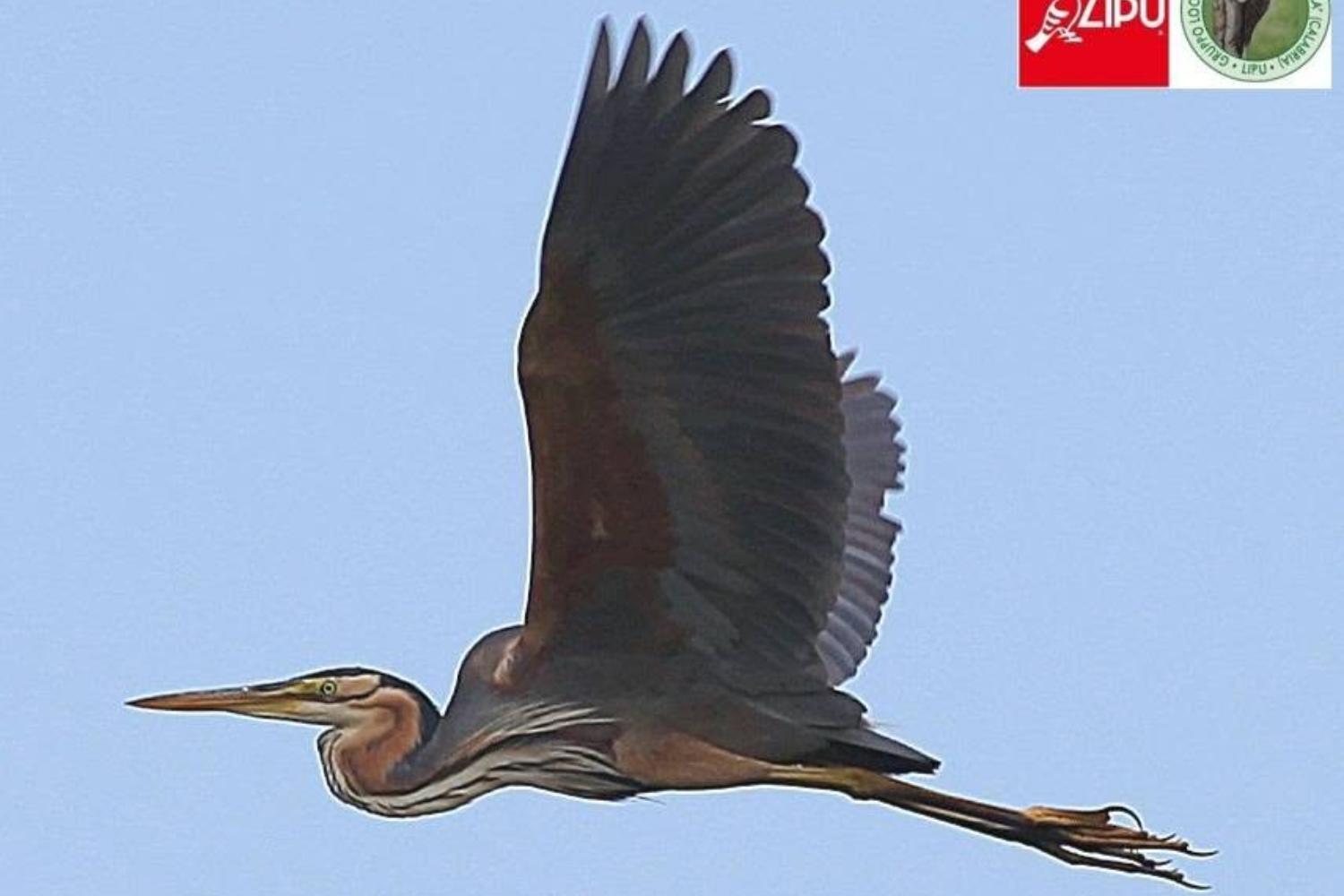
Mediterranean biodiversity rewrites its geographical maps starting from the 355 thousand hectares of the MaB Sila Biosphere Reserve, a natural area protected by UNESCO which embraces 66 municipalities distributed between the provinces of Catanzaro, Cosenza and Crotone. During seasonal wildlife sampling sessions, ornithologists documented an unprecedented event for the local scientific literature. For the first time ever, the Purple Heron has established its breeding sites in Calabria, positioning itself on the extreme southern limit of its peninsular presence in Italy.
The coordinator of the Local Conservation Group 121 Sila of Lipu, Gianluca Congi, led the field operations, coordinated in close synergy with the Italian Ornithological Society, the WWF of Crotone and the Southern Italy Ornithological Studies Association. Specialists have located and protected at least three tall tree nests belonging to this species. Thanks to the use of long-range optics and sensors on the ground, the team followed the development of the brood until the complete and successful fledging of the first young specimens.
The record census in the IBA of Sila Grande
The discoveries in the Sila territories are not limited to red herons, but paint a picture of general expansion for high altitude aquatic and marsh avifauna. In the area of IBA number 148 of Sila Grande, scientists have registered over one hundred new reproductive nests, confirming the excellent health of the Calabrian humid ecosystems. Among the most significant findings stands out the establishment of a structured colony of Night Heron, which has recorded several dozen active nests over the last few weeks.
The real biogeographical surprise, however, lies in the simultaneous arrival of further species that had never chosen the Calabrian plateau as their reproductive cradle. The monitoring records ascertain for the first time the nests of the Squacco Heron, the Little Egret, the Cattle Egret and the Cormorant. Most of these birds nest here at the highest altitudes in Europe, a fact that gives the research a scientific value of international importance.
Legal protection and secrecy of breeding sites
The ecological importance of this population is sanctioned by the strict international regulations for the protection of wildlife. The Purple Heron, the Squacco Heron and the Little Egret are included in Annex I of Community Directive 2009/147/EC, a regime of maximum protection that links these birds to the very rare Black Stork, of which researchers have identified and made safe a new nest in the mountain hinterland.
To guarantee the safety of the nestlings and avoid phenomena of anthropic disturbance, biologists maintain absolute confidentiality regarding the geographical coordinates of the sites. The open dossiers and discussions initiated by the research group aim to obtain from local institutions the adoption of habitat conservation constraints and the preventive assessment of the impact of infrastructure projects in the MaB area. The entire corpus of data, accompanied by photographic findings, was sent to the scientific committees for imminent publication in the main specialized ornithology journals.
You might also be interested in:
