
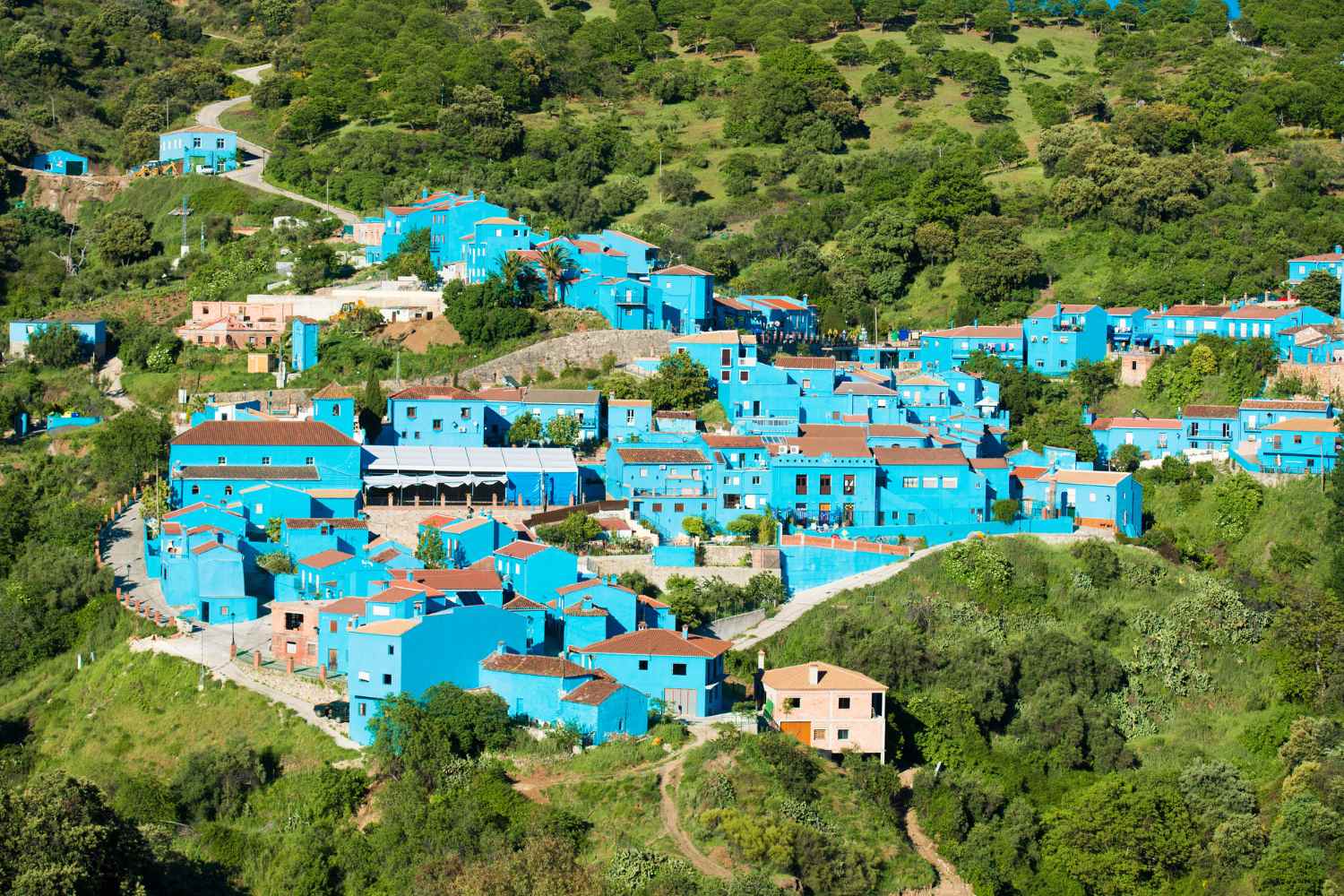
Among the mountains of Serranía de Ronda, in the hinterland of Andalusia, there is a place that seems to come straight out of a fairy tale. The houses are blue, the streets are blue, even the church and many public buildings share the same intense shade that contrasts with the green of the surrounding chestnut groves. Yet Júzcar, a small municipality in the province of Malaga, was not born like this.
Until 2011 it was one of the many “pueblos blancos”, the famous white villages of Andalusia, characterized by white facades and sunny alleys. A rural village of a few hundred inhabitants, surrounded by nature and far from large tourist flows. Then came a proposal destined to change his destiny forever.
That year, Sony Pictures chose Júzcar as the promotional location for the worldwide launch of the film “The Smurfs”. The idea was as simple as it was spectacular: temporarily transform a traditional white village into a gigantic Smurf village by painting all the houses in the historic center blue.
To carry out the operation, approximately 4,000 liters of blue paint were used and a dozen painters worked for weeks so that each building took on the unmistakable color of the famous characters created by the Belgian cartoonist Peyo. Even the church and the cemetery were involved in the transformation.
The initiative was only supposed to be temporary. In fact, once the advertising campaign was over, the country should have returned to its traditional white. But something happened that no one had foreseen.
When marketing changes the destiny of a country
In the months following the transformation, Júzcar became an international curiosity. Thousands of people began to arrive from all over Spain and abroad to see the “Smurfs’ village” live. The numbers were astonishing.
Before 2011 the village received around 9,000 visitors a year. In the six months following the blue coloring, approximately 95,000 tourists were registered, a huge figure for a community that had just over two hundred residents. Hotels, restaurants, bars and small local businesses immediately benefited from the new interest aroused by the town.
Faced with this change, the inhabitants were called to decide the future of the village through a popular consultation. The choice was simple: return to tradition or maintain the new face that had made Júzcar famous throughout the world.
The answer came without hesitation, the majority of residents voted to keep the color blue.
From that moment the small Andalusian center stopped being one of the many white villages in the region and became a unique case in the European panorama: a place whose contemporary identity was born from a cinematographic campaign transformed into local development opportunities.
The blue country of Spain
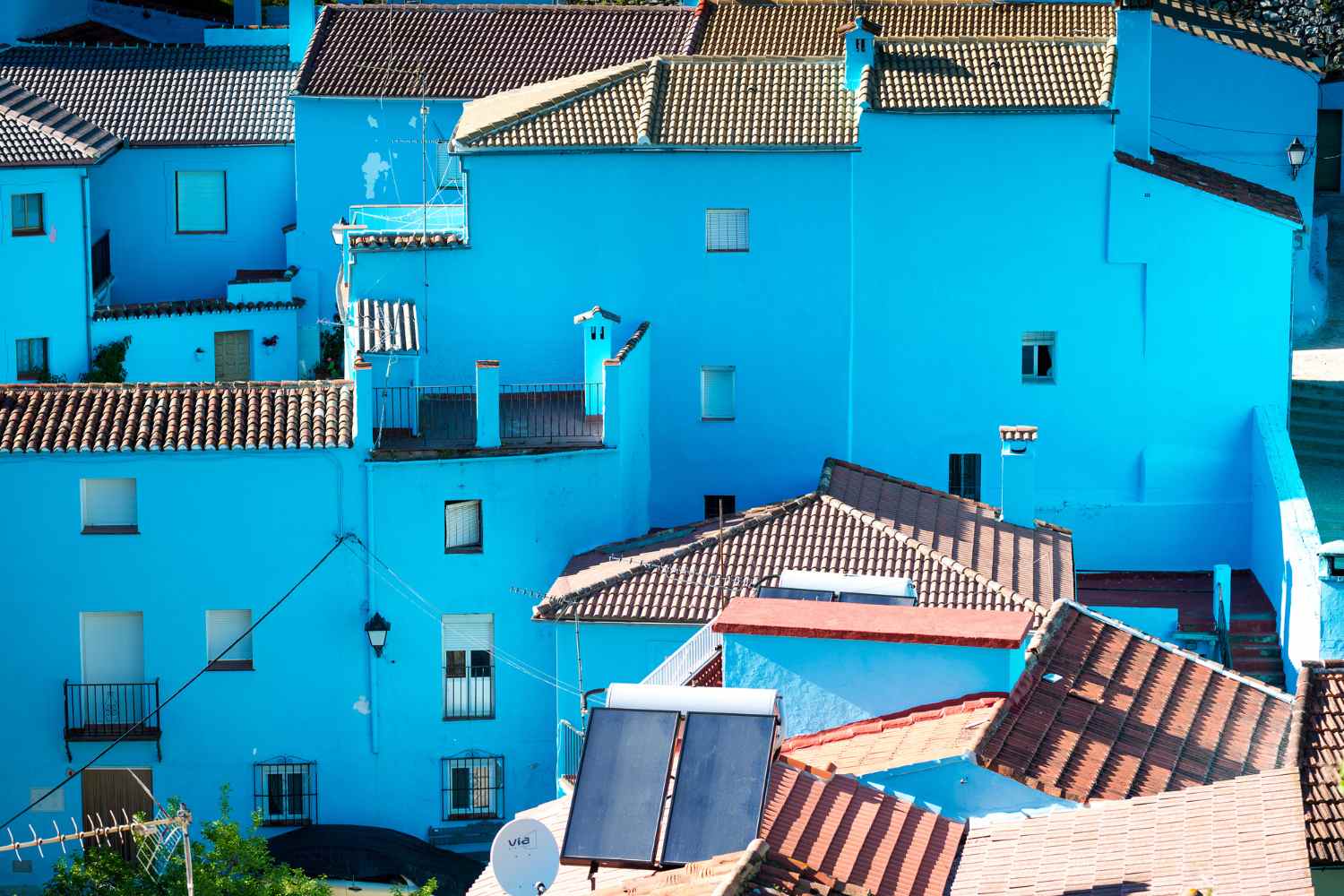
Today Júzcar is known as “La Aldea Azul”, the Blue Village. Over the years some official references to the Smurfs have been toned down due to trademark issues, but the color has remained.
Walking through its streets means living an unusual experience. The blue facades follow one another along narrow alleys and panoramic squares, creating a surprising contrast with the natural landscape of the Genal Valley. In autumn, when the chestnut groves are tinged with coppery shades, the scenographic effect becomes even more evocative.
The Plaza de la Virgen de Moclon represents one of the most photographed points of the village, while from the numerous viewpoints you can admire the blue houses nestled on the slopes of the mountain. From afar the town appears almost unreal, as if someone had decided to color an entire hill with a single brushstroke.
The atmosphere remains the authentic one of a small Andalusian village. Despite the notoriety it has acquired, Júzcar continues to maintain a slow pace and human scale, far from the mass tourism that characterizes other Spanish destinations.
Nature, paths and active tourism
The fame of the color blue is only part of the village’s appeal. Over the years the local administration has tried to expand the tourist offer by focusing on the natural resources of the area.
The town is in fact surrounded by hiking trails that cross the woods, hills and valleys of the Serranía de Ronda. The routes allow you to explore one of the greenest and least known areas of Andalusia, far from the more classic images of Mediterranean beaches.
Among the most popular attractions there are also suspension bridges, adventure courses, zip lines and outdoor activities designed especially for families and active tourism enthusiasts. The area also offers splendid panoramic points over the Genal Valley, particularly suggestive during the autumn season.
Those who visit Júzcar thus discover a destination that combines creativity, landscape and nature. A place capable of attracting curious people looking for original photographs but also travelers interested in getting to know a lesser-known face of Andalusia.
The lesson of Júzcar
The history of this small village represents an interesting case of territorial regeneration. At a time when many European rural centers are struggling with depopulation and loss of services, Júzcar has managed to transform a temporary event into a new economic opportunity.
Of course, the color blue alone is not enough to guarantee the future of a community. However, the Andalusian village demonstrates how an original identity, accompanied by the valorization of natural and cultural heritage, can contribute to reviving marginal territories.
What should have been a simple film marketing operation turned into one of the most curious stories of contemporary European tourism. More than fifteen years later, blue continues to characterize the profile of Júzcar and attract visitors from all over the world.
An unexpected fate for a small mountain town which, almost by chance, found in the color of fantasy the key to reinventing itself without giving up its rural soul.
