
The family-sized package costs less than two trays of pre-cut fruit. The shift ends at nine, the supermarket closes at ten, the park under the house has a sidewalk that disappears after fifty meters among the cars. On such a day, the advice “eat better and move more” retains all its correctness and loses a lot of usefulness.
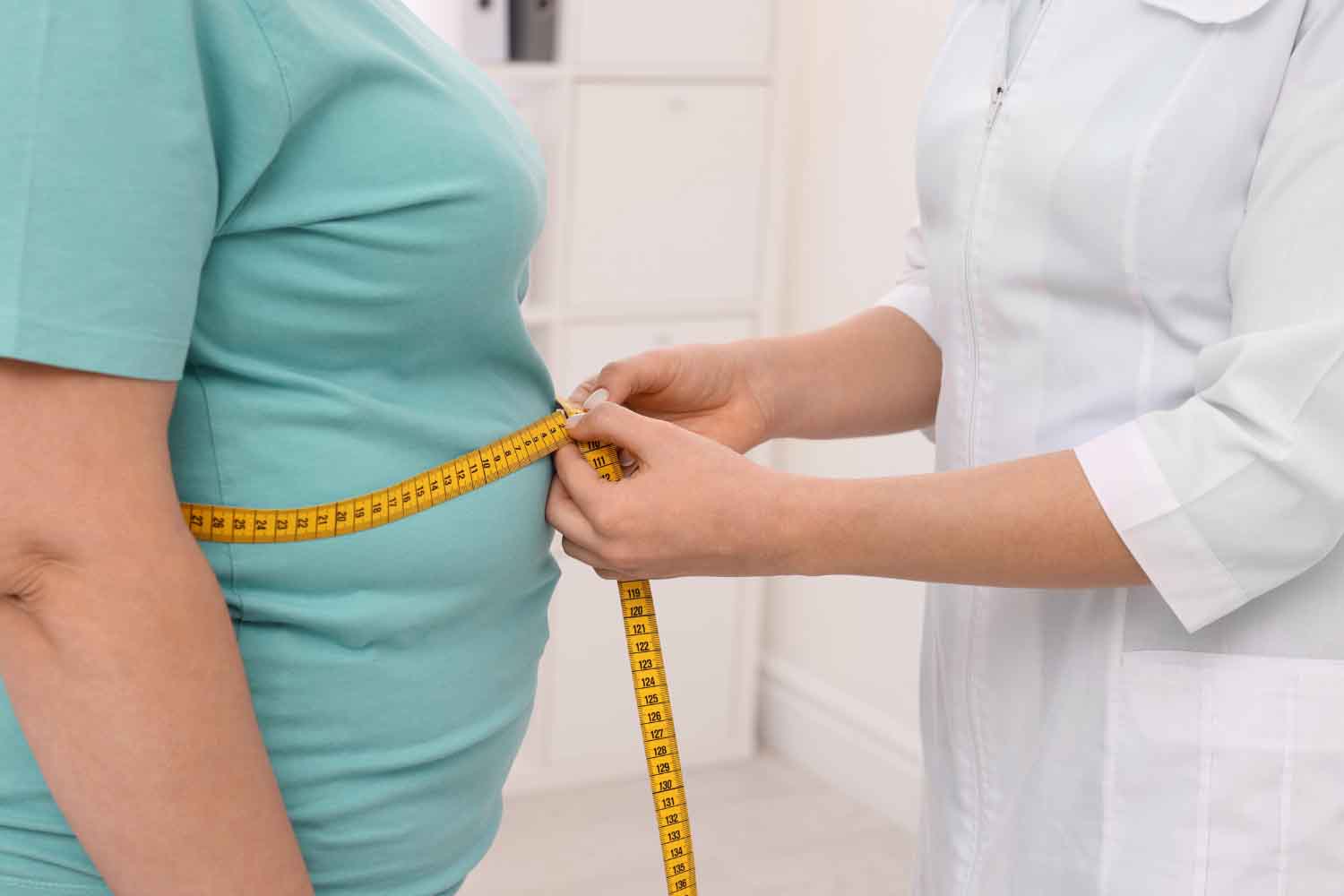
Obesity depends on what we eat and how much we move. Around these two variables, however, income, education, working hours, health services and even the place where you live accumulate. The data published by Istat in the report “Health: an achievement to be defended” they show how much these differences end up appearing on the scale too.
In 1990, obesity affected 5.9% of the Italian adult population. In 2025 the share reached 11.6%. In thirty-five years the value has almost doubled, while the growth has followed a rather precise direction: it affects men more, people with a low level of education and those living in the South.
The increase runs faster among men
In 2001 men and women started almost equally. 8.6% of men and 8.4% of women lived with obesity. In 2025 the male share rose to 12.4%, the female share to 10.8%.
Two tenths of the difference became 1.6 percentage points. The Istat report records the gap and places it among the lifestyle transformations that have occurred in recent decades. The causes can concern various aspects: type of work, diet, alcohol consumption, physical activity, medical checks and attention paid to prevention. The available numbers describe the overall result, without reducing it to a single explanation.
The male figure also fits into a broader healthcare framework. In the pages dedicated to smoking, for example, Istat recalls that in 1980 over half of men aged 14 and over smoked. In 2025 the share fell to 22.9%. In this case the change was enormous and visible. On the obesity front, however, the curve continued to rise.
This difference also tells how health risks change. Some behaviors are reduced through bans, public campaigns and increased awareness. Others grow up in everyday environments in which the quickest food is always available, movement must be planned and work leaves little free space.
The diploma also enters the dish
The strongest distance appears when the data is divided by educational qualification. Among people aged 25 to 44, the prevalence of obesity exceeds 12% among those with a low level of education. Among peers with a high qualification it remains below 5%.
The difference emerges early, when age alone still explains little. It then continues between the ages of 45 and 64 and remains visible even after the age of 65. In each range considered, less educated people have higher values than those with a diploma or degree.
The degree, taken alone, only tells part of the story. Behind that statistical entry often move income, job stability, neighborhood of residence, available time and the ease with which one can understand and use health information.
Reading a label requires some familiarity with percentages, portions and composition of foods. Following a diet requires the possibility of continuously purchasing what is indicated. Preparing meals takes time. Going to a gym requires money, while walking every day requires suitable roads and compatible times.
The Istat report links education and health also through much tougher data. Among Italians aged at least thirty, people with a low level of education have a mortality rate that is approximately 40% higher than those with a high education. Obesity therefore enters a distance already visible through chronic diseases, access to prevention and years of life. The body ends up absorbing conditions built long before the meal is served at the table.
Towards the South the percentage rises
The same fracture crosses the geographical map. In the Istat graph relating to 2025, the South has the standardized share of people with the highest obesity, ahead of the North and the Centre.
Standardization allows you to compare territories with a different age composition. The southern disadvantage, therefore, remains consistent even once the effect of the aging population has been corrected.
The report dedicates several pages to territorial health inequalities. Between 1990 and 2023, mortality decreased throughout Italy, with a faster decline in the Central-Northern regions. In some areas the reduction exceeded 50%, while in almost all of Southern Italy it stopped at around 35%.
In 2023, Campania and Sicily showed higher mortality levels than the rest of the country, for both men and women. Even the improvement in perceived health, recorded over the last thirty years, has advanced more slowly in the South.
This geography includes the availability of doctors and facilities, waiting times, the quality of transport, income and the presence of places in which to carry out physical activity. A well-kept park within walking distance changes your day. A sports facility several kilometers away often remains a possibility written on paper.
The same goes for shopping. Having well-stocked markets and supermarkets nearby expands your options. Moving between a few points of sale, high prices and packaged products on offer leads to more repetitive choices. The territory enters the plate in silence, through the distance, the cost and the time lost to reach what is needed.
Calories only explain the last step
From a physiological point of view, weight gain results from a prolonged imbalance between the energy introduced and the energy consumed. The formula remains linear. The life that produces that imbalance is much less so.
A sedentary job, a split shift, two hours spent on public transport and caring for children change the time allocated to movement and cooking. The same happens with economic precariousness, which pushes us to favor cheap, satiating, easy-to-preserve and quick-to-prepare foods.
Health communication can also widen distances. Generic indications such as “reduce portions” or “do more physical activity” work better when they are accompanied by concrete tools, accessible services and paths built on people’s lives. For some it means receiving nutritional assistance close to home. For others it means being able to carry out physical activity at low cost, having a quality school canteen or finding a doctor before the problem has already become complex.
Istat also reports an element that concerns younger people. In adults, Italy maintains obesity levels among the lowest in the European Union. During the developmental age, however, overweight and obesity reach much higher values than in several European countries. The Italian advantage therefore risks diminishing with the passing of generations.
Prevention begins in canteens, clinics, neighborhoods and working hours. It also passes through schools, because the gap linked to education already appears among young adults and continues to accompany them in subsequent years. The sheet with the diet can stay on the refrigerator. If the shift ends at nine, the shopping costs too much and the neighborhood can only be explored by car, it will remain there collecting dust.
