
In the small rover there will be two seats, two beds, a bathroom without a drain and a tiny room to transfer the samples collected during explorations. Everything will remain firmly anchored to Texas, yet for the four people selected that module will have to function as a vehicle traveling on the surface of another world.
There NASA is looking for four volunteers for the first Moon and Mars Exploration Analog mission, a simulation that will begin no earlier than August 2027 inside the Johnson Space Center in Houston. The crew will spend twelve months living and working in closed, isolated environments built to replicate some of the conditions expected during future human journeys to the Moon and Mars.
The entire effort will last approximately fourteen months. To the period spent in the habitats will be added two months dedicated to preparation, checks, training and data collection before and after the simulation. Applicants will also face a multi-day selection process and pass physical and psychological evaluations conducted by NASA.
An interplanetary trip without leaving Houston
The new mission will bring together for the first time two programs that until now had worked separately. The first is HERAacronym for Human Exploration Research Analog: a habitat of approximately 60 square meters, distributed over two floors and a small mezzanine, used to study the effects of isolation and permanence in very narrow spaces. During the simulation it will become the spacecraft responsible for transporting the crew through deep space.
The second environment derives from CHAPEAthe program that reproduces life on the surface of Mars. Its main habitat, Mars Dune Alpha, measures approximately 158 square meters, was created with 3D printing and includes spaces for sleeping, working, exercising, growing plants and managing daily operations. The facility will serve as a planetary base once the simulated travel phase is concluded.
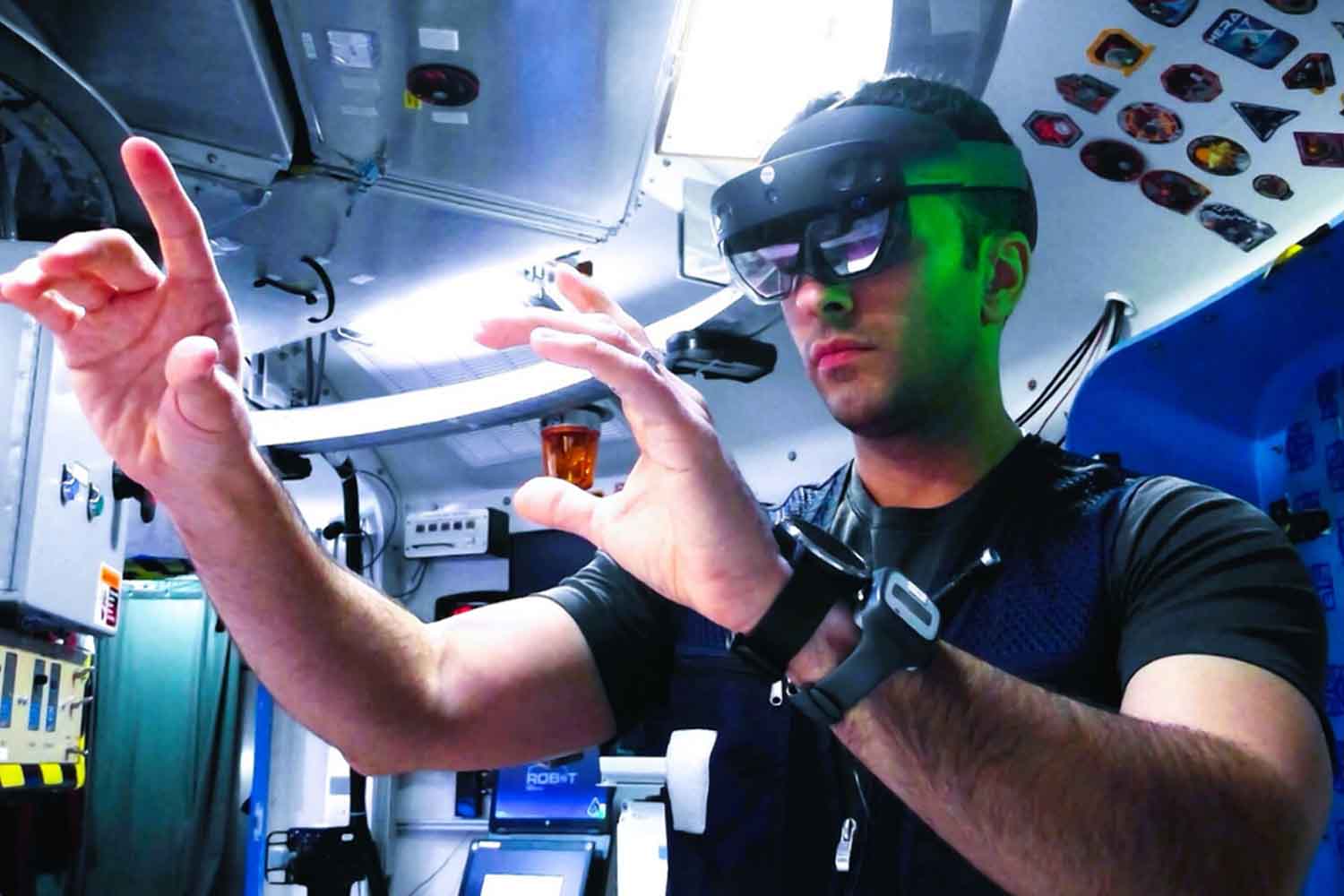
During the year volunteers will have to perform simulated spacewalkscontrol robotic systems, take care of habitat maintenance, work with limited resources and respond to faults introduced specifically by researchers. Some activities will be carried out in immersive environments with augmented reality viewers. The rover will instead serve to reproduce movements towards exploration sites far from the base.
Isolation will play a central role. In previous Martian simulations, NASA factored in communications delays of up to 22 minutes, limited supplies, technical problems and intense workloads. Conditions designed to observe how a small group reacts to fatigue, distance, forced coexistence and the impossibility of receiving immediate help from Earth.
Who can apply for the NASA mission
The door remains open exclusively to US citizens and Green Card holdersthat is, the permanent residence permit in the United States. The age range indicated is 30 to 55, although applications outside this range may be reviewed through additional authorization. The maximum height allowed is 74 inches, just under 1.88 meters, and a good command of English is required.
The selection then looks at the technical preparation. Aspiring crew members must have at least a bachelor’s degree in engineering, biological sciences, physical sciences or mathematics. A master’s degree can replace one year of professional experience, while a doctorate can cover three. Military service may also be considered equivalent to part of the required experience.
Very concrete details appear among the conditions indicated by NASA. Volunteers must therefore be able to follow the diet required by the mission without dietary restrictionsand must not have previous episodes of sleepwalking or use sleep medications. You also need solid technical skills, willingness to live in two different habitats and physical and psychological fitness to face a year of isolation.
Applications are open without a deadline already set. NASA provides a refund for participants, while the amount remains out of public notice. Specific limitations linked to contracts and periods of absence from work may apply to agency employees and collaborators.
NASA is already living on Mars in Texas
The ground was prepared by the CHAPEA missions. The first crew entered Mars Dune Alpha on June 25, 2023 and exited on July 6, 2024, after 378 days spent in the habitat. The four volunteers grew food, repaired equipment, dealt with delayed communications and worked under the limitations expected of a future Martian stay.
The second mission began on October 19, 2025 and will continue until October 31, 2026. Again, four people are living for 378 days inside the 3D printed structure, alternating physical exercise, maintenance, robotic operations, cultivation and fake trips to the surface of Mars.
The new experiment will broaden our gaze. NASA will be able to follow the same crew during the journey, arrival on the surface, external explorations and the return journey. Researchers will evaluate physical and mental health, group dynamics, the effectiveness of technologies, and the ability to maintain reliable performance when space, food, communications, and intervention options become limited. The results could contribute to the planning of future Artemis missions, a stable presence on the Moon and the first human journeys to Mars. Houston will remain behind the walls. For a year, however, the day will have to function as if the Earth were much further away.
