
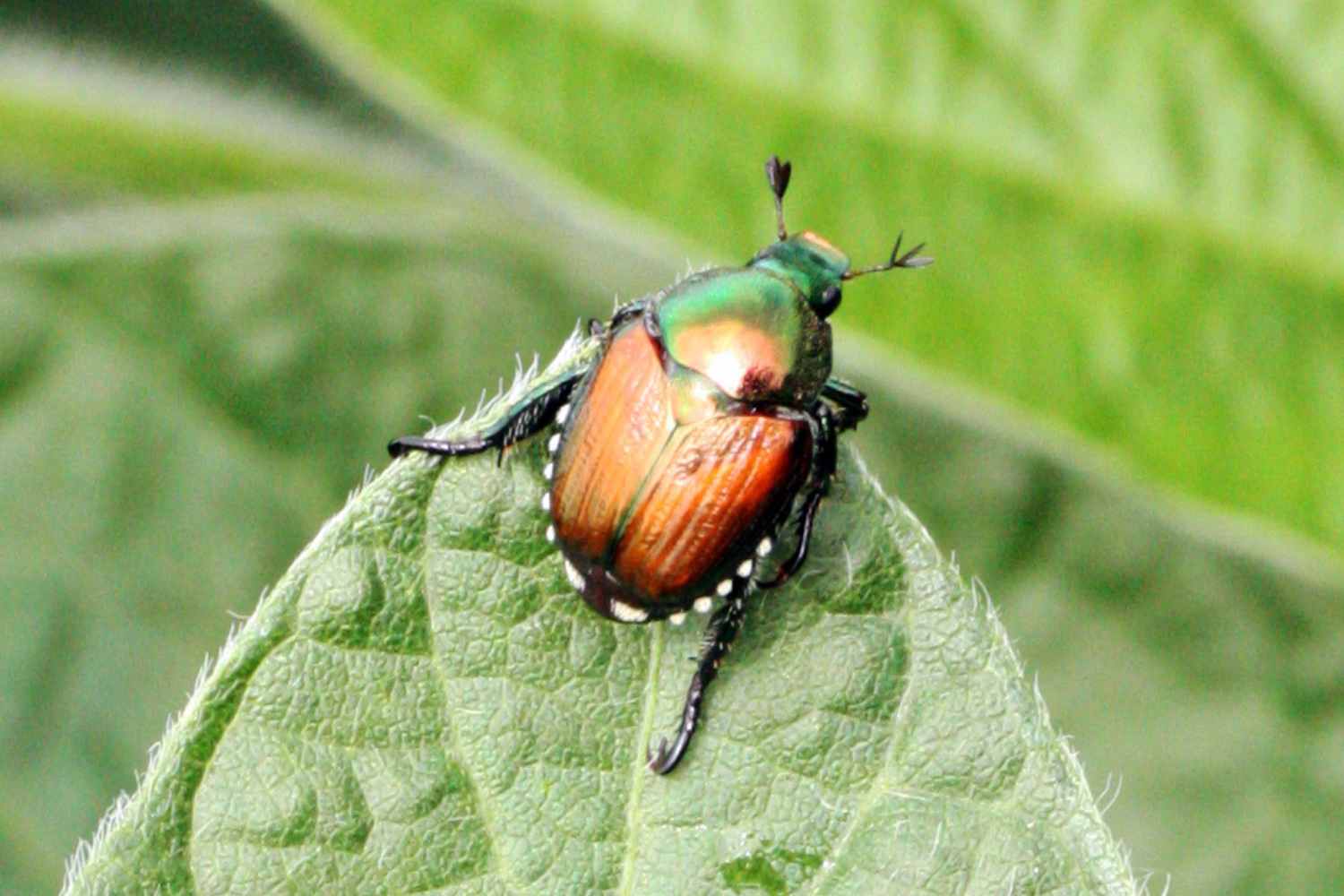
Twenty-seven thousand catches in a single trap, in a single day. This is the peak recorded last 2 July 2025 in the outbreak area of the Lower Valley, according to data from the Valle d’Aosta autonomous region. A number that explains why this year the regional phytosanitary service did not wait to install the traps, an operation that started on July 2nd, ten days earlier than the previous season.
A European quarantine beetle
There Popillia japonica Newmanmainly known as the Japanese beetle, is included among the priority quarantine pests for the European Union, in Annex II part B of Implementing Regulation (EU) 2019/2072. Originally from Japan, it arrived in North America in the early twentieth century and in continental Europe in the summer of 2014, between Piedmont and Lombardy, in the Ticino Park, as reconstructed in the technical sheet of the Valle d’Aosta Region.
@regione.vda.it
In Valle d’Aosta the first specimen was intercepted in August 2020 in a car park in Cervinia, an isolated case with no consequences given the altitude, as reported by the regional phytosanitary service. Since then the species has established itself further downstream: there are twenty-seven municipalities classified as infested, from Pont-Saint-Martin to Saint-Vincent, based on the updated perimeter published by the Region.
The 188 traps between Pont-Saint-Martin and Chambave
For the 2026 campaign, the regional phytosanitary service has positioned 188 “Attract & Kill” traps in the stretch between Pont-Saint-Martin and Chambave, where the presence of the insect is more consistent; the installation, which began on 2 July, ended on 8 July, as specified in the press release from the Agriculture and Natural Resources Department quoted by La Prima Linea. The Department also reports a significant increase in the presence of the beetle in the Lower and Middle Valley areas, in line with what has been observed in the neighboring regions, and reiterates that it maintains coordination with Piedmont and Lombardy as well as with the National Phytosanitary Service and Crea. On the winegrowers’ front, Sara Manganone, from Châteaux Vieux in Pont-Saint-Martin, declared: “Together with Piedmont and Lombardy we will need to be able to find a solution to this problem”, adding that the problem does not only concern the vine but also fruit trees and family gardens.
A warning to owners of lawns and gardens
The Region recommends not installing attractive traps in vineyards, vegetable gardens and private gardens, because if used outside of a coordinated strategy they risk attracting more insects from the surrounding areas; any use of the devices must take place only upon indication of the regional phytosanitary service, which also invites you to report any damage to the traps by writing to fitosanitario@regione.vda.it or by calling 0165 275407.
The alarm from Coldiretti and Confagricoltura
Coldiretti Valle d’Aosta has asked for an extraordinary intervention plan and strengthened coordination between the regions involved. “The popillia japonica no longer represents a limited problem, but an emergency that risks compromising the work of many companies,” declared the president Alessia Gontier, as reported by Ansa. Along the same lines are Confagricoltura Valle d’Aosta, which through its representative Morena is asking to expand and make the trap network more widespread throughout the regional territory.
