
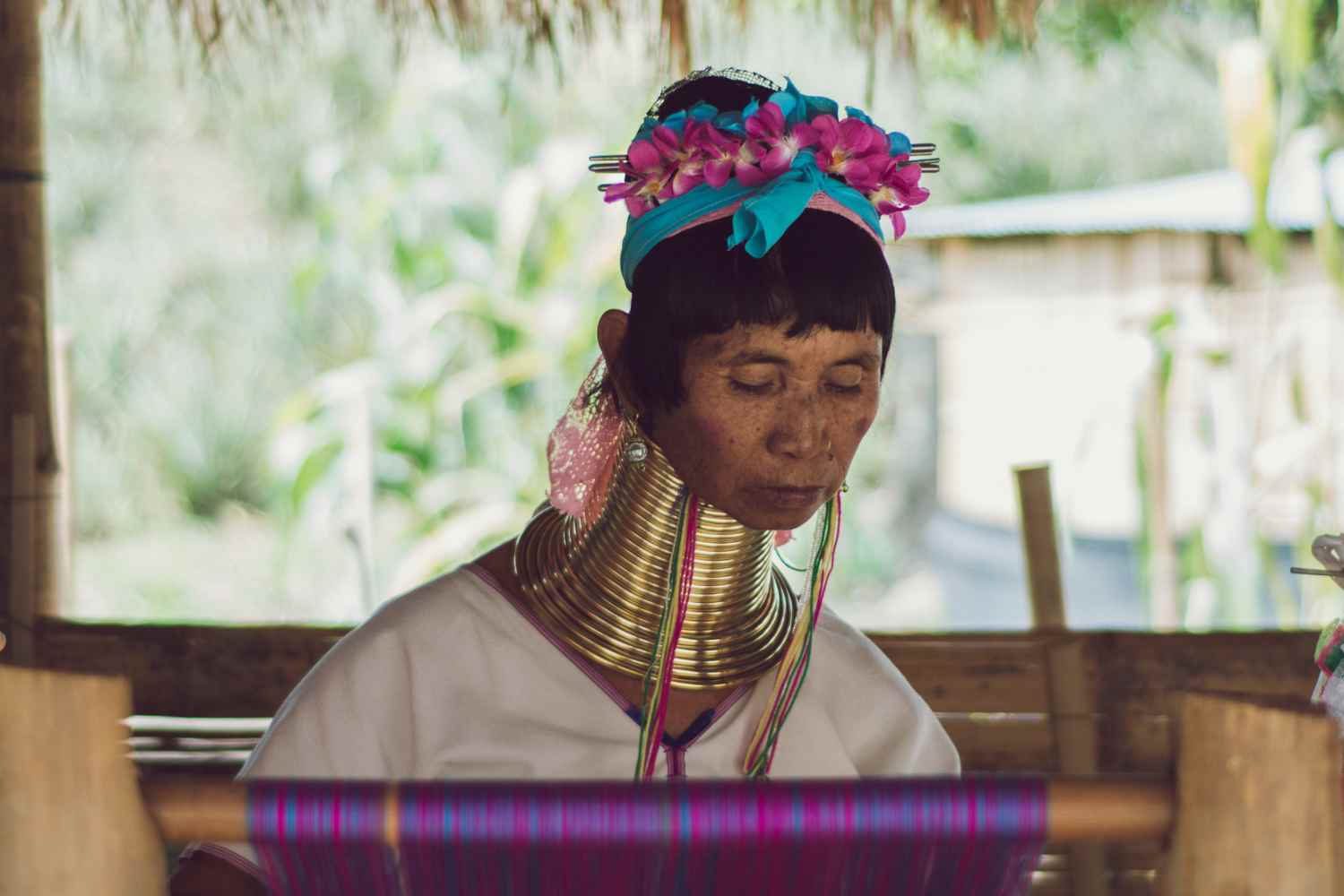
The Kayan Lahwi are one of the subgroups of the Karenni (Kayah) people, originally from what is now Kayah State, in Myanmar. Since the 1980s, thousands of people have fled the civil war and the persecution of the Burmese military regime, finding refuge in refugee camps along the border with Thailand. It is precisely in this context that the tradition of women with “long necks” has also become a source of economic sustenance, often turning into an attraction for tourism.
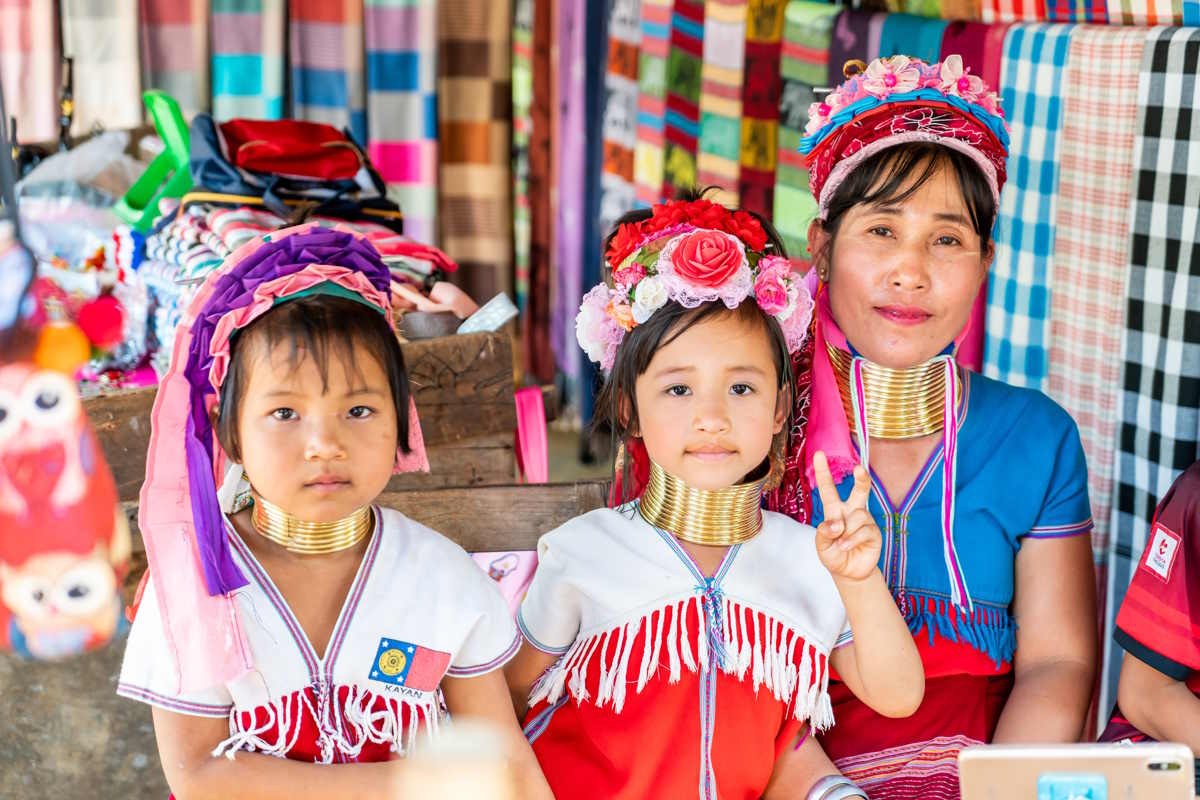
Typically, girls from the Kayan Lahwi people, also known as Padaung, an ethnic group from Burma and Thailand, begin to wear spiral rings around their necks at the age of five.
These brass coils appear to elongate the neck, which is why Padaung women are known as ‘giraffe women’. Women who are sadly exploited by luxury Thai resorts and considered tourist attractions.
In reality it is not the neck that lengthens, but rather the shoulders that descend and the collarbones that deform due to the weight of the rings which is progressively increased over the course of the woman’s life. According to tradition, the adoption of rings would be voluntary and not imposed, so much so that today more and more women decide not to let their little girls wear spiral rings, yet throughout history this feature has been exploited in the most vulgar way.
Photographs from 1935 tell us, for example, that giraffe women were attractions in English circuses and shows, attracting large crowds. But even today there is no shortage of episodes in which their figure is denigrated. Let’s retrace the history of this tradition together.
The first coil, worn by a girl at about the age of five, is usually about 10 centimeters high, in about two years another coil is added. Brass (formerly gold and copper) coils are then added by a bedinsayah (medical spirit) until reaching a limit of 21-25 centimeters, at the age of marriage.
Eating and swallowing become a problem as you get older, but a long neck is a symbol of beauty in a woman. In the past it was a status symbol of wealth, today in some areas of Thailand these women are shown as tourist attractions in luxury resorts, as reported by Cultural Survival.
@danieloweb
/123rf
The land of the giraffe women
The Padaung are an ethnic group that grows rice in the mountains south of the city of Loikaw. According to this population, the practice of giraffe women was born to protect women from tigers, which often attack a victim by biting their neck, but the origin of the rings remains a subject of debate. According to some legends they served to protect women from tiger attacks; according to others they had the aim of making the girls less attractive to the slave traders. Some anthropologists instead believe that they represented above all a symbol of cultural identity and belonging to the group, as well as an aesthetic ideal passed down from generation to generation.
However this tradition, combined with the brass coils wrapped around the ankles and calves up to the knee, severely hinders mobility. The weight and pressure of leg spirals can make walking slow and stiff, and Padaung women face the challenges of steep mountain rice paddies.
Once placed, neck coils are rarely, if ever, removed. Due to the length of their wear, the neck must be supported with a brace until the muscles can regain their strength. Removal is said to have been used as punishment for adultery; unreinforced, the woman’s neck would fall and she would suffocate.
For years it was argued that the removal of the rings would have caused the woman’s death because her neck, now unable to support her head, would have broken. In reality, medical studies disprove this belief. After many years of use, the neck muscles are weakened and removal requires an adaptation period, but does not automatically cause lethal consequences.
Since World War II, as the Padaung have become less isolated from neighboring Karen and Karenni, the process of spiral necking has been in decline. Some Padaung women removed their rings after converting to Christianity, and others simply rejected the practice as old-fashioned and cumbersome.
@topntp
/123rf
The tourism business
Despite this, photographs and paintings of Padaung women continue to be used by the Burmese government tourism agency in its advertising brochures and posters. Trekking tours are often advertised with absurd phrases like “You will be able to see real primitive tribes in the Thai jungle”.
@hecke
/123rf
@hecke
/123rf
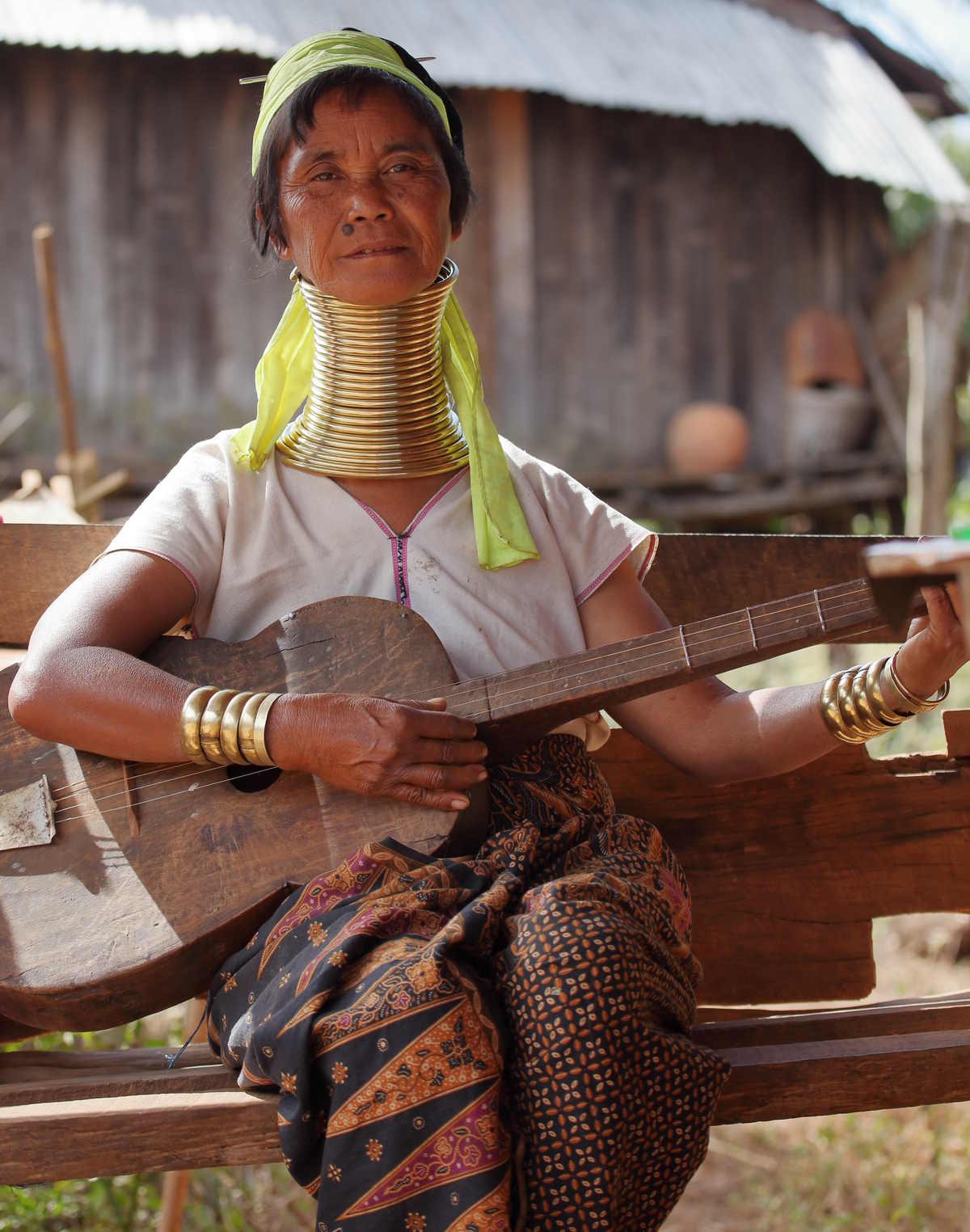
Their presence brings tourists and when they complain about the aloof attitude of these women, they are forced to sing and play the guitar for the visitors.
Today Kayan women have very different stances on tradition. Some continue to wear the rings because they consider them part of their cultural identity and community history. Others, especially young women, choose to give them up, considering them incompatible with a modern life or simply because they do not wish to undergo such a demanding practice.
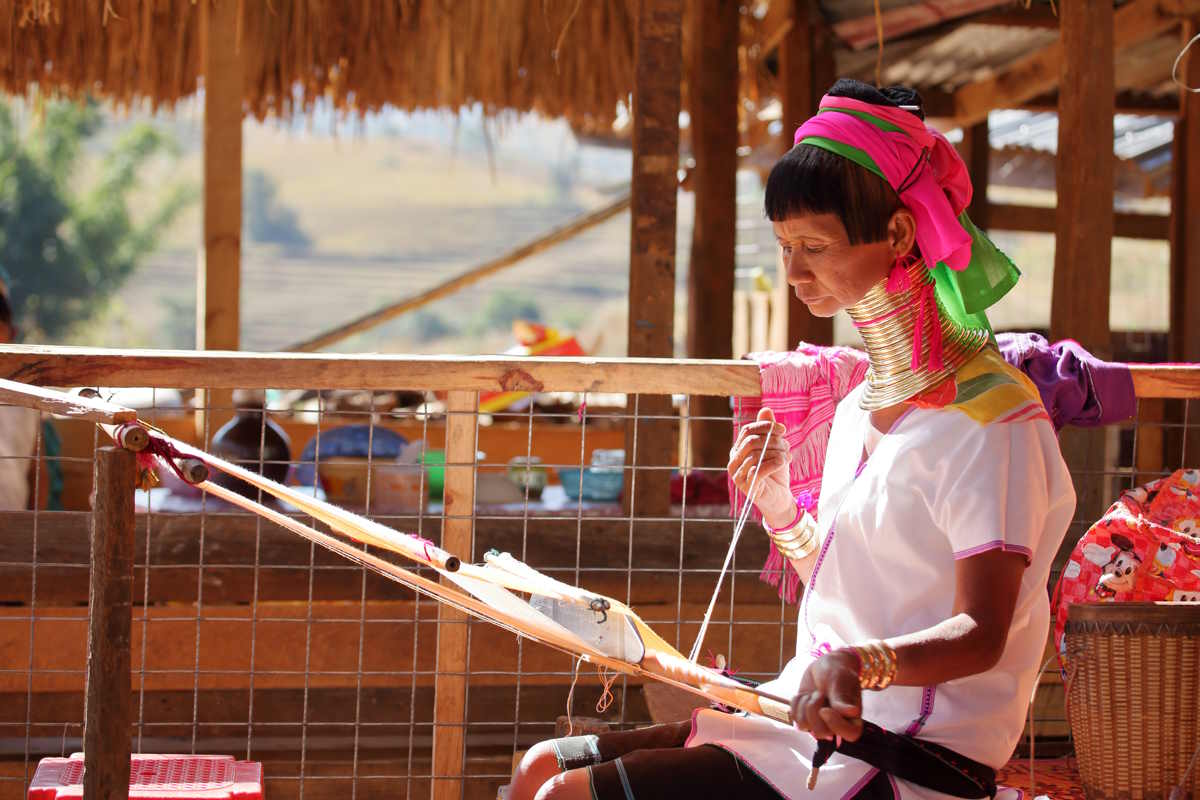
Numerous human rights organizations have defined some tourist villages in Thailand as real “human zoos”. Visitors pay a ticket to photograph women with rings, buy souvenirs and watch craft demonstrations. For many families this represents one of the few sources of income, but the system has been criticized because it limits the freedom of movement of refugees and encourages the preservation of tradition more for economic than cultural reasons.
The story of the so-called “giraffe women” tells of the difficult balance between cultural identity, self-determination and tourism. A tradition cannot be judged only with the Western gaze, but at the same time it should never become a pretext for turning people into attractions. The real challenge is to guarantee Kayan women the freedom to choose whether or not to continue this practice, without financial pressure or expectations from visitors.
