
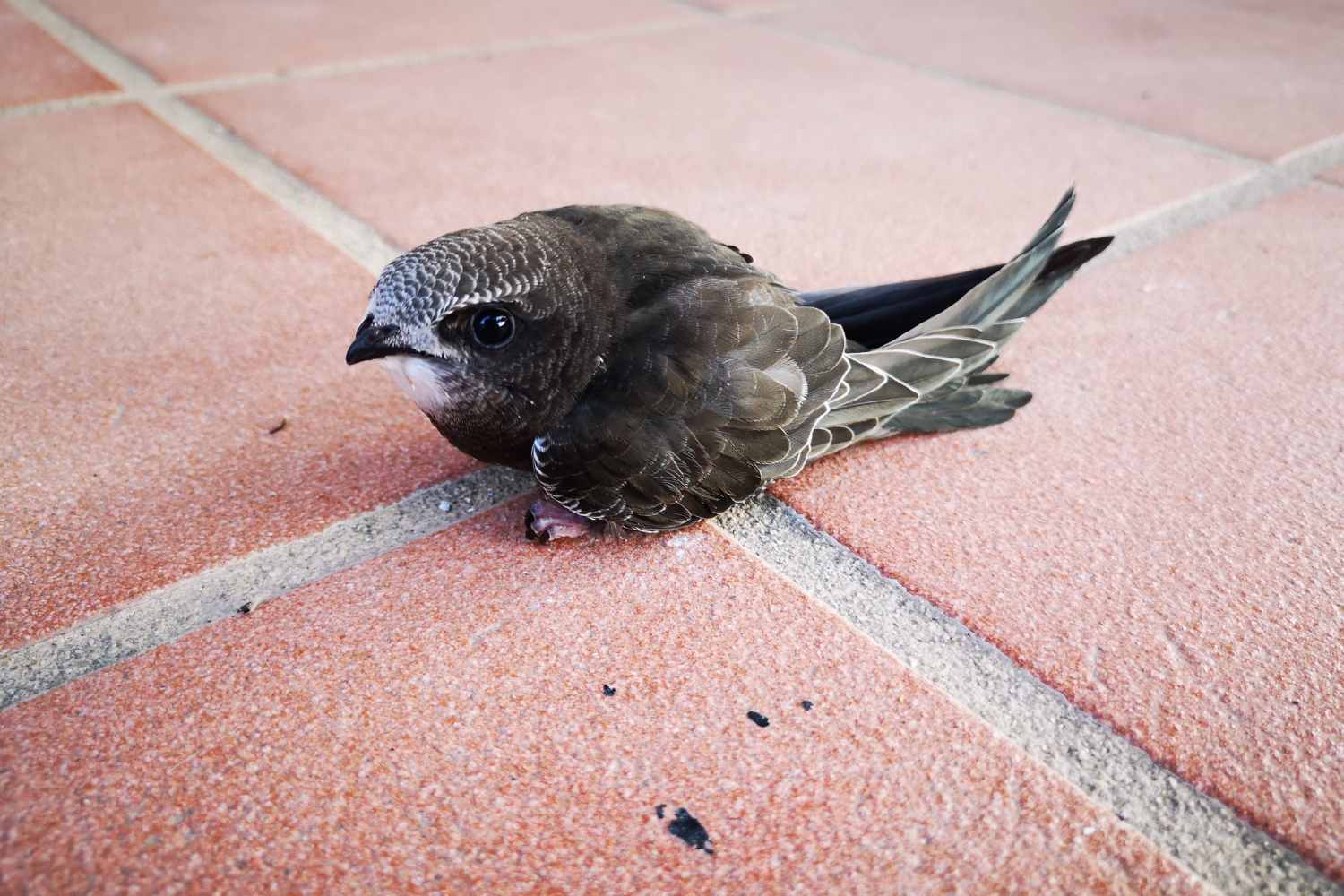
With the summer heat, the number of swifts found on the ground in the city increases. Heat waves, sudden storms and pruning during the breeding season can put these birds in difficulty, which often end up on roads and pavements at the risk of being run over or preyed upon. In these cases it is essential to know how to intervene: a wrong gesture can compromise the animal’s chances of survival. The indications from the Wild Animal Recovery Centers (CRAS) and LIPU explain what correct behavior is.
Why do swifts end up on the ground?
Unlike many other birds, swifts spend almost their entire lives in flight. They practically only perch to nest and have very short legs, which do not allow them to take off easily from the ground. For this reason, a swift found on the ground almost always requires human intervention.
The first steps to follow
If you find a swift:
Is he an adult or a young person?
Understanding the age of the swift is important. An adult has wings that, when folded, extend beyond the tail by about 2-3 centimeters. If he appears alert, has no obvious injuries and is assessed as being in good condition, expert personnel can determine whether he is fit to fly again.
A juvenile, however, has shorter wings that do not go beyond the tail and may still show the sheaths of growing feathers. In this case you should not try to fly it: it must be entrusted to a Wild Animal Rescue Centre.
Never throw a swift from above to make it fly
One of the most frequent mistakes is trying to throw the swift into the air from a balcony or terrace. But a swift that is not ready to fledge can fall on its chest and suffer serious internal injuries, even fatal. Better to try from the ground and in a spacious place like a park.
Only expert personnel are able to assess whether the animal has the necessary muscles to resume flight safely.
What to feed?
The priority must always be to contact a CRAS as soon as possible. If hospitalization takes longer, the most suitable diet consists of insects, such as crickets or mealworms, available in specialized shops.
As LIPU explains, if the swift is dehydrated, a very small quantity of water at room temperature can be administered, possibly sweetened with a little honey or sugar. Simply moisten the tip of a finger and deposit a drop on the side of the beak, being very careful not to let the water enter the respiratory tract.
After about 30 minutes you can try to offer him one or two small meals by choosing from these foods:
You should never force the beak open, because it is very delicate and could break or suffer serious damage.
For a swift it is essential not to improvise the diet, because a wrong diet can cause serious problems or even be fatal. Foods to avoid include:
Who to contact
As soon as possible you should contact a Wild Animal Recovery Center (CRAS) in your area, which will be able to indicate how to proceed or take charge of the animal. Alternatively, you can contact LIPU (national headquarters 0521/273043 or local) or the relevant Provincial Administration.
Timely and correct intervention can make the difference between life and death for these extraordinary migratory birds.
