
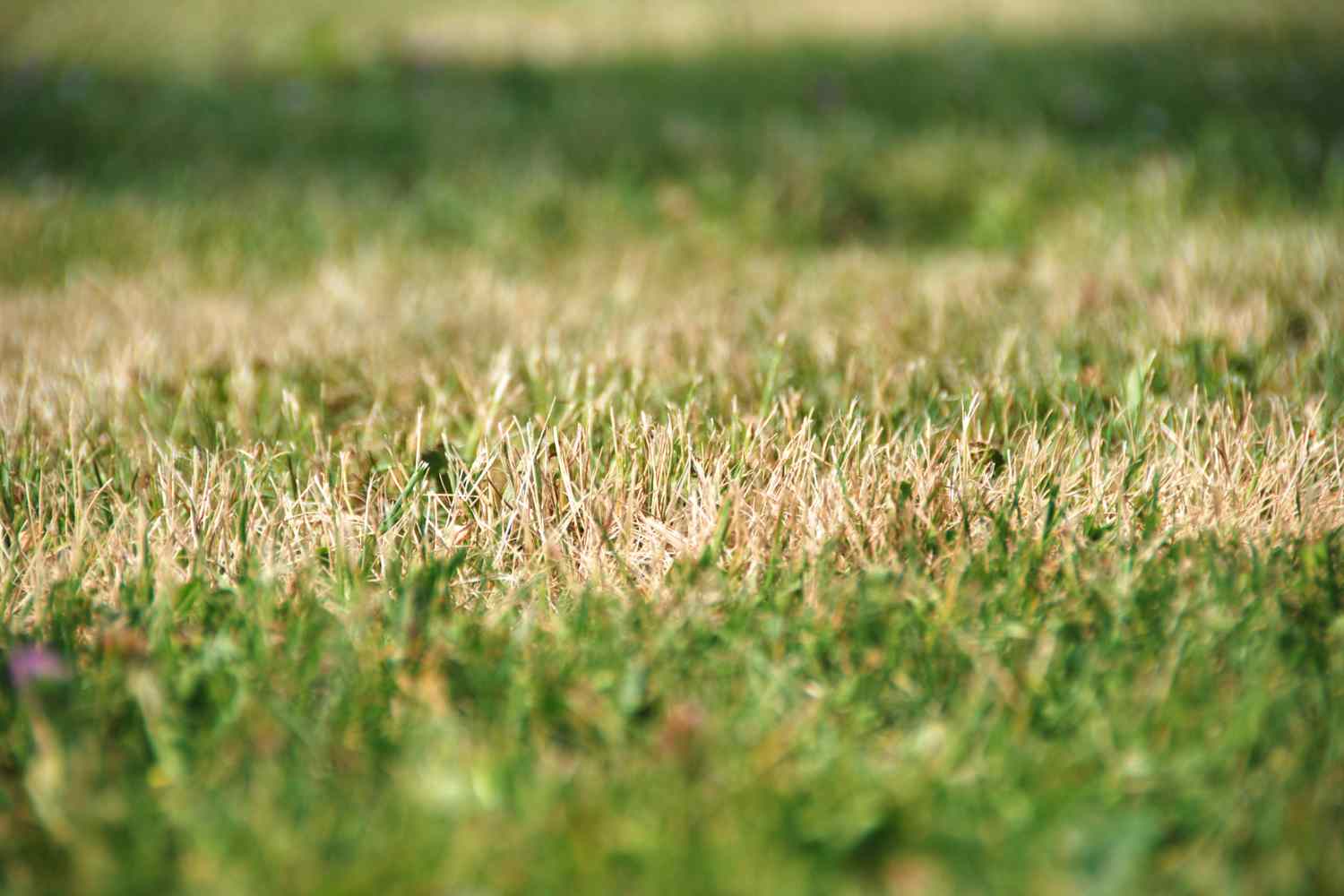
After days of high temperatures, many gardens begin to show signs of heat stress. Lawns that appeared green and lush just a few weeks ago can quickly turn into yellowed surfaces, with dry patches and burnt-looking areas.
The good news is that, in most cases, this is not permanent damage. In fact, grass has a remarkable ability to adapt and can enter a sort of “rest” phase to survive periods of drought and high temperatures. To help her recover, however, it is important to avoid some very common mistakes and intervene in the correct way.
Why Lawn Turns Brown During Heat Waves
When temperatures rise and rainfall is scarce, grass tries to conserve its resources by minimizing vegetative activity. In this phase, the production of chlorophyll, the pigment responsible for the green color, slows down, taking on yellowish or brown tones.
This phenomenon is often interpreted as the death of the lawn, but in reality it represents a survival strategy. The roots remain alive in the soil and await more favorable conditions to resume growth.
Continuous trampling can also contribute to making the situation worse. During the summer we spend more time outdoors and frequent passage compresses the soil, making it more difficult for water, oxygen and nutrients to pass to the roots.
The gesture of a few minutes that can make the difference
According to gardening experts, the most effective practice is to water the lawn in the early hours of the morning.
It may seem like a detail, but the time is fundamental. Watering at dawn or in the early hours of the day allows the water to penetrate the soil before the sun becomes too intense. This reduces losses due to evaporation and gives the roots the time they need to absorb moisture.
On the contrary, watering in the middle of the day is often not very effective. Much of the water evaporates quickly and the soil tends to dry out again within a short time.
Experts recommend intervening preferably between 6 and 10 in the morning, when temperatures are still relatively low.
Be careful not to overdo it with water
When you see brown spots appearing on your lawn, the temptation is to drastically increase watering. However, excess water can also cause problems.
In fact, constantly wet soil favors the development of fungal diseases and can further weaken the root system. It is better to water less frequently but more deeply, in order to stimulate the roots to develop deeply in search of humidity.
This makes the lawn more resistant to future heat waves and less dependent on watering.
The mistake to avoid: cutting grass during extreme heat
Many garden owners continue to use the lawnmower even during the hottest days, thinking it will improve the appearance of the lawn. In reality, this operation can further increase vegetation stress.
When the grass is already weakened by heat and drought, cutting represents a kind of additional trauma. Furthermore, the longer leaves perform a protective function because they shade the ground and reduce water evaporation.
For this reason, experts recommend suspending cutting during the most intense phases of the heat wave and waiting at least one or two days after heavy rain or irrigation before intervening.
Too compacted soil can make the problem worse
If your lawn continues to have dry patches despite watering, there may be another cause: soil compaction.
When the soil becomes too hard, water struggles to penetrate deeply and the roots receive less oxygen. In these cases it may be useful to perform simple aeration using a garden fork, creating small holes that promote the circulation of air and water.
This is a simple intervention that can significantly improve the health of your lawn, especially after long periods of heat and drought.
A more resistant lawn starts with sustainable management
Increasingly hot and drier summers are changing the way we manage green spaces. Rather than chasing a perfectly green lawn even in the most extreme periods, experts urge us to adopt more sustainable practices, reducing cuts, limiting water waste and accepting that grass can temporarily lose color during heat waves.
In most cases, with the arrival of milder temperatures and the first rains, the lawn will gradually return to being green and lush. In the meantime, irrigation carried out at the right time can be one of the simplest and most effective aids to accompany it through periods of greatest climatic stress.
