
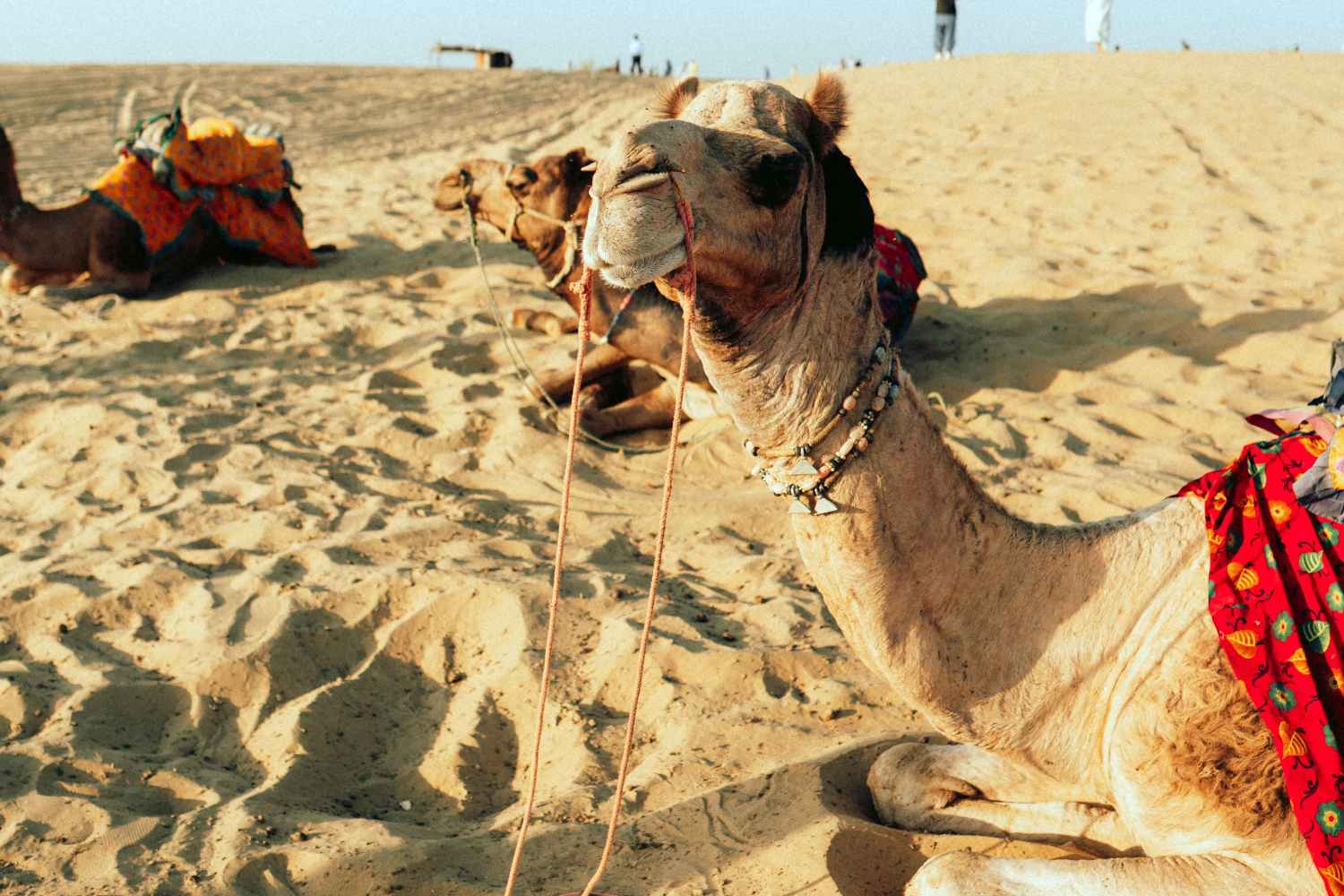
Not even the symbol par excellence of biological resistance to extreme conditions can any longer resist the devastating impact of global warming. In the Afar region of northeast Ethiopia, searing temperatures and extreme heat are taking a toll on the health of dromedaries. Giving voice to the desperation of local farmers is Ali Umer, a forty-year-old owner of around five hundred animals in Semera.
The man said he had helplessly witnessed the loss of eight camel calves in just one month, explaining how the temperatures of the sand can burn the skin and corrode the hair of the animals when they seek rest on the ground, causing painful blisters on the legs and abundant tearing. Even the area’s winds, once a source of relief and refreshment, have turned into searing heat currents that make daily life and the transportation of salt bricks in the Danakil Depression unsustainable.
Dramatic data between Somalia and the analyzes of veterinarians in Kenya
The crisis does not spare the other countries of the Horn of Africa and North Africa, territories which alone are home to around eighty percent of the world’s dromedary population. In Somalia, recent surveys of nearly 6,000 pastoral households have revealed that drought-related camel mortality is a collective tragedy affecting 46% of households, with nightmarish peaks in the northern Sool region, where a death rate of 73% is recorded.
In north-eastern Kenya, on the border with Ethiopian territory, veterinarian Hassan Nuya Guyo of Marsabit county reports an increase of more than 15% in animal deaths in the last two years. The expert finds a continuous increase in cases of hyperthermia in camels, a condition that compromises the animals’ immune defenses, exposing them to contracting multiple and deadly infections.
The critical threshold of 41 degrees and cellular collapse
The scientific reason for this massacre lies in the biological limitations of the species, explained by experts in the sector. Although these animals easily manage temperature variations of up to forty degrees, saving liquids, FAO expert Mohammed Bengoumi underlines how the continuous exceeding of 50 degrees in the Sahara causes unstoppable thermal stress.
Professor at the University of Ghardaia in Algeria, Abdelmadjid Chehma, has demonstrated that temperatures constantly between forty-one and forty-five degrees directly attack the cellular structures of animals, destroying white blood cells and causing an irreparable immune collapse. Added to this scenario are the observations of professor Mohammed el Khasmi of the University of Casablanca in Morocco, who highlights a dramatic clinical picture of drastic weight loss, severe muscle wasting, inflammation, bone disease, kidney imbalances and a collapse in milk production.
The great escape towards the south and the alarm from the World Meteorological Organization
Faced with the progressive drying up of water sources, the disappearance of shaded areas and vegetal cover, many shepherds are forced to drastically change their age-old habits. Researcher Daniel Gelan of Vision University in Ethiopia confirmed that these are not usual seasonal movements, but rather a definitive abandonment of the northern regions towards the southern territories in search of water resources.
In fact, data provided by the World Meteorological Organization highlights that North Africa has recorded the fastest temperature increase on the continent, equal to 0.43 degrees per decade between 1991 and 2025. An unsustainable condition that is transforming even man’s most tenacious ally in the desert into a helpless victim of climate change.
