
During heat waves and extremely hot days, shutters and shutters on sun-affected windows should be closed before the rays reach the glass. Leaving them ajar to let some air circulate seems like a reasonable compromise between darkness and the oven; in the hottest hours, however, that crack offers the sun a fairly comfortable entrance.
Even an open window can make the situation worse. A current of air provides relief on the skin, especially when it promotes the evaporation of sweat. If it is 36°C outside and 29°C inside, the air entering still remains at 36°C. The house breathes, of course. Hot air.
According to a guide published by ENEA, completely lowering the shutters or closing the shutters of windows exposed to the sun can reduce the entry of solar energy by up to 80%. The indication concerns daylight hours and above all the openings reached directly by the rays.
During the day the glass must remain in the shade
Heat also enters the house through glass. Solar radiation passes through the window and heats floors, furniture, walls and fabrics, which slowly release the accumulated energy. That’s why a room can continue to heat up even after the sun changes direction.
External protections are particularly effective because they stop the rays before they reach the glass. Internal curtains help, especially when they are clear and thick, but they intervene when part of the dirty work has already been done: the sun has passed the glass.
The French agency for ecological transition, ADEME, recommends closing the shutters before the sun hits the windows and also closing the windows when the outside temperature begins to rise. Waiting to feel warm means moving when floors and walls are already accumulating energy.
This doesn’t require you to turn your entire house into a cellar at eight in the morning. The closures must be managed according to the exposure: the windows that are already lit are protected first and, during the day, those that are about to be reached by the sun. A shaded room can retain natural light; the window stays closed when it’s warmer outside than inside.
When the shutters can remain ajar
The half-open position makes sense especially during the night and in the early morning, when the outside air is finally cooler. With the window open, a shutter stopper can allow air to pass through while maintaining a minimum amount of shade, security and privacy.
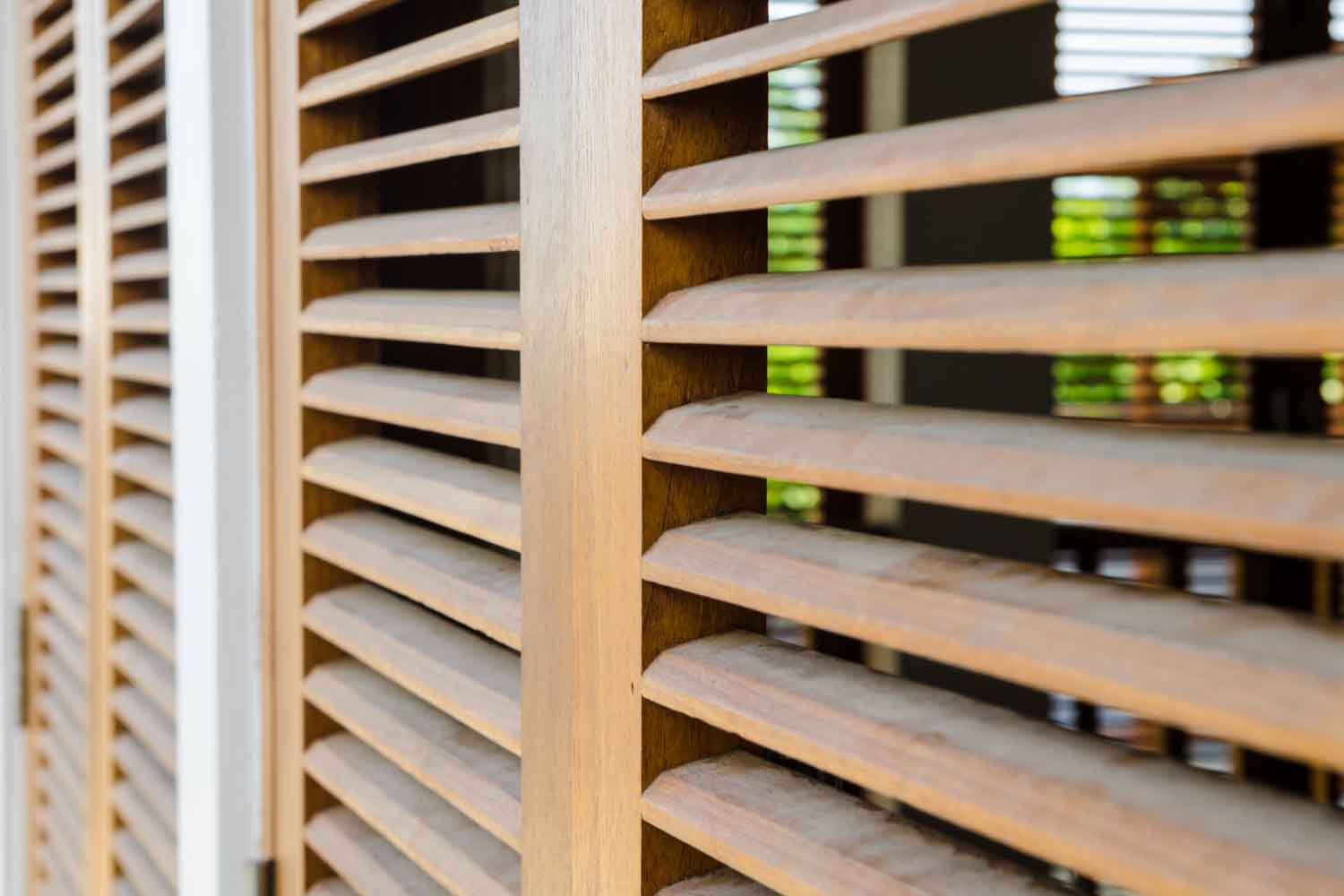
Something also changes based on the type of closure. Shutters with fixed or adjustable slats can shade the sun while letting air and a little light filter through, as long as the inclination prevents direct rays from reaching the glass. Full shutters protect well from radiation, but when closed they allow very little air to pass through. Shutters, on the other hand, offer the best sun protection when the shade is completely lowered.
A technical guide from the French National Housing Agency distinguishes precisely these cases: the slats can retain a certain permeability, while a traditional roller shutter is more effective against the sun when fully deployed. To ventilate at night it may be necessary to lift it at least partially.
The practical criterion is brutal in its simplicity: if a blade of sunlight passes through the shutter and is drawn on the floor, the screening is too open. A little diffused light is fine. The direct ray, during a hot day, immediately begins to heat what it encounters.
The windows reopen when it gets cooler outside
The useful time to ventilate generally comes late in the evening, during the night or in the early hours of the morning. It is advisable to open more windows, possibly on different sides of the house, to create a current capable of carrying out the heat accumulated by walls, ceilings and floors.
ADEME suggests comparing the internal temperature with the external one: the opening becomes useful when it is as cool or cooler outside than the house. In multi-level apartments, it can help to open low and high windows, taking advantage of the natural rise of hot air.
As soon as the sun hits the windows again or the external temperature exceeds the internal one, exposed windows and screens are closed again. In houses under roofs, poorly insulated or surrounded by asphalted surfaces, this method can limit overheating without working miracles. During tropical nights, when even after sunset the air remains very warm, the cooling margin is significantly reduced.
The sequence, therefore, matters more than the position chosen once and for all: at night it opens and the air is allowed to circulate; during the day the windows are closed and the sun is kept away. The crack in the shutters at three in the afternoon remains above all a rather generous pass for the heat.
