
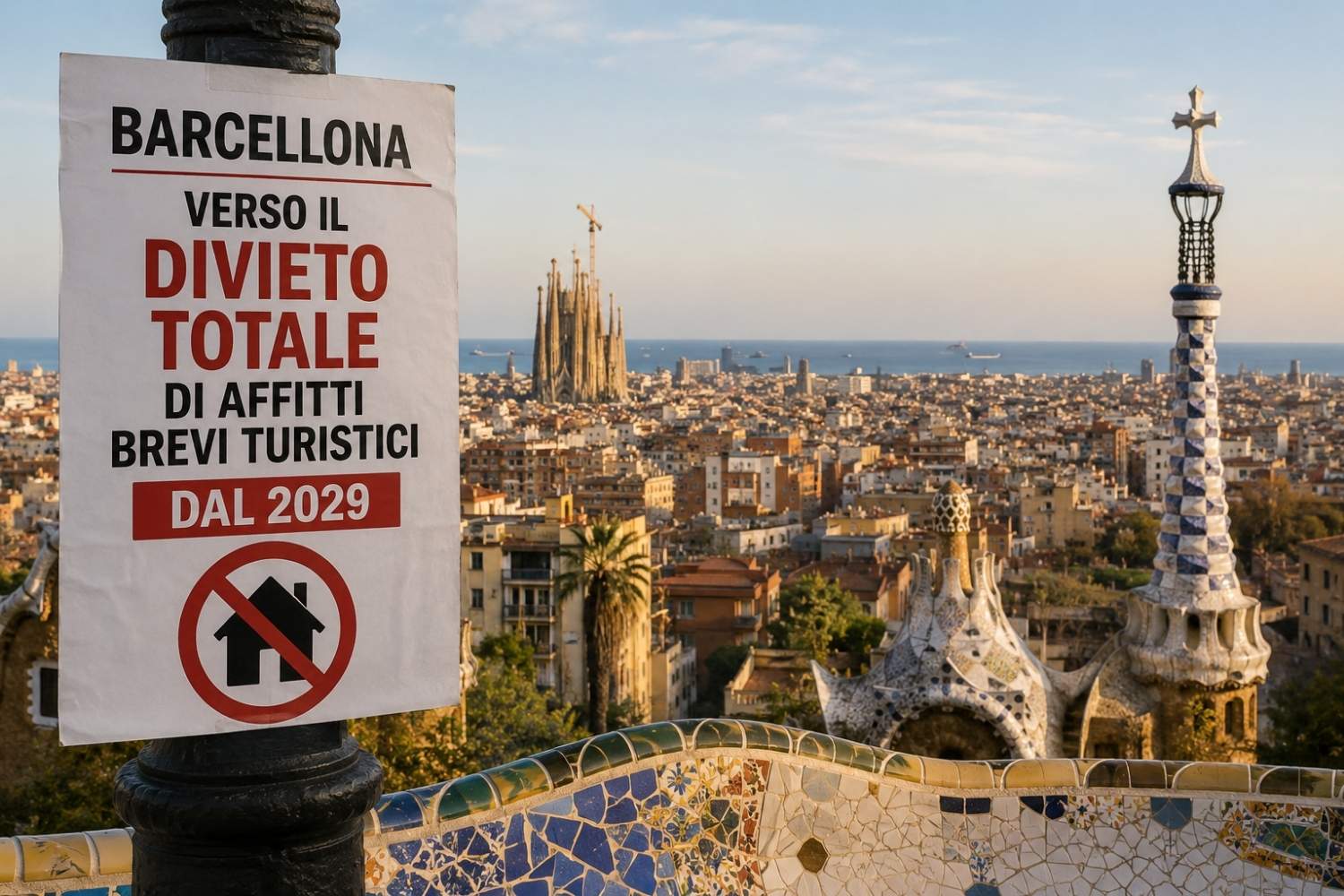
Ten thousand one hundred and one apartments is the exact number of short-term rental licenses that the City of Barcelona has decided not to renew, marking the end of a tourism model that for years has transformed entire neighborhoods in the historic centre. Mayor Jaume Collboni announced the plan in a press conference, presenting the so-called Pla Viure: the city will stop issuing new licenses and will not renew existing ones, so that from November 2028 no home will no longer be allowed to be rented to tourists, as communicated by the Ajuntament de Barcelona. A measure which, if confirmed on schedule, would make Barcelona the first major European city to completely eliminate short-term tourist rentals.
The Municipality’s reasoning is as simple as it is politically explosive. “Let’s ensure that tourist activity in residential apartments completely ceases in Barcelona,” Collboni declared in the same press release. Therefore, the approximately ten thousand homes currently registered as tourist rentals will thus return to the rental or ordinary sale market. The Municipality relies on Decret llei 3/2023, of 7 November, published in the Diari Oficial de la Generalitat de Catalunya, which sets a maximum limit of five years for tourist licenses in municipalities with a real estate market under pressure. The plan has already passed an initial judicial scrutiny, and on 13 March 2025 the Tribunal Constitucional fully rejected the unconstitutionality appeal presented by the Partido Popular parliamentary group, as announced by the Court itself.
Cruises are also in the sights
The short-term rental front is not the only one on which the Municipality is intervening. Barcelona has been working for some time to reduce the presence of the so-called staircase creuersships that stop only a few hours without staying overnight, aiming to transform the city into a base port rather than a hit-and-run stop, as stated on the page dedicated to the management of cruise tourism of the Ajuntament. On this front, in mid-July the Municipality’s Economy and Finance commission gave the green light to an increase in the municipal tax up to the maximum allowed, 24 euros per day, compared to the current 11, an increase still in the approval phase and not yet formalized in a definitive tax ordinance, and for this reason reported so far only by the local and sector press, not by an official press release from the Municipality.
What the residents think
Discontent with overtourism does not fall within the parameters of mere perception, because it is an aspect measured and supported by data: a survey by the Ajuntament de Barcelona itself found that 76.7% of residents believe that the city is reaching, or has already reached, its tourist capacity limit, against 21.5% of the opposite opinion. The same poll shows that 56% of the population would be in favor of further increasing the tourist tax.
The most delicate issue remains open, that of possible side effects: the fear concerns the fact that without the short-term rental channel, many owners could simply choose to sell, moving capital elsewhere instead of putting the houses back on the ordinary rental market. We will find out whether the municipality of Barcelona is right or not, calmly, by 2029.
