
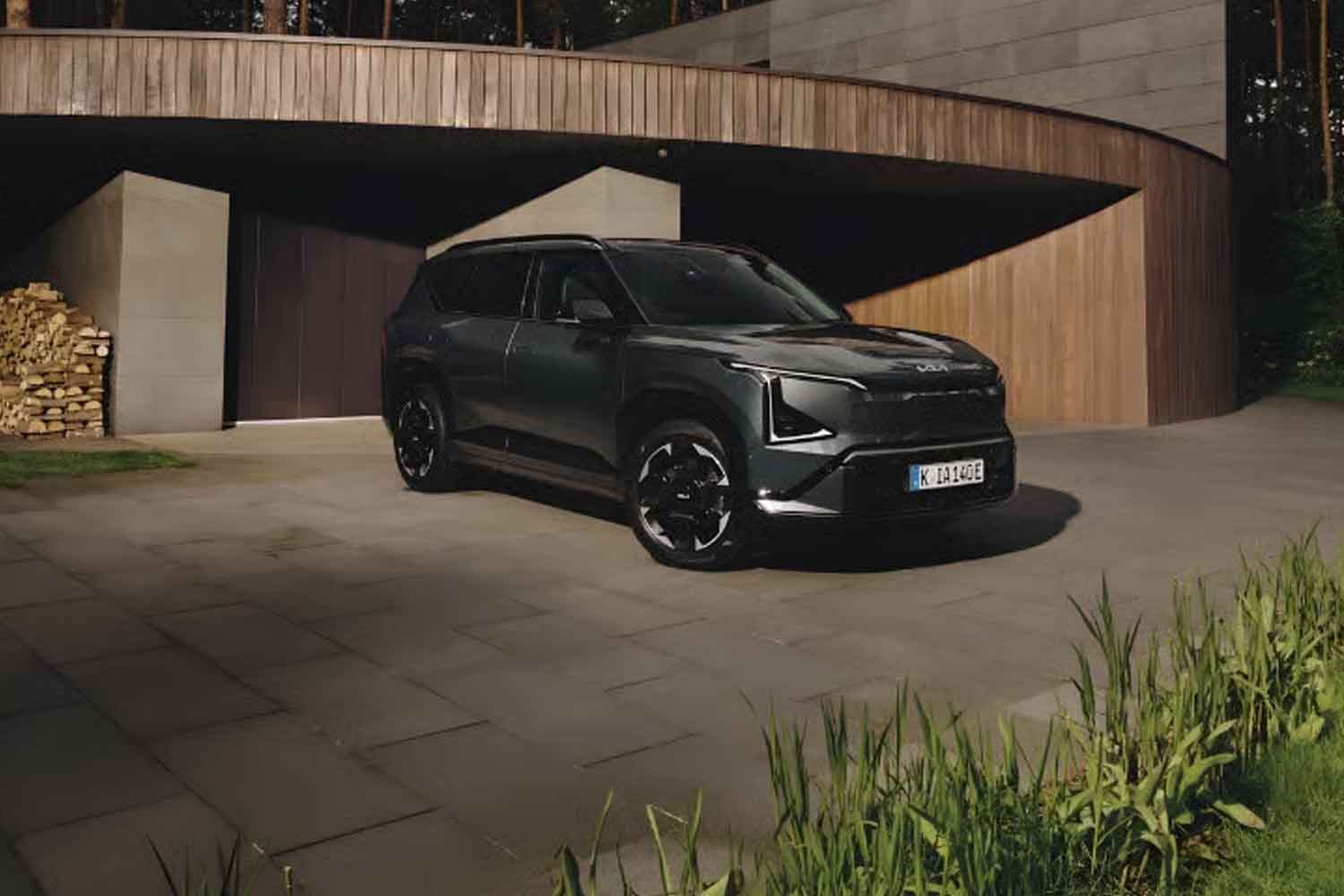
Thirty minutes in the sun, door open, 56°C inside the cabin. The air conditioning starts and requests up to 3.6 kW. The scene repeats itself four times. At the end of the test, a Kia EV5 consumed 15.18 kWh, compared to the 11.75 kWh recorded along the same route without stops: 3.43 kWh more, equal to 29%.
The test was conducted by Quattroruote on a mixed route of 70 kilometres, with external temperatures above 36°C and the air conditioning set at 22°C. On the first trip the car completed the journey directly. In the second, four half-hour stops were included, all in full sun.
The interior exceeds 50°C and the air conditioning has to start over again
During the non-stop journey, maintaining the set temperature required the air conditioner approximately 0.5-0.6 kW. After each parking lot the absorption exceeded 2 kW for a long time, with peaks of up to 3.6 kW.
In thirty minutes the indoor air reached between 49 and 56 °C. Some surfaces in the passenger compartment reached 63°C: seats, dashboard and upholstery continued to release heat even after the air conditioning was turned on. The battery, meanwhile, paid for the work needed each time to bring the car back from the values of a small greenhouse to the set 22°C.
The result remains limited to a Kia EV5, to that route and to rather severe conditions: four close stops under a sun of over 36°C. It therefore does not indicate an automatic 29% loss for all electric cars during the summer. It measures a very precise case, that of a car left to overheat several times and cooled down again every time it starts again.
The second test with the Hyundai Ioniq 5
The test continued with a Hyundai Ioniq 5, observed during a 24-hour cycle to compare different cooling modes. According to the results, during short stops it may be more efficient to activate the air conditioning remotely before returning to the car, preventing the passenger compartment from accumulating as much heat as possible before setting off again.
The air conditioner naturally continues to use battery energy. However, the comparison indicates that, after a short pause, the peak needed to quickly cool a hot interior can weigh more than an early and gradual activation. For longer stops the result cannot be automatically extended: the test concerns defined conditions and intervals.
The most useful data remains the one measured on the Kia EV5. The heat has an impact especially when the car has to return several times from over 50°C to the temperature chosen by the driver. On that day, four half hours in the sun cost 3.43 kWh.
