
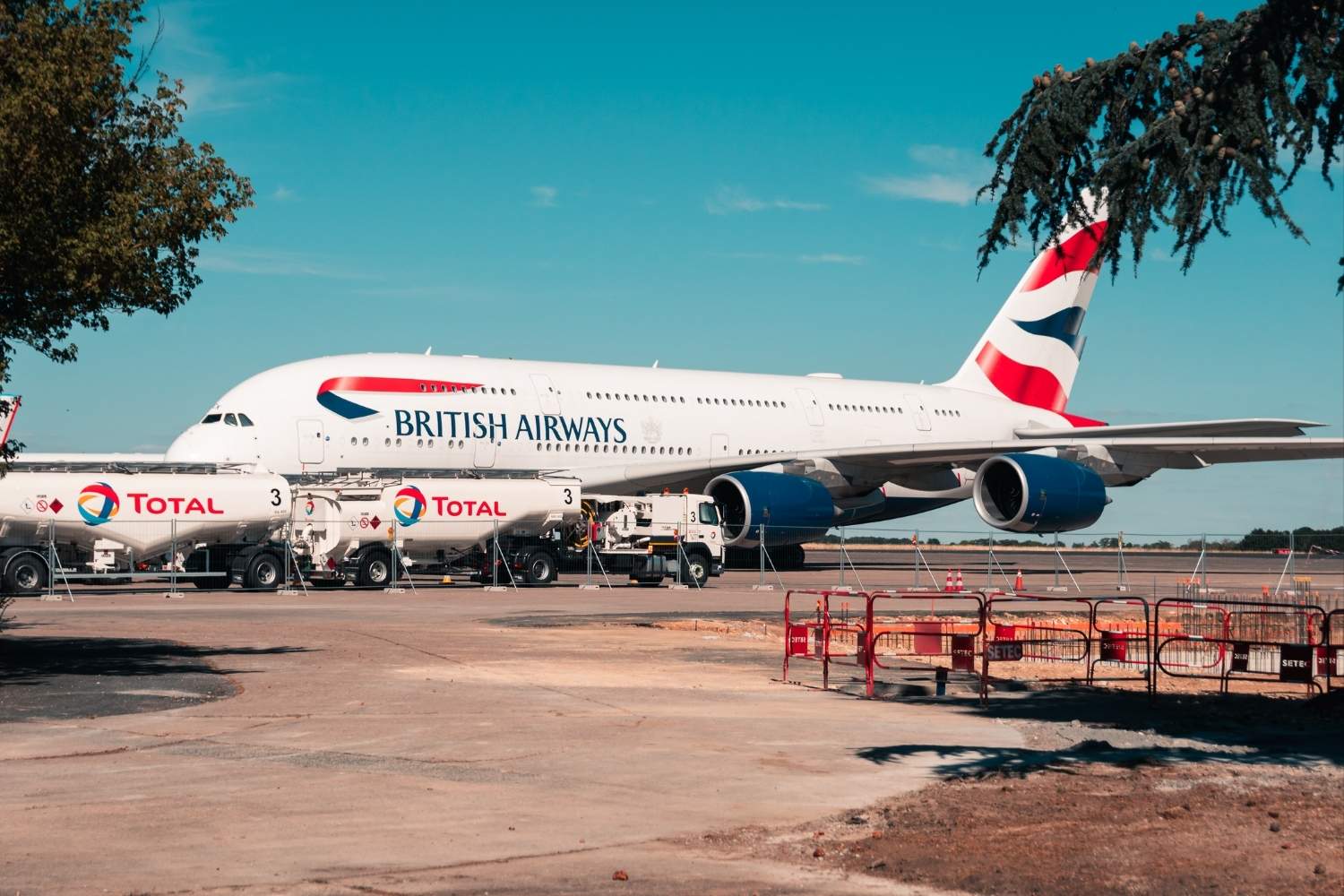
Two stall warnings within minutes, a speed sensor failure and a recovery maneuver that caused the plane to lose altitude to 2,200 feet. This is what emerges from the first information from the Air Accidents Investigation Branch (AAIB), the British body that investigates air accidents, on British Airways flight BA919 of 6 July. The case only ended up in the newspapers at the end of July, and since then the official news has coexisted, not without friction, with the much more dramatic version circulated in much of the British press.
The sequence reconstructed by the investigators
The flight, an Airbus A320-232 with registration G-EUUN which departed from Düsseldorf, was making its first approach to runway 27L at Heathrow when a fault in the Air Data Reference system, the one that supplies the on-board computers with speed and altitude, caused the plane to pass through the Normal Law toAlternate Lawa mode in which fewer automatic stall protections remain. A first alarm was raised above Canary Wharf, the financial district east of London, at around 4,000 feet. The crew declared a PAN PAN (the international emergency radio signal indicating a serious problem, even without imminent danger to life) and aborted the approach, entering a holding pattern. On the second attempt another alarm came through, this time at 3,000 feet. The pilots performed what the AAIB describes as a “potentially abrupt recovery maneuver,” during which the plane descended to about 2,200 feet before leveling off. The emergency was elevated from PAN PAN to MAYDAY (a signal that you will have heard in many films, which unlike PAN PAN indicates a serious danger with a risk to life) even though, fortunately, the landing took place without further problems or injuries among the approximately 180 passengers on board. Simple Flying took care of reconstructing everything on the basis of the initial information released by the investigators.
What the AAIB didn’t say
The body classified the event as a serious accident, with the acronym Loss of Control In-Flighta category that applies whenever flight protections are reduced or a low-altitude stall warning is triggered, a situation which does not, in itself, imply any attribution of fault. And it is precisely here that the official version stops, given that the preliminary notes do not establish whether the alarms corresponded to a real aerodynamic stall or were the effect of the incorrect data generated by the failure, they do not indicate who was at the controls in the two critical moments and they do not mention any physical intervention by the commander. An AAIB spokesperson limited himself to confirming the opening of the investigation, declaring that the body is investigating “a serious accident involving a commercial aircraft, which occurred on 6 July on approach to Heathrow airport”, without adding details, as reported by LBC.
The version of the anonymous sources
The Sun took care of filling that information void, citing unidentified sources according to which it was the commander who physically intervened on the controls after the co-pilot’s first attempt had not worked, an unusual gesture inside the cockpit and defined by the same informants as “unheard of”. The same sources speak of the “most serious near miss in recent years in the United Kingdom” and hypothesize that there was a close call to a “hull loss”, the technical term that indicates the total loss or irreparable damage to the aircraft. The commander, according to these rumors, is now on leave due to stress. None of these circumstances, it must be said clearly, are confirmed in the AAIB documents or in company declarations. It is a sort of parallel story, plausible but not verified, which quickly overlapped with the few established facts.
The reactions
British Airways has chosen the most prudent line possible, the one imposed by the fact that it is an ongoing investigation, therefore maximum collaboration with the authorities and no comment. Also on the same line is the Civil Aviation Authority, the British civil aviation authority, which refused any comment. The pilots’ union BALPA, which assists both crew members, has instead chosen to intervene publicly through a note published on its website, in which it asks “all members, commentators and the public to speak with care and compassion, avoiding speculation”, and specifies that it does not wish to express any opinion on the causes of the accident until the AAIB has published the final report, a process conducted according to ICAO Annex 13 which generally takes months. Only the analysis of the data from the flight data recorder and the voice recordings will be able to say what really happened in those minutes over the English capital.
