
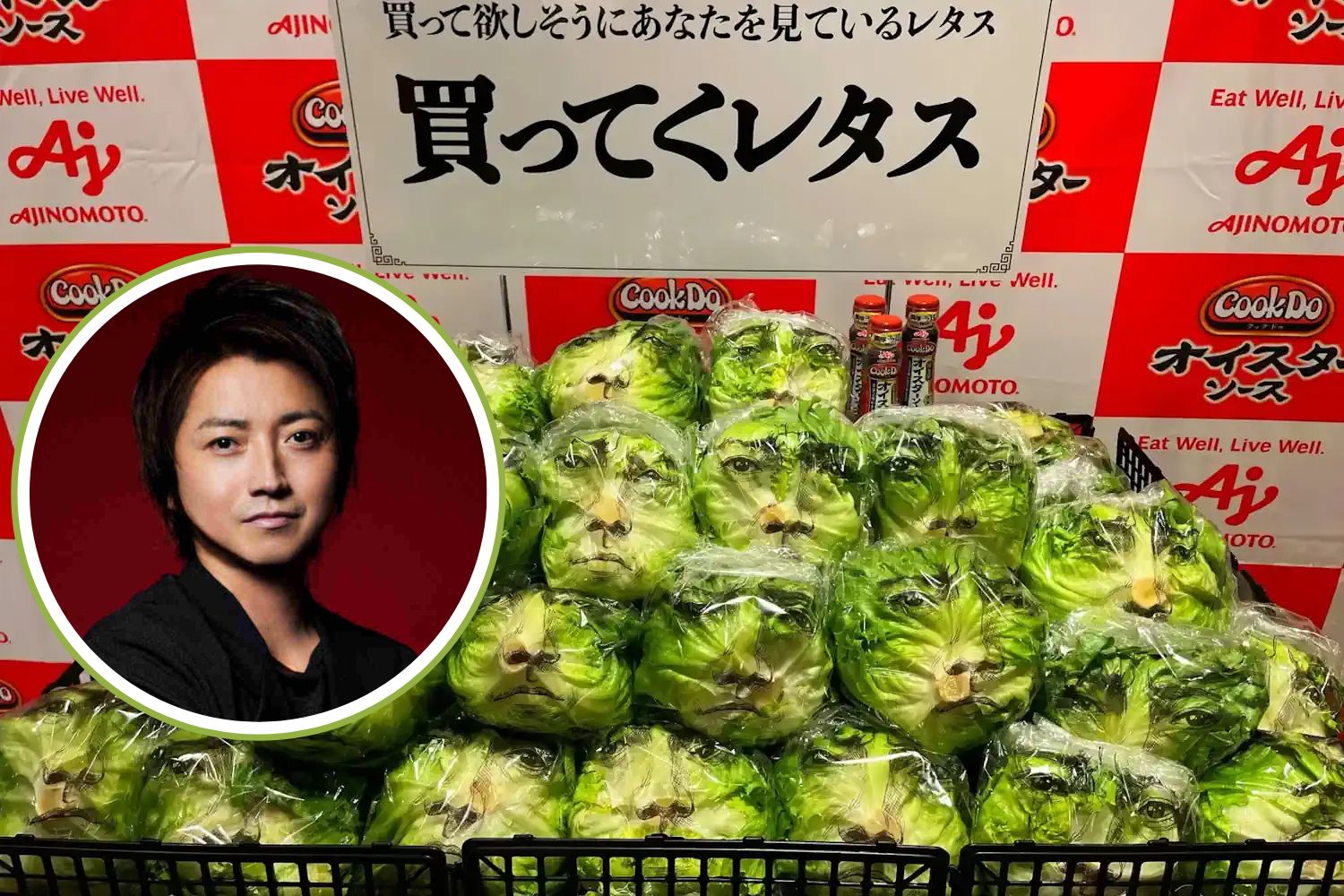
In the vegetable section of supermarkets in Tokyo and the Kansai region, shoppers find themselves faced with a decidedly unusual scene: the severe face of Tatsuya Fujiwara, an actor famous for the role of Light Yagami in the film death Note and for Battle Royalewhich stares at customers straight from the lettuce wrappers.
The initiative was born from the collaboration between the agri-food giant Ajinomoto and the agricultural cooperative Zen-Noh. The objective is to raise public awareness against food waste, a problem that is particularly felt in summer. Fujiwara recounted the unusual proposal on social media:
They asked me, ‘Lettuce is in crisis, so could you lend us your face?’ I said, ‘Sure,’ and it turned out to be a job where I literally lend my face. Why, though… I’ll wait for you in the vegetable section.
View this post on Instagram
The challenge of summer and the trap of traditional cuisine
Behind this choice lie worrying data: over 60% of Japanese consumers end up throwing away part of the lettuce purchased during the summer months. If on the one hand the heat and humidity accelerate its deterioration, on the other the real criticality lies in the local gastronomic habits. Traditional Japanese cuisine uses this vegetable almost exclusively in mixed salads, leaving people without ideas on how to consume the remaining part before it rots.
Intelligent packaging that stimulates the culinary imagination
@AJINOMOTOPARK/X
To overcome the obstacle, Ajinomoto exploited the notoriety of Tatsuya Fujiwara, former promotional face of Cook Do sauce, creating a play on words that combines the verb “buy me” with the local pronunciation of lettuce. Inside the packaging there is a QR code that guides users to alternative recipes signed by the brand, such as cold ramen, pork shabu shabu or gyoza wrapped in lettuce leaves instead of traditional dough. This approach doesn’t just catch attention on the shelf, but offers practical solutions to vary everyday meals.
以下、藤原さんのコメントです。
「レタスの危機だから、
顔を貸してくれないか?」との依頼。「いいですよ」とお答えしたら、
本当に ”顔を貸す” 仕事でした。
なんでだよ・・・。売り場でお待ちしています。#CookDoオイスターソース#買ってくレタス#藤原竜也 pic.twitter.com/Uw9z4Fy80n
— 味の素パーク (@AJINOMOTOPARK) July 21, 2026
The success of the limited edition and international comparisons
The campaign was launched in a limited edition of just 10,000 units, debuting in the Ginza Nagano store and then extending to the Heiwado and Comodi-iida chains. The media impact was extraordinary, transforming spending into a viral phenomenon shared by thousands of users. A creative marketing operation that finds a parallel in the Makro Colombia chain, where special stickers applied to the fruit indicate ripeness and suggest recipes to extend its shelf life, demonstrating how originality can guide consumers towards sustainable choices.
