
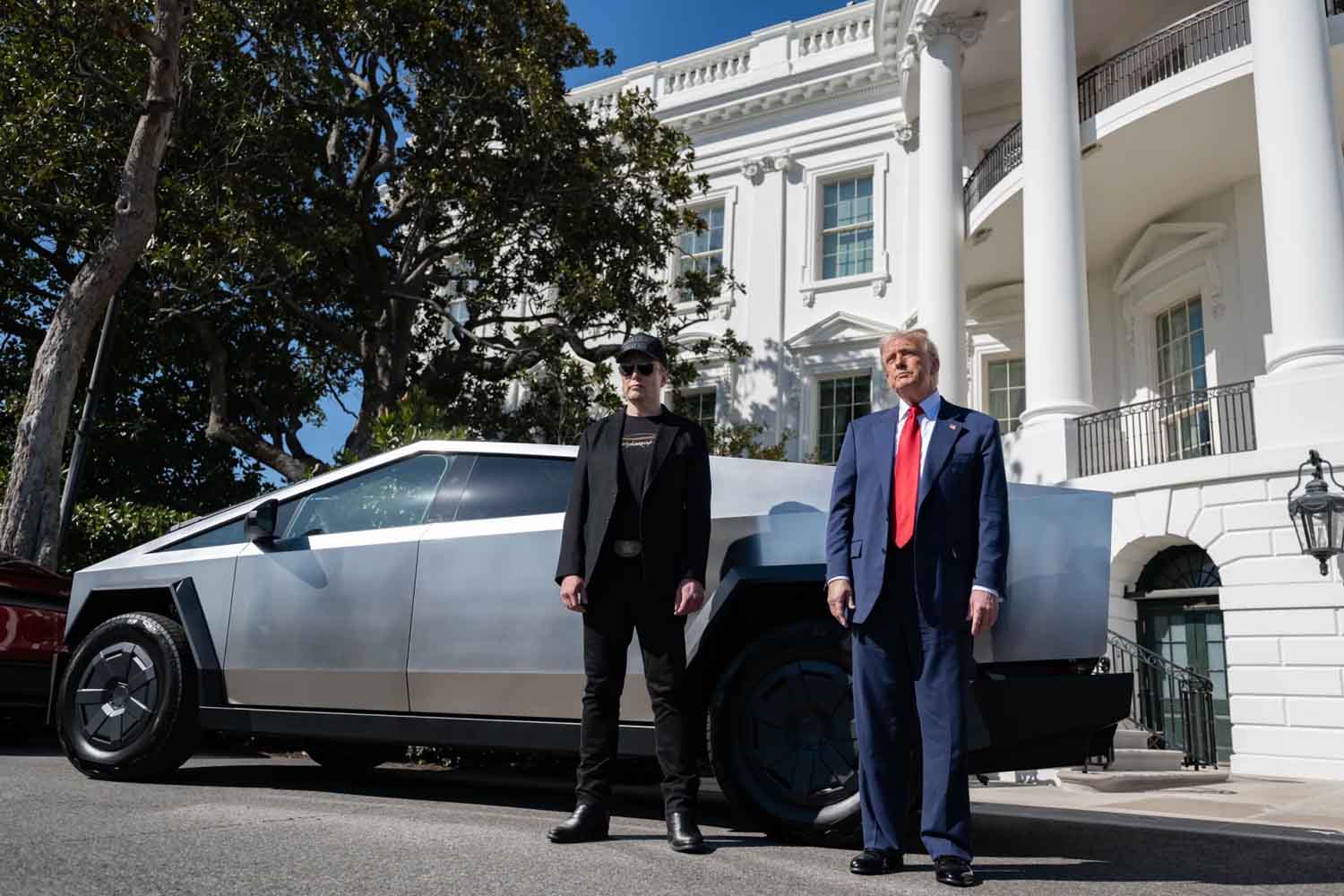
A Tesla on the South Lawn of the White House, Elon Musk next to the counter and Donald Trump determined to pay full price for it. It was March 11, 2025. The official photos document the scene; in the report published by the federal government, the president explains that he chose the car also because Musk had “dedicated his energy and his life” to Tesla. For one afternoon, the White House looked like a dealership with Doric columns.
On August 5, 2026, from the stage at the Red Rock Casino Resort in Las Vegas, Trump himself explained that those who drive an electric car, when they look at the battery, “have an illness”. Shortly afterwards he called these people “crazy”. Seventeen months to go from purchase to collective diagnosis.
Technology dismissed as a clinical extravagance however transforms a greater share of energy into movement. According to the US Environmental Protection Agency, an electric vehicle uses around 87-91% of the energy available in the battery and recovered during braking to move. A petrol car stops between 16 and 25%. The diagnosis comes from the stage; the waste remains in the combustion engine.
The “disease” with the battery at 75%
In the full video of the speech, around the 40 minute mark, Trump claims to have closed the so-called electricity mandate, recognizes that Musk was not enthusiastic about it and settles the matter with “We love Elon”. Then he describes drivers who are already agitated with the battery at 75%.
In his story, the car still loses charge, a sign appears and the nearest charging station is 89 miles away on the right: about 143 kilometers. Street and place are not indicated. Distance is accurate to the mile; geography disappears. Then the sentence:
These people are crazy.
Because electrics consume less energy
A combustion engine burns fuel and wastes much of the energy in heat, exhaust, cooling and friction. The electric motor avoids combustion and recovers some of the energy during braking. If the criterion is how much energy it takes to move the car, the advantage is clear.
The comparison of the “six times”, recounted here, starts from this difference. The physicist and popularizer Johannes Kückens compared the electricity fed directly into the battery with the same energy transformed into synthetic fuel and burned in a heat engine. In the first case, the car travels about six times the distance.
The number is about that specific comparison: direct electricity versus electricity transformed first into e-fuel. It’s not a universal ratio between any electric and any petrol car. The direction remains solid: the electric motor wastes much less energy.
The EPA adds that electric cars produce no tailpipe emissions and, considering manufacturing, charging, use and end-of-life, generally have a lower climate footprint than an average gasoline car. Battery production weighs; the result also depends on the electrical mix, size and kilometers travelled. A huge battery inside an SUV weighing more than two tons remains huge. Physics grants advantages, not plenary indulgences.
The mandate that did not oblige the purchase
According to Trump, all Americans should own an electric car by 2030. The executive order signed by Joe Biden in 2021 instead set a non-binding goal: to increase the share of new light vehicles sold in 2030 made up of battery electric, hybrid models to 50%. plugins or fuel cells.
It was about new sales. No federal law ordered citizens to buy an electric or scrap a gas-powered car. California had a stricter rule: 100% of new zero-emission vehicles, with a limited share of pluginsin 2035; thermals already in circulation remained legal. On stage, the 2030 federal goal and the 2035 California rule end up in the same blender. An order comes out addressed to every motorist who has never entered the texts cited.
Cancellations exist
On January 20, 2025, Trump issued the order Unleashing American Energyrevoking Biden’s goal and placing a pause in federal funds also intended for charging stations. In Las Vegas the difficulty of charging then became evidence against the electric car. First you turn off the tap, then you are surprised that little water comes out.
On June 12, 2025, Trump signed resolutions revoking federal authorizations of the California rules. The tax incentives ended shortly after: According to the Internal Revenue Service, credits for new, used and commercial vehicles do not apply to purchases made after September 30, 2025. In February 2026, the EPA also canceled federal greenhouse gas standards for cars and trucks in a final rule.
Range anxiety exists
There range anxiety It has practical bases: it weighs on long journeys, on unknown routes and in extreme temperatures. Network coverage, faults, queues and charging speed matter. To say that there is no way to charge in the United States remains false: the Department of Energy database shows public stations in every state. Their presence does not guarantee that they are free, functional, fast or close enough.
A 2025 study of 1,005 electric drivers in Norway associated greater experience, ease of charging, and sense of control with less range anxiety. It was a transversal questionnaire in a very mature market: it measures associations, it does not demonstrate that a few kilometers behind the wheel are enough. The gown remains on stage.
7% without the rest of the data
The 7% cited by Trump is close to a real figure, as long as different categories are added together. The US Energy Information Administration estimates that pure electrics accounted for 6% of new light-duty vehicle sales in the second quarter of 2026; the hybrids plugins 1.4%. Together they make 7.4%.
The same agency records a peak of 12% for pure electrics in September 2025, the last month before the end of the incentives, and then three months below 6%. The sequence does not prove that tax credits alone explain the decline. It shows how convenient it is to present the number without category, period and context. 89 miles and a diagnosis were enough for the rally. On energy performance, the numbers continue to point towards electric.
