
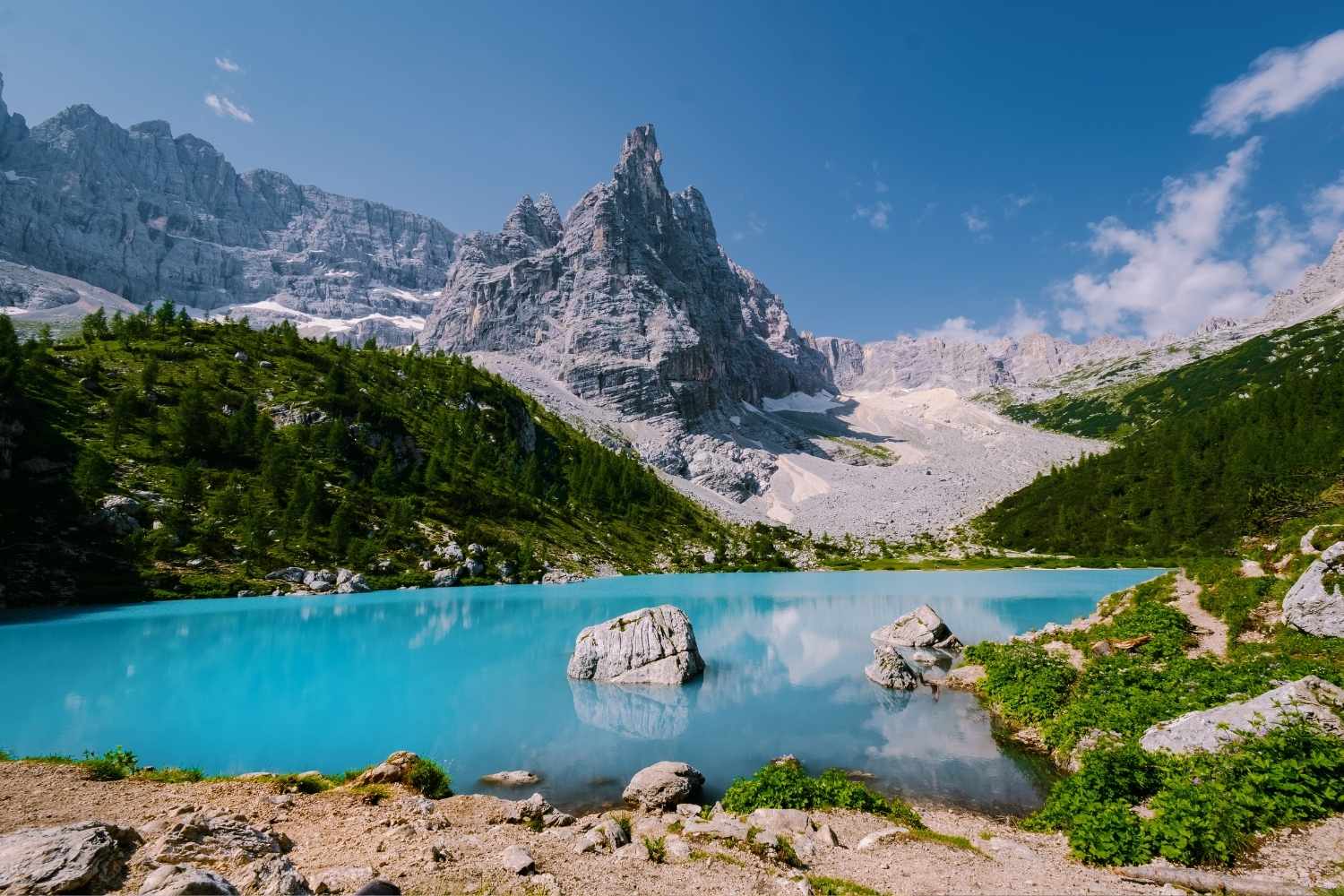
A swimmer releases about a milligram of phosphate into the water, a quantity that quickly disperses in a lowland lake, where there is no shortage of currents and water exchange is constant. In an alpine lake this does not happen and it remains there, accumulates, and over time changes the rules of the game for those who have always lived in that water.
Small basins, fragile balances
This is explained by an analysis published in November 2025 by CIPRA Slovenia, which studied the four lakes of the Triglav Lake Valley, an increasingly popular destination for hikers on the Via Alpina. The reason why these basins are so vulnerable lies in their very size: small, shallow, fed by weak water exchange. The substances that end up inside are not diluted and are not carried downstream, and on the contrary remain, concentrate and end up altering the chemical balance. Experts call this process eutrophication, and the most visible result is the bloom of algae and cyanobacteria, already observed in the Dvojno jezero, the Slovenian “double lake” (image below).
Sunscreen, repellent, thirty-two molecules
The point focuses on the fact that when we enter the water we don’t just bring ourselves, among the UV filters of sunscreens, insect repellents, soaps and perfumes, all skin care products (used especially in summer) that release molecules that cold water disposes of extremely slowly. Near the Savica spring, in Slovenia, researchers counted thirty-two different types, infiltrated up to the aquifers that supply the drinking water of the valleys below. The calcareous soil typical of the Alps, fractured and poorly filtering, does not help, as it lets more pass through than it retains.
The Italian precedent: Lake Sorapis
In Italy the best known case remains that of Lake Sorapis, in the Belluno Dolomites. Since 1 August 2019, the Municipality of Cortina d’Ampezzo has banned bathing with an ordinance signed by the then mayor Gianpietro Ghedina, motivated both by environmental protection and the safety of bathers, given the absence of rescue and the misleading depth of the seabed.
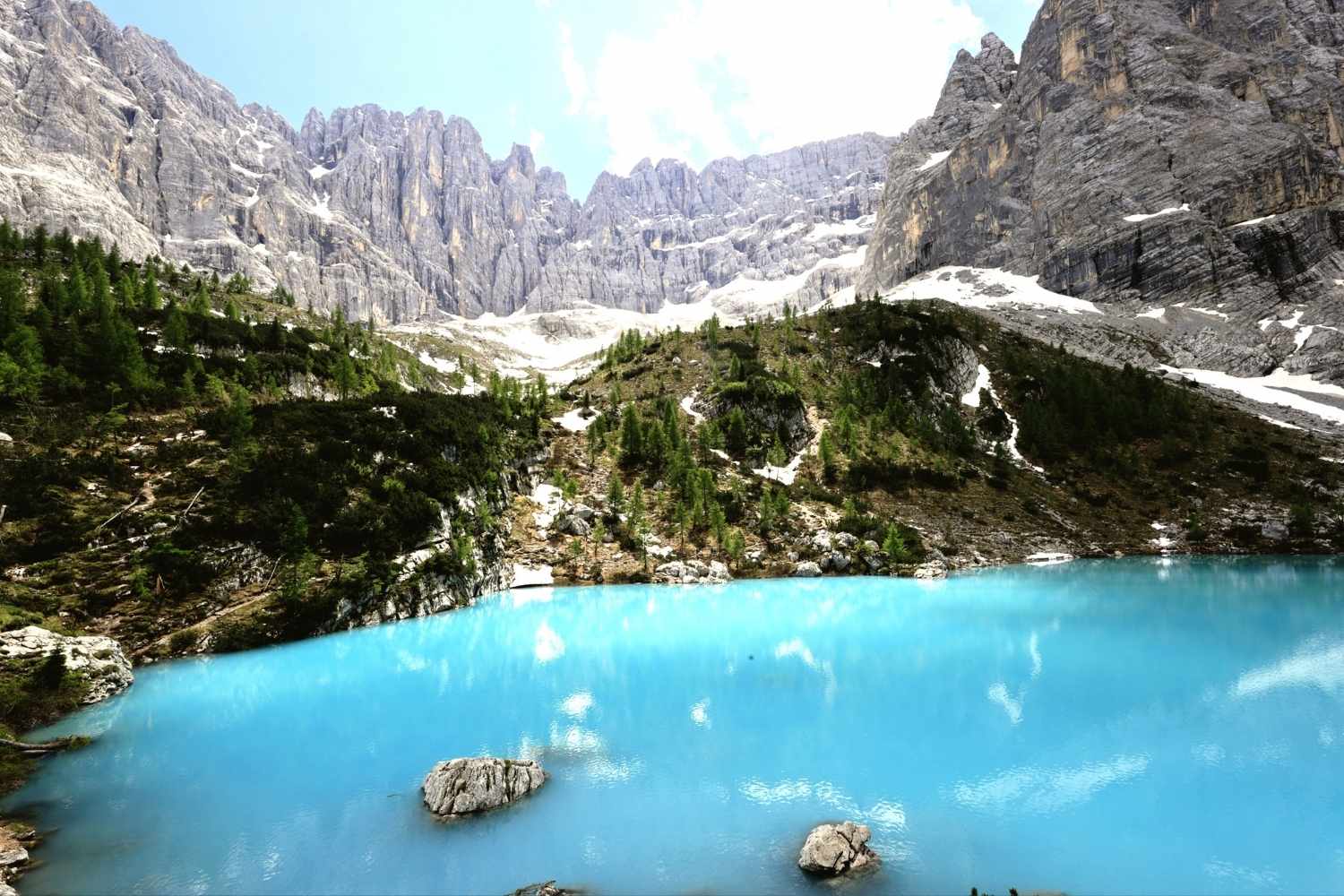
This ordinance certainly does not represent an isolated exception: we can cite the law on the aforementioned Triglav National Park, which prohibits swimming in all fourteen lakes in the central core of the park, and other Alpine bodies that have adopted similar measures over the years.
Decades to form, a summer to alter
None of these regulations come from the whim of an administration. It arises from the fact that a glacial lake takes decades, sometimes centuries, to reach the chemical and biological balance that today allows it to be seen transparent, a harmony that would risk disappearing due to a few summers and associated mass bathing.
