
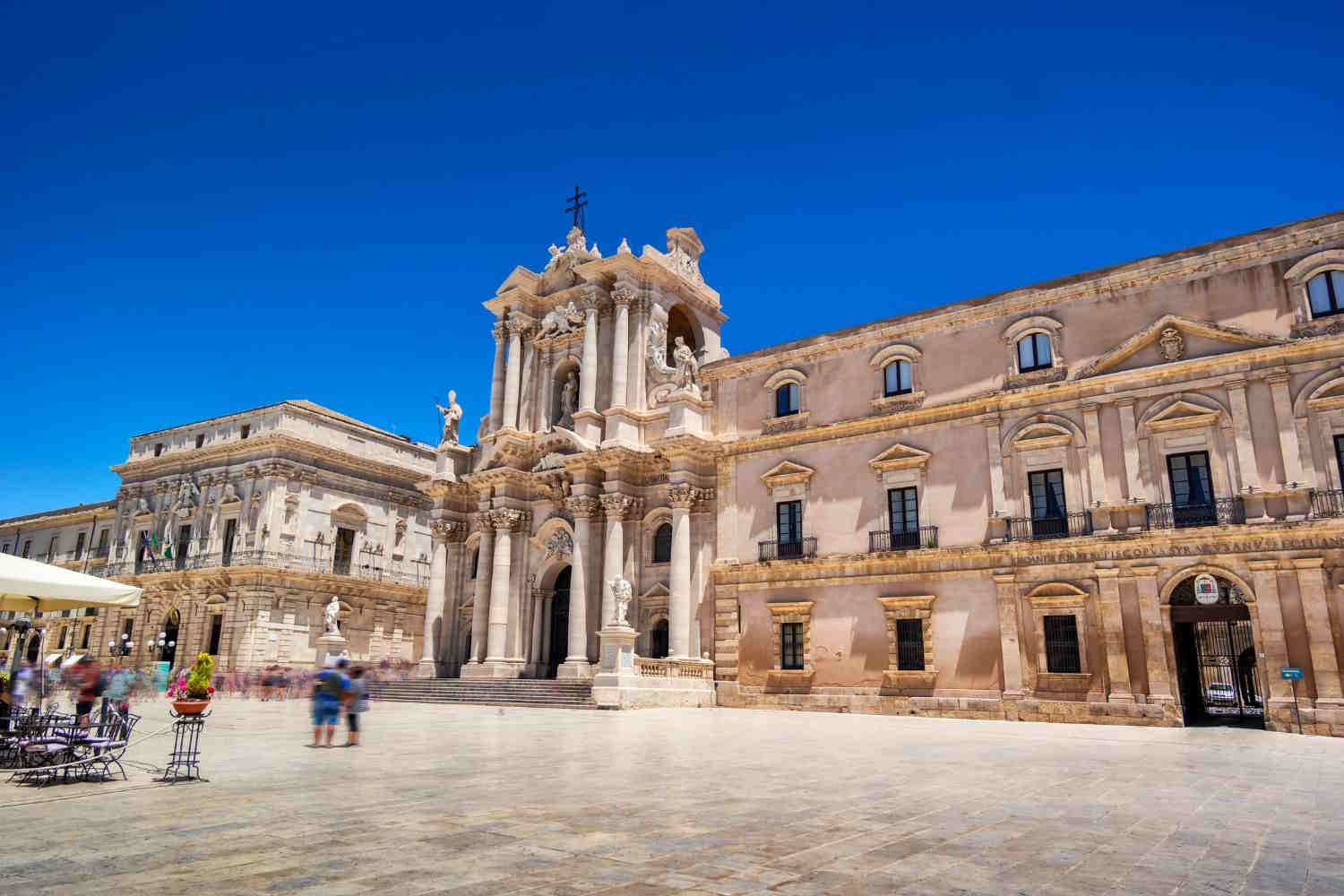
Sicily is one of the Italian regions with the largest number of sites included in the UNESCO World Heritage list. A trip to the island doesn’t just mean sea and beaches: along the Sicilian territory you come across Greek temples, Roman villas, baroque cities, volcanoes, islands of volcanic origin and monuments that tell of the encounter between different cultures.
There are seven material sites recognized by UNESCO: the Valley of the Temples in Agrigento, the Roman Villa del Casale in Piazza Armerina, the Aeolian Islands, the late baroque cities of the Val di Noto, Syracuse and the rock necropolis of Pantalica, Mount Etna and the Arab-Norman route of Palermo with the cathedrals of Cefalù and Monreale.
Palermo, Cefalù and Monreale: what to see on the Arab-Norman route
@javarman/123rf
Inserted in the UNESCO list in 2015, the site “Arab-Norman Palermo and the cathedrals of Cefalù and Monreale” represents one of the most interesting itineraries to discover the multicultural history of Sicily.
In Palermo you can visit monuments such as the Norman Palace and the Palatine Chapel, where Arab, Byzantine and Norman elements coexist in the same architecture.
A few kilometers from the Sicilian capital are the Cathedral of Cefalù, overlooking the sea and famous for its Byzantine mosaics, and the Cathedral of Monreale, known for the large cycle of golden mosaics that covers the interiors. It is an itinerary suitable for those who want to combine art, history and visits to Sicilian villages.
Valley of the Temples of Agrigento: visit to the Greek temples and the archaeological area
@Andrea Mosti/Pexels
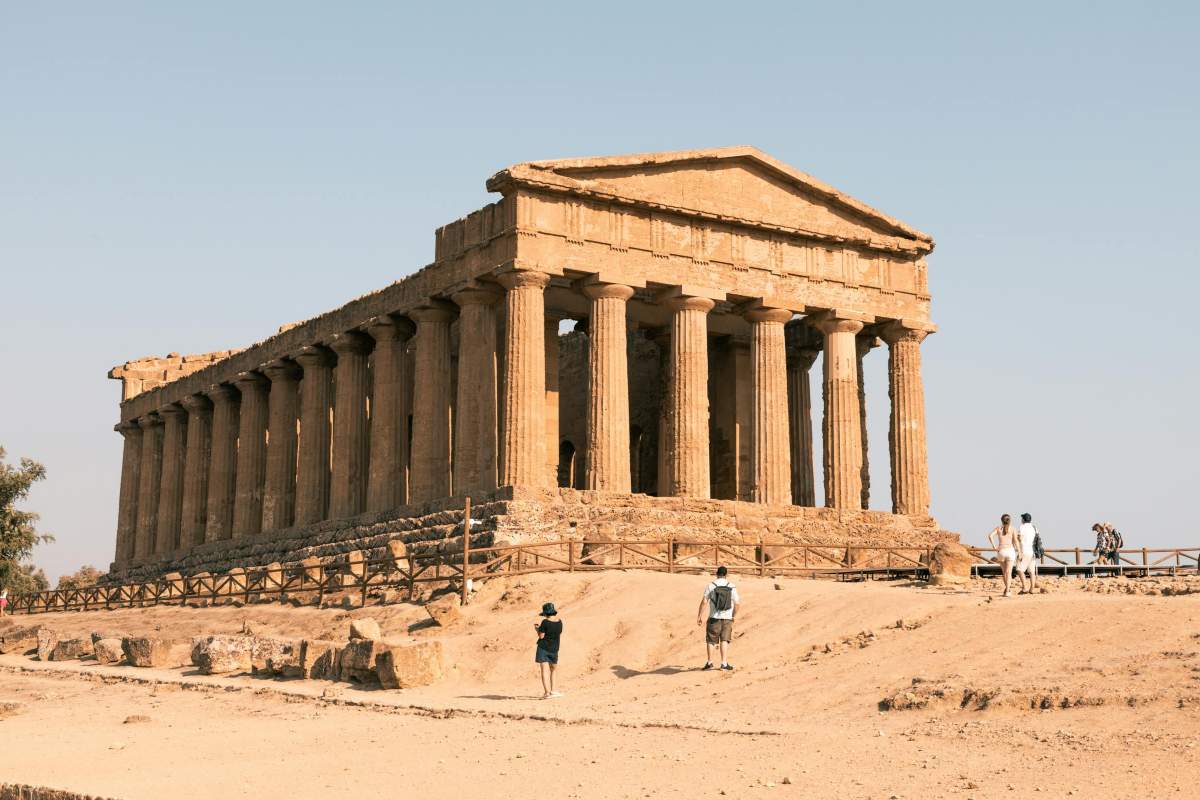
The Valley of the Temples in Agrigento was included in the UNESCO heritage list in 1997 and is one of the most important archaeological sites in the Mediterranean.
The area preserves the remains of ancient Akragas, one of the main cities of Magna Graecia. The route allows you to admire some of the best examples of Doric architecture, including the Temple of Concordia, the Temple of Juno and the Temple of Heracles. The visit takes place in a landscape where archeology and nature meet, among olive trees, almond trees and Mediterranean vegetation.
Villa Romana del Casale in Piazza Armerina: where to see the Roman mosaics
In the heart of Sicily is the Villa Romana del Casale, a UNESCO heritage site since 1997, the villa, built in the 4th century AD, is famous for the extraordinary conservation of its mosaics, which tell scenes of daily life, sporting activities, animals and moments of Roman society.
Among the best-known environments is the Corridor of the Great Hunt, a long mosaic which depicts the transport of wild animals destined for shows in Roman times. A recommended stop especially for those who want to delve deeper into Roman history in Sicily.
Aeolian Islands: which islands to visit and what to discover about the volcanic archipelago
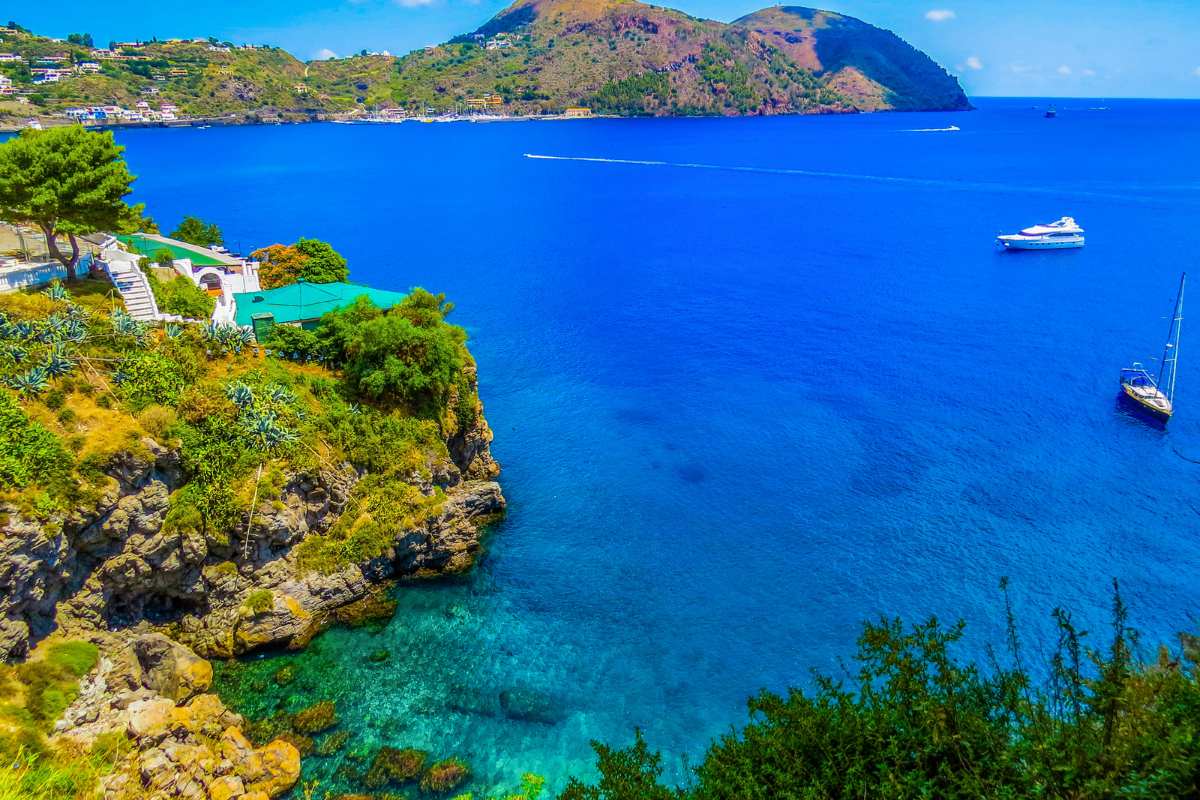
The Aeolian Islands have been a UNESCO heritage site since 2000 for their geological and volcanological value. The archipelago includes seven main islands: Lipari, Vulcano, Salina, Stromboli, Filicudi, Alicudi and Panarea. Each has different characteristics: Stromboli is known for its still active volcano, Vulcano for its thermal phenomena and Salina for its natural and agricultural landscape.
The Aeolian Islands are a destination where sea, trekking, nature and history meet. In addition to the geological aspects, they preserve archaeological evidence of the different civilizations that crossed the Mediterranean.
Syracuse and Pantalica: itinerary between Ortigia, Greek theater and rock necropolises
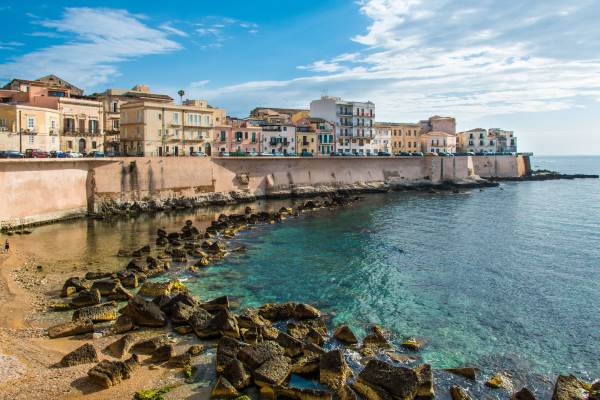
Since 2005 Syracuse and the rock necropolis of Pantalica have been part of the UNESCO heritage. Syracuse was one of the most important cities of ancient Greece. Today the historic center of Ortigia preserves evidence of different eras, from the remains of Greek temples to baroque churches and historic buildings.
Among the places to visit is the Greek Theatre, still used today for classical performances. A few kilometers from the city is Pantalica, a vast archaeological area with thousands of tombs carved into the rock, set in a natural environment characterized by canyons and rocky walls.
Mount Etna: how to visit the UNESCO heritage volcano

@Oscar M/Pexels
Mount Etna entered the UNESCO list in 2013 thanks to its scientific, geological and landscape value. It is the highest active volcano in Europe and represents one of the most studied places in the world to understand volcanic phenomena.
For those visiting eastern Sicily, Etna offers various itineraries: excursions on the paths, visits to the craters, paths in the woods and views of the lava landscapes created by the eruptions over the centuries.
Val di Noto: which baroque cities to see after the 1693 earthquake
The late Baroque cities of the Val di Noto were recognized by UNESCO in 2002. The site includes eight centers in south-eastern Sicily: Caltagirone, Militello Val di Catania, Catania, Modica, Noto, Palazzolo Acreide, Ragusa and Scicli.
These cities were rebuilt after the 1693 earthquake according to the canons of Sicilian Baroque, with monumental churches, noble palaces, stairways and scenic squares. Among the most well-known destinations are Noto, with its cathedral and golden stone facades, Modica for its historic center and vertical baroque, Ragusa Ibla and Scicli.
The other UNESCO heritage sites in Sicily
Alongside the seven main sites, Sicily also houses heritage sites recognized by UNESCO for their cultural and environmental value.
The intangible assets include the Mediterranean Diet, the Sicilian Puppet Opera and the cultivation of the Pantelleria sapling vine.
The sapling vine represents a particular agricultural system developed on the island of Pantelleria to cultivate Zibibbo in difficult conditions, between wind, little water and volcanic soils.
The Madonie Park and the Rocca di Cerere Geopark are also part of the UNESCO Geoparks network, territories where nature, geology and history intertwine.
How to organize a trip to the Sicilian UNESCO sites
The Sicilian UNESCO heritage sites are distributed throughout the island and can be visited by organizing different itineraries. A trip to the north of Sicily can include Palermo, Cefalù and Monreale, while the east coast allows you to combine Etna, Syracuse and the baroque cities of the Val di Noto.
For an archaeological route you can instead choose Agrigento and Piazza Armerina, while those looking for nature and landscapes can focus on the Aeolian Islands, Etna and the geoparks.
