
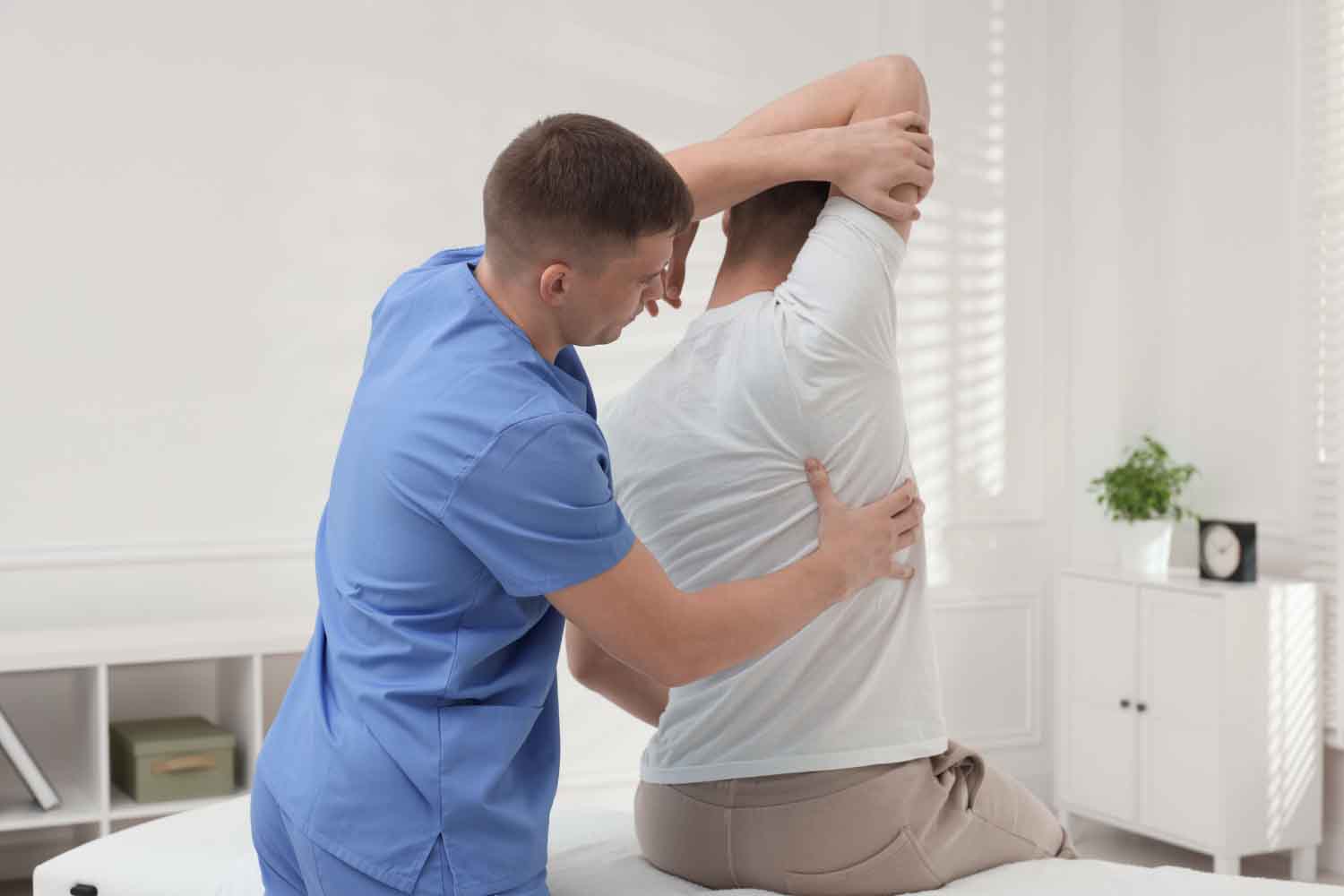
From 14 September 2026, already trained osteopaths will be able to apply to enter the special lists subject to exhaustion established at the TSRM and PSTRP Orders. It is the operational step announced by the National Federation of Orders of Technical Health Professions, Rehabilitation and Prevention after the resolution of the National Council of 28 July. Eight years after the law that recognized the osteopath as a healthcare profession, the position of those who were already carrying out this job was also starting to be sorted out.
However, there is a rather important clarification. The opening of the lists is presented by the Federation as the completion of the recognition of osteopathy in the National Health Service. This does not mean that from 14 September osteopaths will automatically be hired by hospitals, nor that osteopathic services will therefore become reimbursed by the NHS. The transition concerns first of all the professional status, the registration in the Orders and the regulation of those who possess the qualifications obtained before the start of the new university path.
Who will be able to apply for registration from 14 September
The date is the same for everyone, the requirements decidedly less so. The Prime Ministerial Decree of 25 March 2026, published in the Official Journal on 22 May, establishes quite detailed conditions for entering the special lists.
Those who have enrolled by 31 August 2026 in an osteopathy course lasting at least three years and have completed it by obtaining the relevant qualification can access the course. For those starting with a high school diploma, the path must include at least 2,400 hours of theoretical training and 1,000 hours of practical training. Those who already have a degree qualifying for another healthcare profession can instead return to the second path provided for by the decree, with at least 1,500 theoretical hours and 1,000 of osteopathic training.
The decree also leaves space for those who do not reach the expected one thousand hours of training. In these cases, the professional experience attributable to the activity of the osteopath can be assessed, provided that it has been carried out for at least 36 months, even if not continuously, and can be documented through VAT number, contracts, tax documentation or other useful documents.
Then the normal personal requirements are needed: Italian or European citizenship or equivalent position provided for by law, full enjoyment of civil rights, absence of pending charges required by the decree and residence or professional domicile in the jurisdiction of the Order to which the application is submitted. The governing councils of the territorial orders will check the documentation.
The practical methods for submitting requests must be published by the Federation and the 59 territorial Orders. The announcement of July 31st therefore sets the departure day, while instructions and operational requirements are made available on institutional channels.
The special list is a step, not the finish line
Entering the special list does not close the case with a stamp and many greetings. Those who are admitted will subsequently have to take a qualifying exam at one of the universities that host a degree course in Osteopathy. The final text allows six years from the date of registration on the list to overcome it.
Once the recognition of the title or equivalence to the qualifying degree has been obtained, the professional will be able to move from the special list to the professional register of osteopaths at the competent TSRM and PSTRP Order. Anyone who does not take the exam within the deadline will be removed from the list.
It’s a detail that changes the meaning of the news quite a bit. A new healthcare profession is not suddenly born on 14 September: that was already identified by Law 3 of 2018. Presidential Decree 131 of 2021 then defined its profile and skills, while inter-ministerial decree 1563 of 2023 regulated the qualifying degree course. The 2026 measure serves above all to build the bridge for those who trained before that university path was available.
What a recognized osteopath can do
Here too the legislation places some boundaries that should be left clearly visible. The professional profile established in 2021 provides that the osteopath works in reference to the diagnosis of medical competence and the indication or contraindication to osteopathic treatment. The evaluation concerns the somatic dysfunctions of the musculoskeletal system and the treatment must use manual, external and non-invasive techniques. If symptoms persist or worsen, the practitioner should redirect the patient to the doctor.
The law also allows osteopaths to work, when their skills are required, in public and private health or socio-health facilities, as employees or in a freelance regime. This is the concrete meaning of the inclusion of the profession in the regulated healthcare system. It is not equivalent to the automatic creation of places in hospitals or the entry of services into the essential levels of care.
And the legal recognition of the profession, alone, does not transform every technique or claim attributed to osteopathy into a clinically proven practice. Professional rules, training and effectiveness of individual treatments remain different plans. However, the new structure has a very concrete effect for those who turn to an osteopath: it defines training, skills, responsibilities and a verifiable professional path.
From September 14th this less spectacular and perhaps more useful part begins: checking the qualifications and backgrounds of those who practiced before the Italian degree in Osteopathy. After eight years of laws, decrees and agreements, this time there is even a date on the calendar.
