
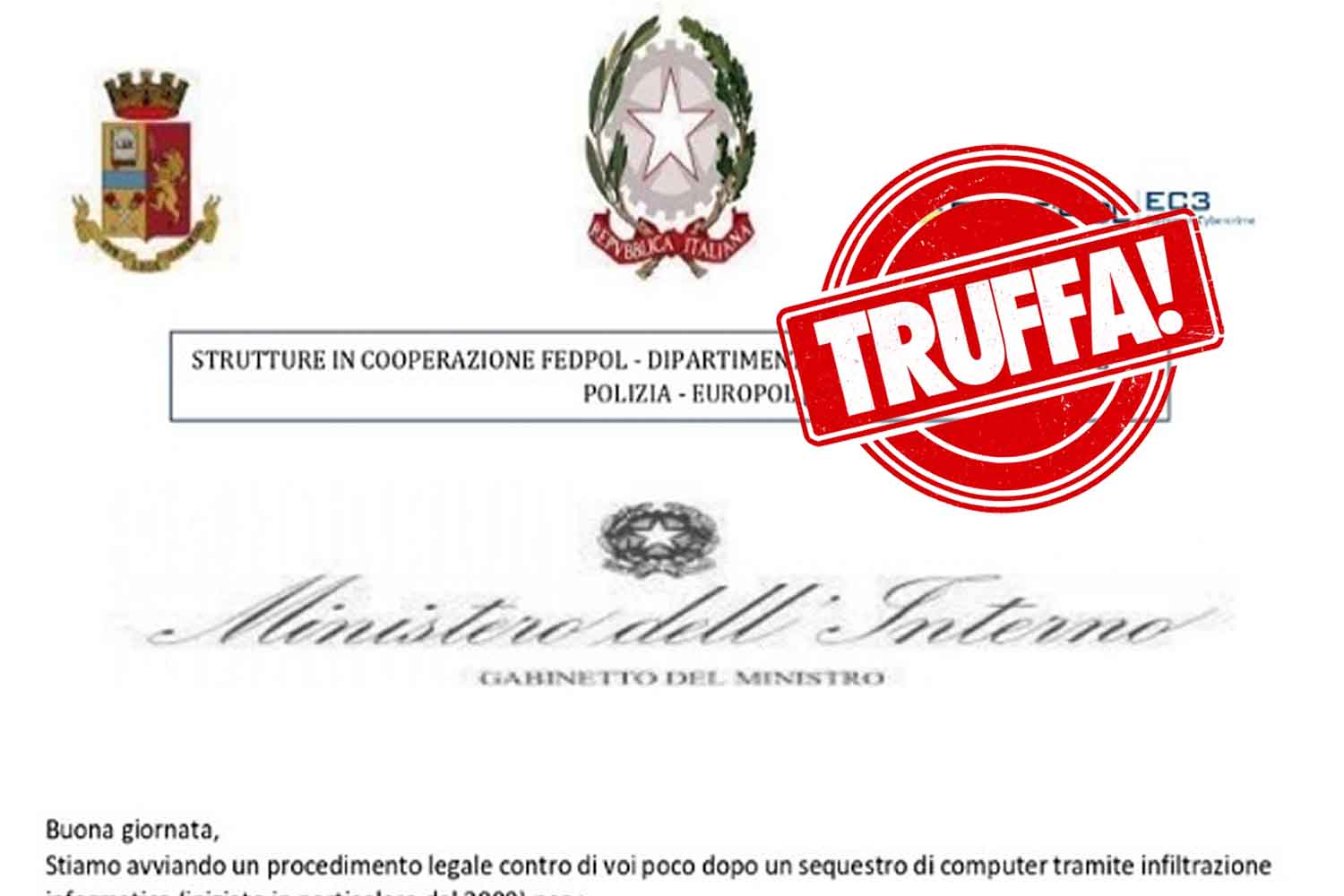
A Police logo, a signature at the bottom of the page and an accusation that makes you want to check calmly: having visited illegal sites or viewed child pornography material. Then comes the request to immediately provide “justifications”. If such an email appears in your inbox, . The State Police reports a sharp increase in this cyber scam, built precisely to make a false judicial summons appear authentic.
The mechanism exploits something much more effective than a badly colored link or an unlikely foreign prince eager to give us an inheritance: the fear of being involved in criminal proceedings. The messages imitate notifications, summons and judicial documents, bearing logos, headers, names and signatures attributable to the Chief of Police, managers or other law enforcement officials. All material reproduced to make the scam credible.
How the false police summons works
The first email serves above all to scare. The recipient is attributed with having consulted illicit content, often linked to child pornography, and is asked to respond to avoid legal consequences. The accusation is serious enough to provoke an immediate reaction, exactly what the scammers are counting on.
The money comes later. According to the Police, those who respond may receive a second communication in which they are asked to pay a sum to close, settle or interrupt the alleged proceeding. Naturally, a criminal case does not disappear with a bank transfer to the sender of an email. The charade, however, has already done its job in the meantime: authority, urgency and fear have been stacked on top of each other.
The presence of an official logo offers very few guarantees. In 2024 the Police had already reported false summons constructed with institutional symbols and even the threat of enrolling the victim in a phantom “Register of sexual offenders”, which did not exist. The sheet may have coats of arms, solemn formulas and impeccable-looking signatures. It remains a fake.
The script has been around for years and keeps coming back
The one reported in recent days is in fact a new flare-up of an already known scam. The PS online police station had published a new notice on 29 April 2026 for emails practically built on the same scheme: false document from the police force, serious accusation and subsequent request for money to “interrupt the ongoing investigations”.
Even earlier, on November 5, 2024, the State Police had warned against false judicial summons sent via email. Signatures, headings and some words change; the mechanism remains surprisingly resistant. After all, for it to work, all it takes is finding someone who reads the accusation before taking a good look at who sent it.
What to do if you receive one of these emails
The indication from the State Police is very simple: . A request for payment made as a condition to avoid an investigation or close a case should immediately raise alarm bells.
There is also a useful rule of thumb beyond this specific scam. The Police reminds that its members by telephone, message or email. In case of doubt, it is better to interrupt contact and verify independently through official channels, without using contact details provided in the suspicious communication.
Anyone who believes they have already fallen into the trap can contact the Postal Police: the PS Commissariat online indicates how to contact the offices and submit a report or complaint. If a payment has already been made, moving quickly can make the difference: in several computer frauds, timeliness has allowed investigators to block or recover sums transferred to the fraudsters’ accounts.
The email, therefore, can also have the right emblem and a tone threatening enough to make your blood run cold. The detail that matters comes shortly after: someone demands money to make an investigation disappear. The Police do not sell acquittals via email.
