
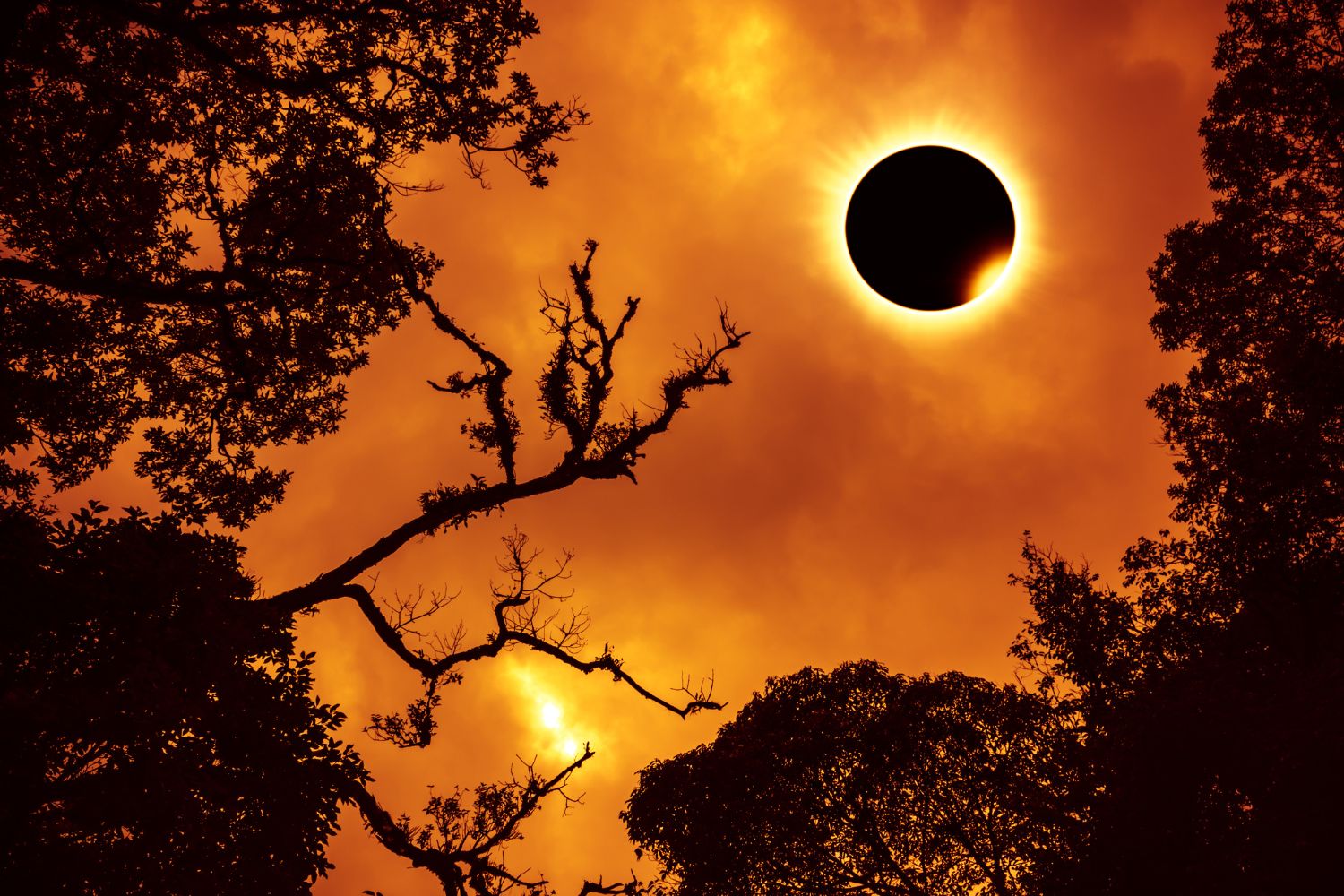
Today’s day August 12, 2026just before 8 p.m., half a billion people will look up to the west at the same time for the solar eclipse. In Italy the sun will never disappear completely, but in some areas of the North-West the residual crescent will be reduced to less than 5% of the disk. The event is the first total solar eclipse to hit the European continent since 1999. The streak of totality originates in Arctic Siberia, crosses the frozen ocean, touching the North Pole, descends onto Greenland and western Iceland, touches a strip of Portugal and closes its journey on Spain, from the Atlantic coast to the Balearic Islands, according to the reconstruction of the National Institute of Astrophysics. Anyone on the center line, in Iceland or near Burgos, will see the sun disappear for just over two minutes. Italy remains outside that range, therefore, in the Bel Paese we will have a partial eclipse, albeit one of the most fascinating in recent decades.
View this post on Instagram
A difficult eclipse to watch
The reason why Italy will have to settle for a partial score is not just geographical. The phenomenon begins around 7.30pm, when the sun is already low, and culminates around 8.20pm, just a breath away from sunset. Whether the local obscuration can actually be seen depends as much on the percentage of coverage as on the horizon available: a relief, a building or a light haze towards the west-northwest can hide the whole show. For this reason, INAF has created maps that cross astronomical calculations with the digital model of the Italian terrain, indicating where the eclipsed sun will truly remain visible until the last moment. The favored regions they are the western and northern ones, therefore Piedmont, Valle d’Aosta, Liguria, Lombardy, Emilia-Romagna, Tuscany and Sardiniawhere coverage exceeds 90%. Going down towards the Center and South the percentage drops together with the time available for observation, because in many cities the sun sets before the eclipse reaches its theoretical maximum.
| City | Start | Maximum | Coverage |
| Turin | 7.27pm | 8.21pm | 93.3% |
| Milan | 7.27pm | 8.20pm | 92.3% |
| Genoa | 7.29pm | 8.22pm | 91.8% |
| Verona | 7.27pm | 8.20pm | 91.7% |
| Venice | 7.27pm | 8.19pm | 91.3% |
| Florence | 7.30pm | 8.20pm | 83.4% |
| Rome | 7.32pm | 8.11pm | ~69% |
| Naples | 7.34pm | 8.02pm | ~46% |
| Palermo | 7.38pm | 7.56pm | less than 20% |
Local times (CEST), calculated by the specialized portals timeanddate.com and taken from INAF; they can vary by a few minutes depending on the exact observation point.
Mountains, lakes or sea: where to stand
In the Western Alps the altitude helps, but it is not enough on its own, because you need a point where the horizon to the west remains open even beyond the surrounding peaks. The Sestriere for example, with the ridges surrounding it, it offers precisely this type of view. Come on large Lombard lakes the strategy is similar: the hills above Bellagio, those of Brunate or the hills behind Stresa allow you to overcome the profile of the mountains on the opposite bank, with the further advantage of the reflection of the eclipse on the water. If you prefer the sea you will find better conditions on the Tyrrhenian side than on the Adriatic sidebecause only the first offers the sunset, and therefore the eclipse, directly on the marine horizon. The western coast of Sardinia, between Alghero, Bosa, Oristano and Carloforte, combines open views and solar coverage of over 80%. Even cities, after all, can offer a good observation point, and a terrace in Milan or Turin, with an unobstructed view towards the west, is worth as much as a trip out of town.
How to watch it without risk
The fact that the eclipse occurs at sunset does not reduce the danger to the eyes. They are needed ISO 12312-2 certified glassesgiven that normal sunglasses, no matter how dark, do not sufficiently protect the retina, and direct exposure can cause permanent damage. The same caution applies to those who want photograph the phenomenon (both lenses and sensors require a professional solar filter in Mylar or ND100000) and for anyone who will use a smartphone, where a small dark filter placed next to the lens avoids both damage to the device and completely overexposed shots. If you stay at home you can follow the event online, INAF will broadcast a live broadcast starting from 7.30pm on the EduInaf YouTube channel, with images of the totality collected in Spain in collaboration with the Italian Amateur Astronomers’ Union and timeanddate.com.
The next appointment, in a year
In case you miss it, you will have a second chance at close range: on August 2, 2027 another total solar eclipse will cross the Mediterraneanthis time for the benefit of Southern Italy. The band of totality will not touch the Italian mainland, but will pass approximately twenty kilometers from the southern coast of Lampedusa, in territorial waters; on the island, from land, coverage will still be close to 99.8%. It will also be the longest total eclipse of the century, with a maximum darkening phase exceeding six minutes in some parts of Northern Africa.
