
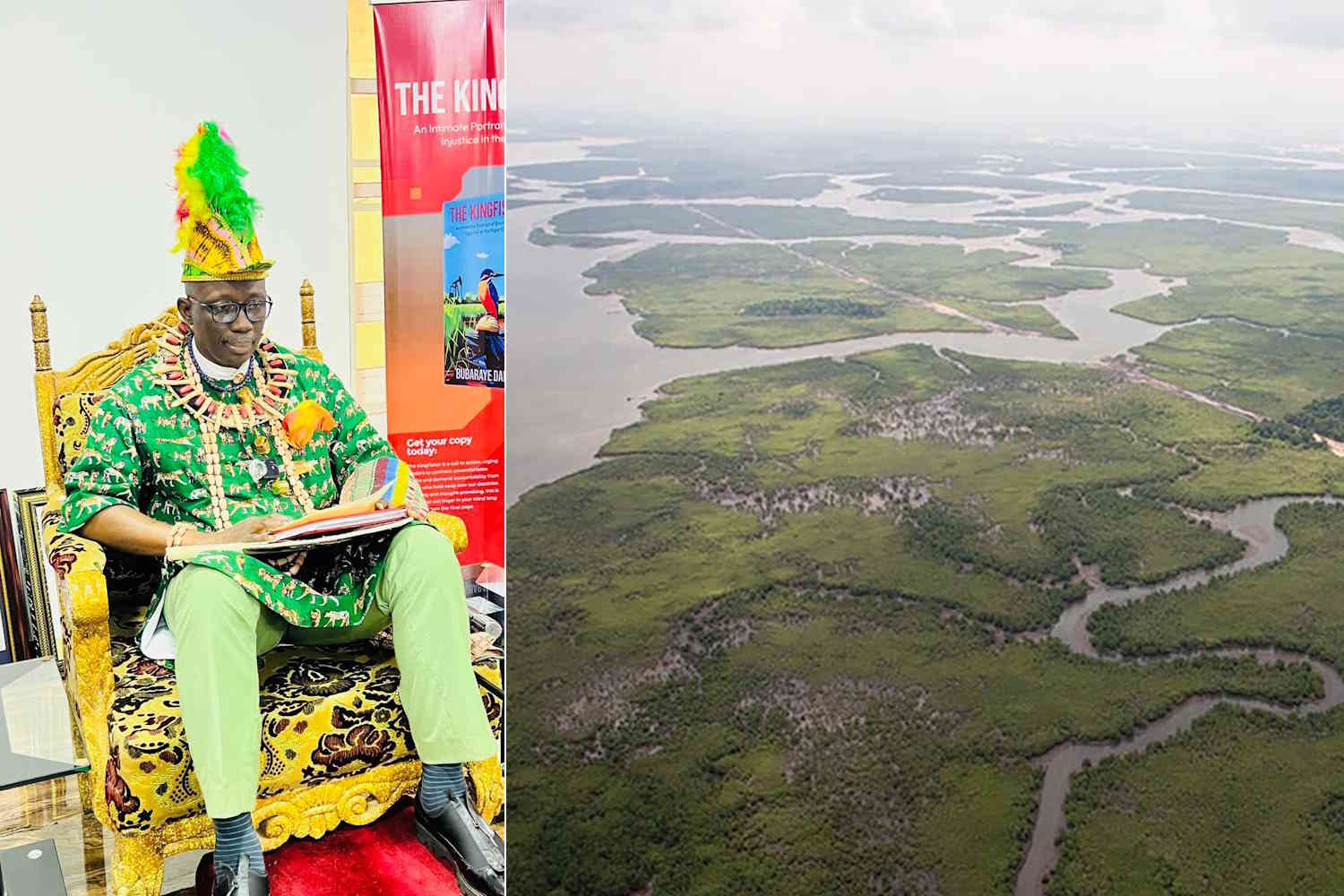
As a child he caught 20 kilos of fish in just a few minutes. Today, he says, a whole night may not be enough to take just three. He is Bubaraye DakoloKing of the kingdom of Ekpetiama, in the Nigerian state of Bayelsa, who turned the environmental devastation of his territory into a legal battle against Shell.
In July a Nigerian court rejected his case, but the sovereign has already appealed and promises to go all the way to the Supreme Court.
Among all, there is one image that perhaps tells better than any scientific report what happened in the Niger Delta and it is precisely the one dating back to the 1970s, when Bubaraye Dakolo was a child and a few minutes were enough to catch even 20 kilos of fish in the waterways of southern Nigeria. Today, however, a fisherman can spend the whole night with his nets in the water and return home with just three kilos. How come?
Well, it’s easy to understand why: in between there are decades of oil extraction, pipelines, gas flaring, spills and contaminated water.
And this is where the battle of began Bubaraye DakoloAgada IV, a battle that is not just about Shell, but a much bigger question: can a multinational leave a territory after decades of extraction without first repairing the accumulated environmental damage?
Who is Bubaraye Dakolo, the environmentalist King of the Niger Delta
Dakolo is not only a traditional ruler, but is a former military man, writer, human rights and environmental activist and president of the Bayelsa State Traditional Rulers Council, and has in recent years become one of the most recognizable voices in denouncing the impact of the oil industry on communities in the Niger Delta.
View this post on Instagram
He is the author of several books, including The Riddle of the Oil Thief And Once a Soldierin which personal experience, the history of the Delta and oil exploitation inevitably intertwine. His, after all, is a biography that literally grew up alongside oil. As a child, he walked to school on the exposed pipelines that crisscrossed the area. His father worked in a refinery, and Dakolo says he was born seeing what he was then unable to recognize as an environmental catastrophe.
I was born with this calamity before my eyes.
An awareness that came over time and then became political, cultural and finally judicial action.
Even before the lawsuit against Shell, Dakolo was directly involved in reporting spills in the region: in 2021, for example, HOMEF cited him during an inspection relating to the serious blowout of the OML 29 well in the Santa Barbara River area. For him, defending the territory is not an activity ancillary to the role of traditional leader. It’s the role itself.
If you are a traditional boss or leader and you don’t stand up for the environment, then you are not doing your job.
A territory poisoned by oil
Bayelsa occupies a symbolic place in Nigerian oil history: right here, in 1956, Shell drilled the country’s first commercial oil well. Mining has since radically transformed Nigeria’s economy, but has left behind a huge environmental legacy. In 2023 the Bayelsa State Oil and Environmental Commissionafter four years of investigation, estimated in a report that about $12 billion and 12 years of work would be needed to clean the state of the consequences of decades of oil pollution.
@Justice for Bayelsa
The report speaks of contamination of water and soil and of very serious consequences on fishing, agriculture and the health of populations. Analyzes conducted as part of the investigation also revealed worrying levels of heavy metals in biological samples collected from the population in some communities. And it is in this scenario that Dakolo took Shell to court.
The case against Shell
The King of Ekpetiama accused the company of wanting to abandon its onshore oil activities without first having reclaimed the territory, dismantled obsolete infrastructure and compensated the affected communities. The lawsuit involved Shell and Renaissance, as well as Nigerian federal authorities, and requested that the transfer of assets be conditional on the resolution of environmental liabilities accumulated in the Ekpetiama territory. Environmental organizations that supported the action speak of spills, gas flaring, destruction of fishing areas and agricultural land and deteriorated oil infrastructure in the Gbarain oil field, which falls within the territory of the kingdom.
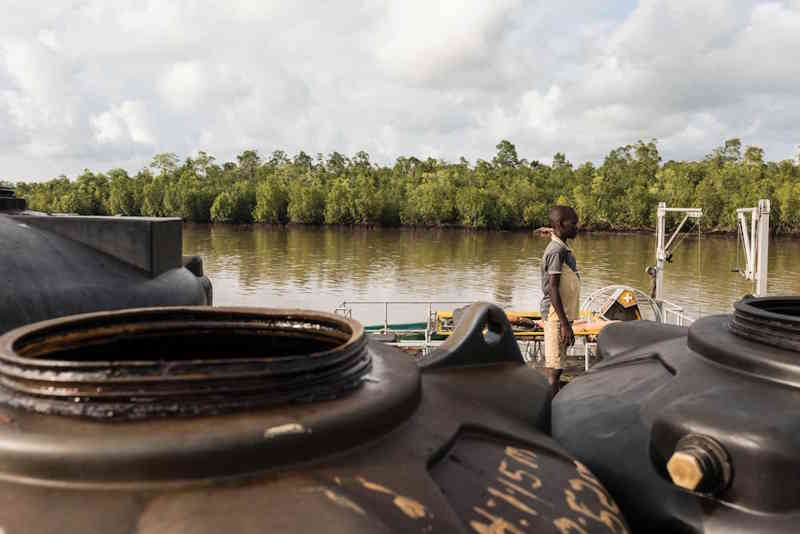
@Ed Kashi/Justice for Bayelsa
At the beginning of the affair, Dakolo was also asking for around $2 billion in compensation for his kingdom, a figure that should not be confused with the $12 billion estimated by the Environmental Commission for the cleanup of the entire Bayelsa State.
But in the meantime Shell sold and while the battle over environmental responsibilities continued, the change of ownership became reality: on 13 March 2025 Shell completed the sale of Shell Petroleum Development Company of NigeriaSPDC, to Renaissance, a consortium made up mainly of Nigerian companies. SPDC itself was later renamed Renaissance Africa Energy Company Limited. However, Shell has not abandoned Nigeria but has rather chosen to focus its portfolio on deepwater offshore oil and integrated gas assets.
In practice: large international companies sell old, complex and highly impactful onshore assets, while the question of who will actually have to bear the costs of their environmental legacy remains open. A problem that doesn’t just concern Shell. In July 2026, several organizations also initiated action in France against TotalEnergies to obtain environmental documents relating to the planned sale of its stake in the same Nigerian assets.
The court rejects the lawsuit
On July 17, 2026 the Federal High Court in Yenagoa dismissed Dakolo’s lawsuit. Judge Ayo Emmanuel in fact defined it as substantially premature and legally inadmissible, considering among other things that some requests had been submitted beyond the deadlines established by Nigerian legislation. Furthermore, according to the court, the case mainly concerned compensation for environmental damage, negligence and blocking of a commercial sale, and could therefore not be configured primarily as an action for the protection of fundamental rights.
Be careful, however: the court did not establish that pollution does not exist and did not examine the merits of whether or not Shell is responsible for the environmental damage reported by the community, but the case fell on preliminary and procedural issues.
Shell welcomed the decision and reiterated a position it has held for years: that the majority of spills in the region are due to oil theft, sabotage and illegal refining. The company also claims that its former subsidiary took steps to clean up the spills from its plants regardless of the causes.
Communities and environmental associations have long contested in a report the attribution of most of the pollution to sabotage alone. The Bayelsa Environmental Commission has also collected testimonies and data that describe a much more complex picture.
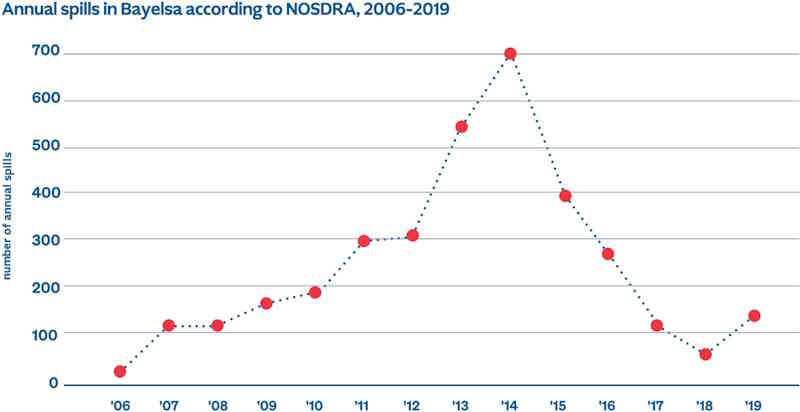
@Justice for Bayelsa
Dakolo doesn’t give up
On 27 July 2026, Dakolo and the Ekpetiama community formally began the appeal process against the Federal High Court’s decision. According to them, considering the environmental claims to be time-barred means ignoring the fact that many of the damages reported are continuous and not simply attributable to an episode that occurred decades ago and is now closed.
The defense also disputes the conclusion that Dakolo lacked sufficient standing to pursue some of the claims and argues that such complex issues should have been discussed through a trial on the merits of the evidence.
The story of Bubaraye Dakolo would risk being told as the suggestive story of an African king against one of the largest oil companies in the world, but that would be an understatement. In reality, behind it there are millions of people who live in one of the symbolic territories of the global fossil industry. One question, therefore, is set to become increasingly urgent as Western multinationals sell off their old deposits: who pays for what’s left?
