
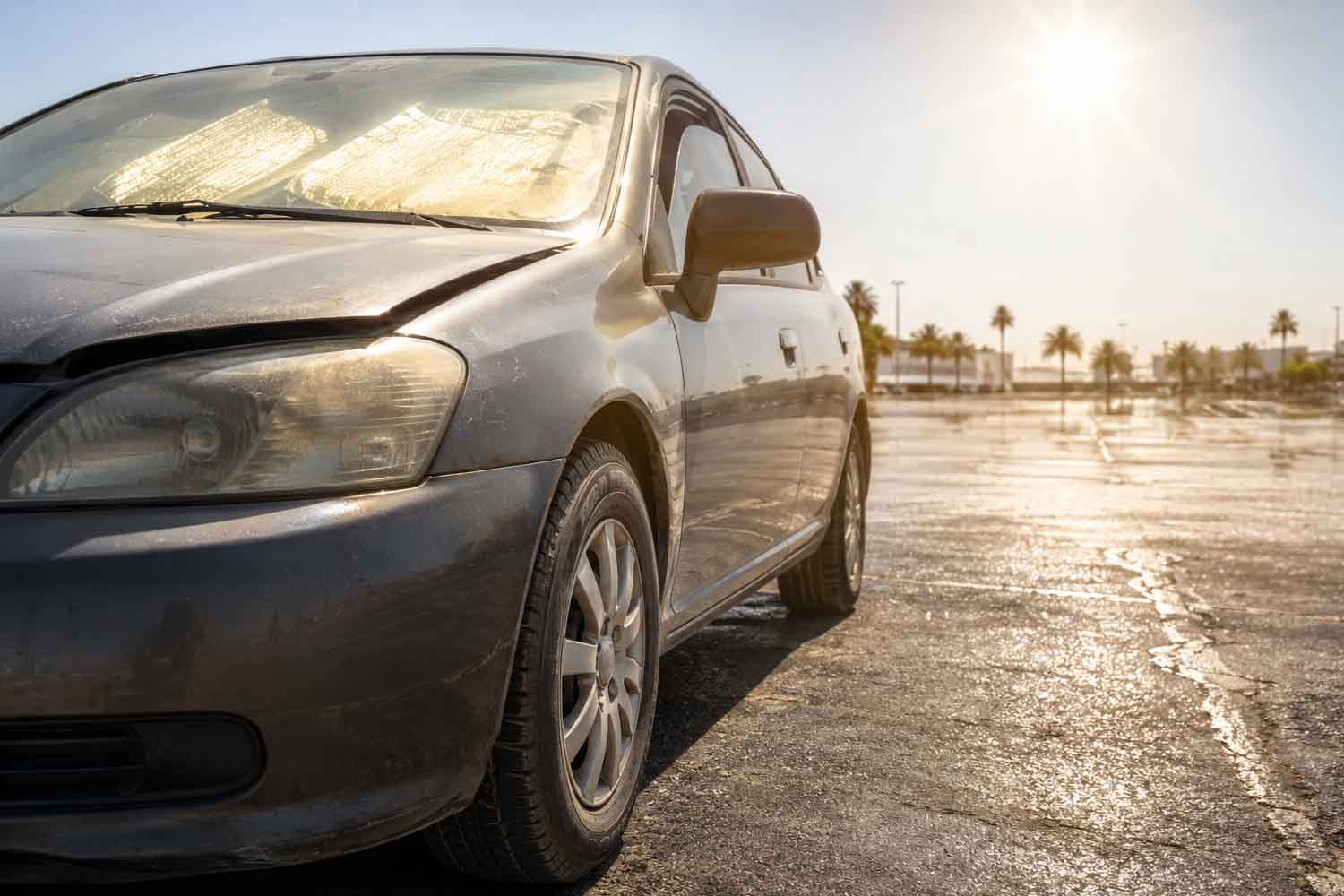
The asphalt exceeds 60 °C, inside the passenger compartment it can reach 70 and under the bonnet the engine must continue to do its job as if nothing had happened. With the extreme heat the car also begins to suffer, piece by piece: tyres, battery, engine, dashboard, seats, electronics and bodywork.
By putting together the most exposed components and the most expensive interventions, Federcarrozzieri estimates potential damage of up to 16,400 euros for a car. The figure represents the overall scenario indicated by the association, therefore not the bill that automatically awaits us after leaving the car for a few hours under the sun. The everyday problem is much simpler: heat accelerates wear and deterioration and can worsen existing defects.
The hot asphalt puts the tires to the test
The first to come face to face with the heat are the tires. On the hottest days the asphalt temperature can easily exceed 60°C, increasing stress on the tread and accelerating wear.
Pressure also changes with temperature: the air contained in the tire expands when it heats up. For this reason Federcarrozzieri recommends checking the pressure when cold, as well as the condition of the tread and the presence of cuts, cracks or other deterioration.
It is a particularly important check before summer departures. ACI also includes tire pressure and conditions among the checks to be done when temperatures rise.
Replacing a tire, according to the prices collected by Federcarrozzieri, can cost on average between 50 and 150 euros, including labor. Multiplied by four, the heat is already starting to lose a lot of its summer charm.
Even the battery fears the summer
The battery is often associated with the problems of frosty mornings. The heat, however, works more silently.
High temperatures accelerate the chemical processes inside traditional batteries, favoring the evaporation of fluids and a progressive loss of efficiency. An older battery can therefore fail more easily during the warmer months.
To replace it, Federcarrozzieri calculates, an average of 100 to 250 euros are needed, including assembly. ACI also recommends checking the condition of the battery and electrical system between summer checks, along with fluid levels and the cooling system.
The heaviest bill can come from the engine
Then there’s him, the one who can turn a nuisance into a rather unpleasant phone call to the workshop: the engine.
When the outside temperature rises, the cooling system has to dissipate heat under more difficult conditions. Federcarrozzieri also refers to the reduction of the viscosity of the lubricating oil and the thermomechanical stress on the metal components, continuously subjected to expansion and temperature variations.
In more serious cases, overheating can contribute to the failure of the head gasket and even lead to engine seizure. Here the estimate changes significantly: redoing an engine can cost between 2,500 and 8,000 euros, depending on the vehicle, the spare parts and the extent of the intervention.
The cooling system therefore becomes one of the points to monitor during the summer: refrigerant level, radiator, pipes, fans and water pump. The ACI reminds us that its inefficiency can cause very serious damage when the heat and long journeys increase the load on the car.
Inside the car it can get close to 70 degrees
Just open a door left in the sun to notice it, possibly without immediately placing your hand on the steering wheel.
According to Federcarrozzieri, in the most extreme conditions the passenger compartment can reach temperatures close to 70°C. And all those plastics, fabrics, glues, coatings and electronic components spend hours inside the same oven.
Prolonged heat favors the deterioration of the dashboard plastics, the discoloration of the fabrics and the premature aging of the seats. It can also increase the release of volatile organic compounds from synthetic materials and put stress on digital displays and other electronic devices.
Depending on the component and the extent of the damage, redoing parts of the interior can cost from 200 to 4,000 euros.
Sunshades and curtains therefore become something more than the accessory that spends eleven months folded in the trunk: they limit direct exposure of the dashboard and internal surfaces, while whenever possible it is preferable to park in the shade or under cover.
Sun, resin and excrement: the bodywork also takes its toll
Outside the cockpit, the dirty work is mainly done by heat and ultraviolet rays. With prolonged exposure the paint can lose shine, become discolored and develop small cracks in the transparent protective layer. Plastic headlights, meanwhile, can yellow and become progressively less transparent.
Then there’s the one that falls on the car. Resin and bird droppings, left on the hot bodywork for a long time, can attack the surface coating more quickly. A pretty good reason not to wait for the first rain of September and hope that it will do everything.
According to Federcarrozzieri, repainting a single element, such as a door or a bumper, costs between 150 and 600 euros. For a complete painting you can go from 1,300 up to around 4,000 euros.
And so we arrive at the figure indicated by the association: considering tyres, battery, serious damage to the engine, interior and bodywork, the potential bill can reach 16,400 euros.
Before getting there there are decidedly less demanding checks: tires at the right pressure, oil and coolant at the correct levels, battery in order, a look at the cooling system and, when possible, a few extra meters to look for a shaded parking spot. In August it may seem like a luxury. For the body shop it’s almost a holiday.
