
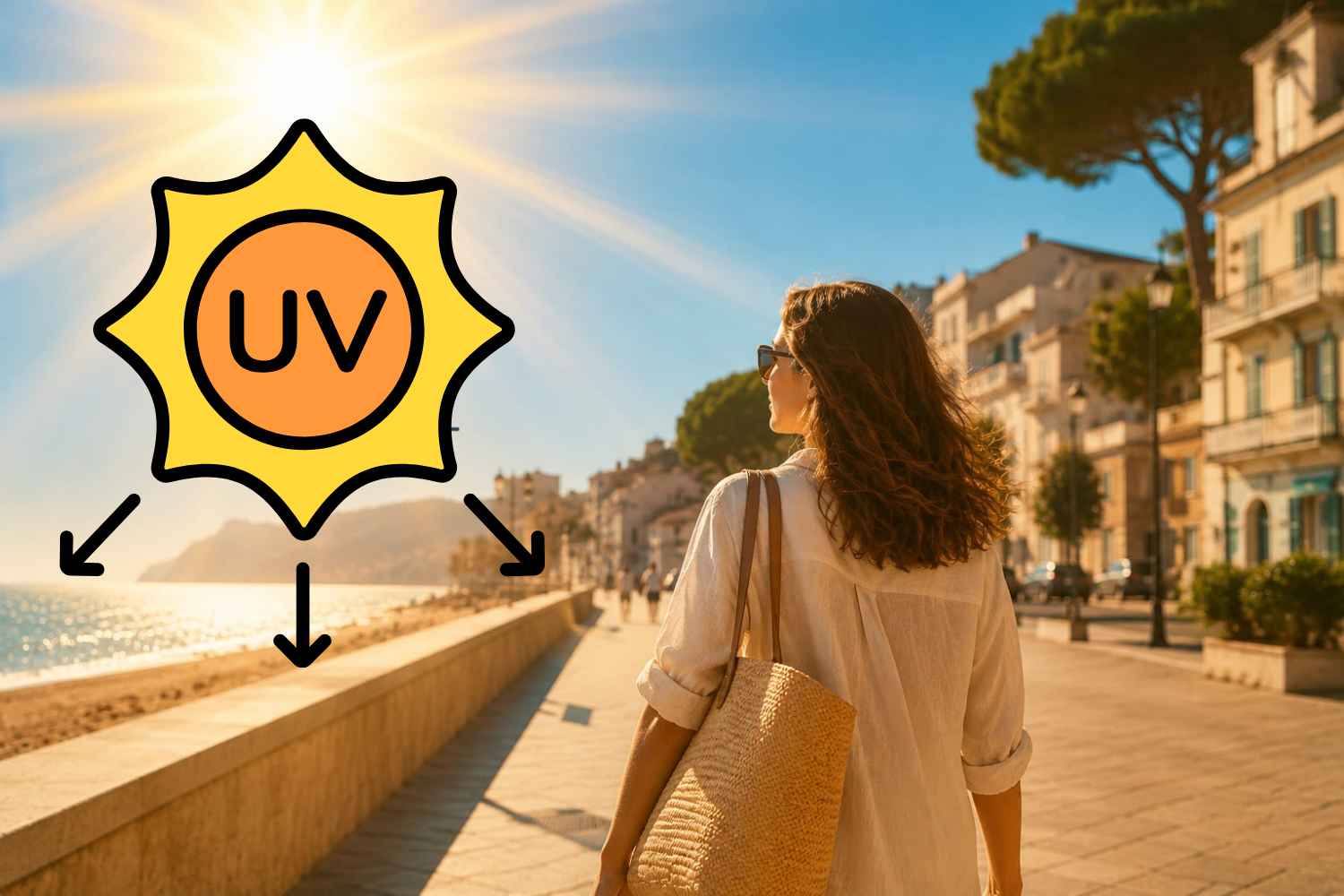
Ultraviolet rays reaching the Earth’s surface are increasing in much of Europe. A new study, which analyzed data collected at 40 monitoring stations between 2013 and 2022, shows significant growth in 26 locations. And behind this phenomenon there is not a new “ozone hole”, but above all a change in the way in which the atmosphere lets solar radiation pass.
The research, published on Photochemical & Photobiological Sciencesis one of the largest analyzes ever carried out on the trend of UV radiation on the ground in Europe.
Scientists examined measurements from 40 stations distributed across several European countries, integrating them with data from satellites. The result is rather clear: 26 out of 40 stations recorded a statistically significant increase in annual UV radiation, while in none of the locations analyzed was a significant decrease observed.
In the period considered, the median increase was around 11% in ten years, although the amount varies greatly from one area to another. In some places the increase reached even higher values.
However, the phenomenon does not affect the entire continent in the same way. The most marked increases were observed above all in central and western Europe, while proceeding towards the south and south-east the trend tends to become weaker.
What is causing UV rays to increase?
The main explanation is surprising and closely linked to climate change: in Europe there are more and more periods with little cloudy skies. In fact, clouds represent a sort of natural filter for solar radiation. When they decrease, more radiation is able to reach the ground.
The researchers found a strong relationship between increased hours of sunshine and increased UV radiation. In other words, more hours of clear skies also mean greater exposure to ultraviolet rays.
According to the study, the decrease in cloud cover would explain most of the observed increase.
A second factor also contributes: the reduction of atmospheric aerosols, i.e. particles present in the air, including those linked to pollution. With fewer aerosols, less solar radiation is absorbed and dispersed in the atmosphere and a greater portion is therefore able to reach the ground.
The increase in UV radiation observed in Europe does not appear to be due to a further reduction in the ozone layer. Stratospheric ozone is essential because it absorbs much of the most harmful ultraviolet radiation. However, over the analyzed period, the authors did not detect a significant annual decrease in ozone at the stations considered.
In some places and in some months, small increases were even observed. The problem, therefore, is above all another: the quantity of solar radiation that manages to pass through an atmosphere with fewer clouds and fewer aerosols.
And in Italy?
Italy represents a particularly interesting observatory because it shows how the increase in UV radiation can vary from one area to another. The study used data from three Italian stations: Saint-Christophe, in Valle d’Aosta, managed by ARPA Valle d’Aosta; Rome, monitored by Sapienza University and ENEA; and Lampedusa, where measurements are carried out by ENEA.
Data collected between 2013 and 2022 shows that the increase in UV radiation is not uniform across Europe. The most marked trends are observed in central Europe, while they tend to attenuate moving towards the south and south-east, therefore also along the Italian peninsula.
The case of Lampedusa is particularly interesting: despite its southern position and the high amount of sunshine that normally characterizes the island, a statistically significant annual trend in UV radiation was not detected in the analyzed period.
In the Alpine area of Saint-Christophe, however, the trend of UV radiation is also affected by the characteristics of the territory and the presence of snow. The snow-covered surface can reflect solar radiation and increase its intensity through the so-called albedo effect. Changes in the duration of snow cover, linked to global warming, can therefore also influence the values recorded locally.
However, it is important not to confuse the absence of a significant increase over time with low exposure to UV rays. Even where the trend has remained stable, such as in Lampedusa, radiation levels can be high. The study simply shows that the increase observed in many other parts of Europe has not occurred in the same way in all areas.
The health risks
The aspect that worries experts most is obviously the health one. Ultraviolet radiation is in fact the main environmental risk factor for skin cancer. Excessive and repeated exposure can also cause eye damage and promote premature skin aging.
According to estimates reported in the study, around 150,000 new cases of melanoma are diagnosed in Europe every year and over 25,000 deaths related to the disease are recorded.
The authors also tried to estimate what the increase in exposure recorded over the last decade for non-melanoma skin cancers could mean in the long term. Depending on the models used, the increase in UV radiation could translate into an increase in future incidence, but this is a statistical projection and not a certain prediction.
The median increase of 11% in UV rays recorded over the decade could translate, in the long term, into a theoretical increase in the incidence of skin cancers (non-melanoma) of between 9% and 59% (with a median value of 24%), if the habits of the population do not change.
The result serves above all to give the measure of the problem: if exposure increases and our habits do not change, the risk may also increase. We must therefore protect ourselves even when it is not very hot.
One of the most insidious aspects of UV rays is in fact that we do not directly perceive their intensity. A cool or slightly cloudy day does not necessarily mean the risk is low. This is why it is important to look at the UV index and take normal protection measures when the values are high.
Hat, clothes that cover the skin, sunglasses and sunscreen on exposed areas are important tools. Even more effective is to avoid direct exposure during the hours when the radiation is most intense and look for shaded areas.
Particular attention should be paid to children: sunburns during childhood and adolescence represent an important risk factor for melanoma. Newborns, on the other hand, should never be exposed directly to the sun.
We need more shade in our cities
The study also suggests a reflection that goes beyond individual protection. If climate change is contributing to making some areas of Europe sunnier, the answer cannot be entrusted to sunscreens alone. The way we design cities can also make a difference.
Trees, parks, porches and other shaded areas can simultaneously offer protection from heat and UV rays, making urban spaces more livable. It is no coincidence that urban reforestation is closely linked to the United Nations Sustainable Development Goals: more public greenery means more sustainable cities, fewer health risks linked to sun exposure and more effective adaptation strategies in the face of a changing climate.
A theme that also concerns biodiversity and agricultural productivity, increasingly exposed to increased solar radiation. Planting more trees, therefore, is not just an aesthetic question, it is a choice that has to do with the health of everyone, men and the planet.
