
Images of devastation that until recently we ideally placed in the American plains of Texas are becoming daily normality even at home. We are not faced with simple seasonal anomalies, but with a profound transformation of weather phenomena. What is truly frightening is not only the sheer violence with which these storms hit inhabited centers, but the pounding frequency with which they overwhelm cities, infrastructures and completely unprepared communities. The statistics photograph an unequivocal reality: while atmospheric phenomena accelerate and become increasingly aggressive, our ability to adapt and react dramatically struggles to keep up.
The fury of the wind between Busto Arsizio, Gorla Maggiore and Malpensa airport
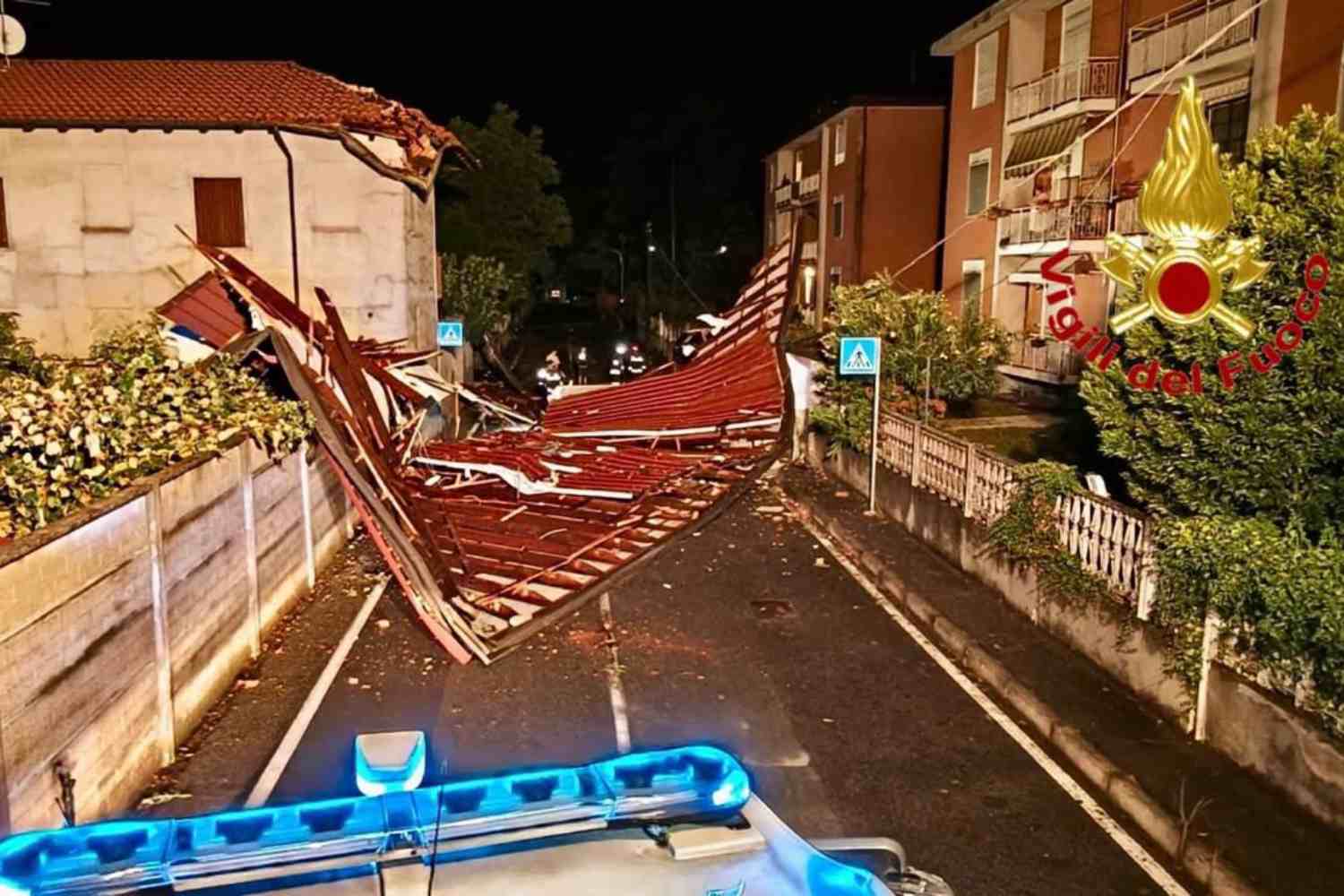
The province of Varese has undoubtedly been the most affected in the last few hours. More than one hundred rescue operations involved the Fire Brigade and the Civil Protection, supported by five teams arriving in reinforcement from Milan and Monza and Brianza. In Busto Arsizio, a falling tree hit a car in Viale Trentino, fortunately without causing any injuries.
In Gorla Maggiore a whirlwind uncovered the roof scaffolding, pushing it fifty meters away and felling numerous trees. Road traffic was also blocked in Ferno due to debris and plant elements remaining on the road. The chaos did not spare Malpensa airport: the violent storm flooded the runways and various spaces inside the terminals, forcing airlines to cancel several departing and arriving flights.
#Badweather #Lombardy, over 190 interventions by the #firefighters due to fallen trees, flooding and structures damaged by the wind: Varese the most affected province (photo), reinforcements arrived from the commands of Milan and Monza. Teams also at work in Como and in the Milanese capital… pic.twitter.com/fKLxKTFC8P
— Vigili del Fuoco (@vigilidelfuoco) August 25, 2026
Terror in Lido Estensi: the waterspout between Bagni Medusa and Sayonara
The force of the air vortices also hit the Emilian coast with ferocity. In Lido degli Estensi a waterspout formed just before lunchtime on Sunday, advancing rapidly from the coast towards the shoreline. The phenomenon has fully affected Bagno Medusa and Bagno Sayonara. The force of the gusts lifted and threw sunbeds, tables, gazebos and even children’s games two hundred meters away.
An umbrella blown by the wind shattered the rear window of a parked car. Four people were injured, hit by stray objects and glass and cutlery splinters flying from restaurant tables. Samuele Bellotti, mayor of Comacchio, expressed immediate solidarity with the managers and swimmers involved, underlining how these sudden episodes put years of work efforts at risk.
The most recent waterspout, which landed on Bagno Medusa in Lido degli Estensi (FE). Unfortunately there is at least one injured swimmer pic.twitter.com/GWr32ICaMI
— Federico Pavan (@PavanFederico00) August 23, 2026
The geography of the emergency: the numbers of the climate crisis in Italy
Official data confirm the structural transformation of our climate. What speaks clearly is the bitter end-of-year assessment drawn up by Legambiente’s City Climate Observatory and created in collaboration with the Unipol Group. During 2025, the Peninsula recorded 376 extreme weather events, marking an increase of 5.9% compared to the previous year and positioning itself as the second most critical year of the last eleven, immediately after 2023. The most frequent events involved flooding from intense rain (139 episodes), wind damage (86) and river flooding (37). Compared to 2024, there was a 94% increase in cases linked to record temperatures, a 42% increase in landslides and a 28.3% increase in wind gusts.
The North is the geographical area most affected by adverse weather conditions. Lombardy leads the regional ranking with 50 emergencies, followed by Sicily (45) and Tuscany (41). At a provincial level, the map of critical issues highlights Genoa in the lead with 16 events, followed by Messina and Turin at 12, Florence and Treviso with 11, Milan with 10, and then continuing with Como, Lecce, Massa Carrara and Palermo at 9. The mobility network is also suffering seriously: in 2025 there were 24 transport blockages, including railway delays and interruptions of local public transport caused not only by floods and landslides, but also from extreme heat and strong winds.
