
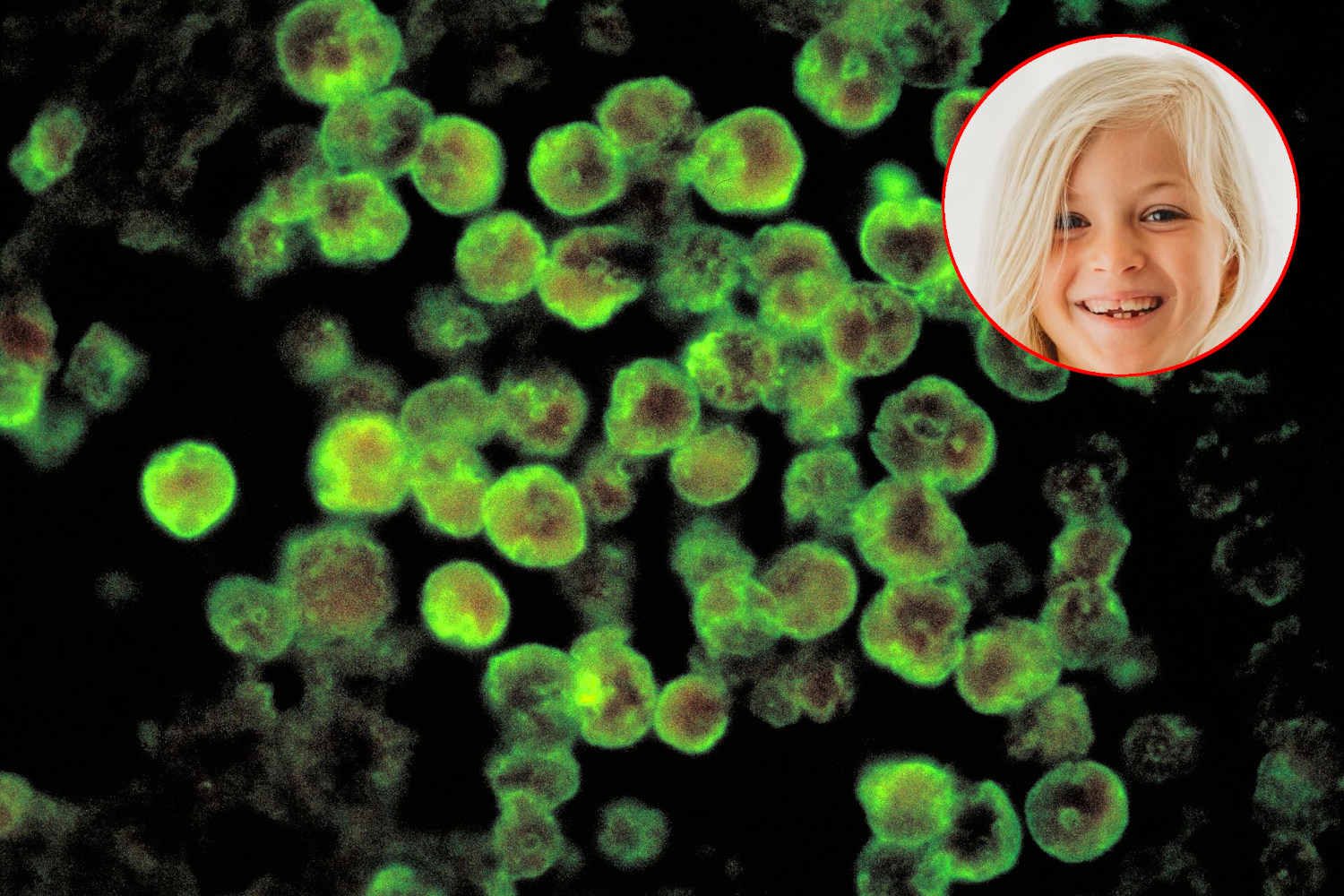
An invisible and lethal summer nightmare has shattered the tranquility of Lincoln County, United States. Little Lillian Smart, just eight years old, died due to a very rare and devastating brain infection caused by the parasite Naegleria fowleri, universally known as the brain-eating amoeba.
After spending a carefree day bathing in the fresh waters of Lake Claiborne, Louisiana, the little girl began to develop the first symptoms. Emergency hospitalized on August 15th at the Shreveport health facility, little Lillian Smart fought between life and death, tragically passing away on Saturday August 22nd, the day immediately after her eighth birthday.
What is Naegleria fowleri and where does it proliferate?
Naegleria fowleri is a microscopically lethal single-celled organism that commonly lives in warm freshwater bodies, such as lakes, rivers, ponds, canals and hot springs. This amoeba finds its ideal habitat at temperatures between 26 and 46 degrees, proliferating massively during the particularly hot summer seasons. It can also be found in basins with stagnant water, industrial waste or swimming pools that are not adequately disinfected. The link between global warming and the rise in temperatures of internal waters is pushing experts to raise the alarm about the possible spread of the parasite even in territories that have historically never been affected before.
Modes of contagion and pathogenesis
Understanding how Naegleria fowleri works is essential to decipher its danger. The parasite is not transmitted by ingestion by drinking contaminated water, nor can any contagion occur from person to person. The infection is triggered only when water forcefully enters the nasal cavities, usually during diving, diving or swimming. Once it enters the nose, the amoeba rapidly migrates along the olfactory nerves until it reaches the brain tissue. From that moment on, a ruthless destructive action begins which leads to primary amoebic meningoencephalitis (PAM), a pathology characterized by rapid edema and necrosis of the brain.
Symptoms, diagnoses and devastating mortality
Timely diagnosis represents an almost impossible challenge for medicine: the initial manifestations of the disease simulate those of a normal flu or bacterial meningitis, presenting fever, nausea, vomiting, intense headache and stiff neck. Within a few days the clinical situation worsens dramatically with the loss of smell, neck rigidity, photophobia, hallucinations, convulsions and coma. To confirm the presence of the parasite, a lumbar puncture or brain biopsy is required. With a mortality rate above 97% and just over 180 cases recorded in the United States from 1937 to the present, Naegleria fowleri infection remains a very rare but almost inexorably fatal clinical tragedy.
